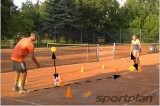
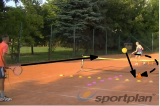
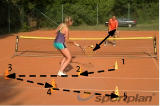
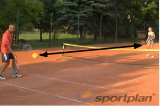
The coach feeds the ball to the player, and the player hits a backhand stroke. If the ball is hit inside the court player runs, puts the hurdle and runs over it. The player's goal is to put all the hurdles.
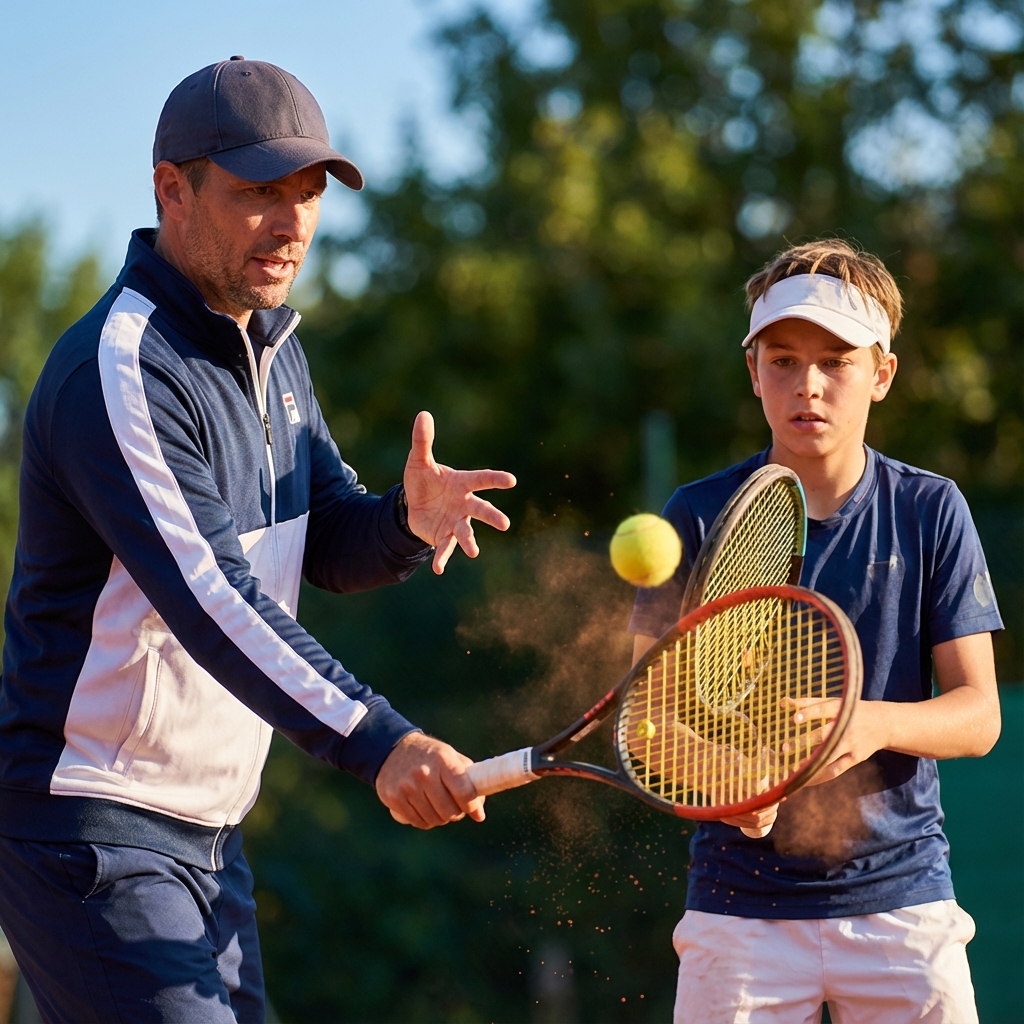
Younger players love to have fun so all sessions designed for this group of players have to include this factor. The coach shouldn't use the same drills as he/she does for older players because younger players will quickly get bored. By adding extra activities between the strokes, younger players are interested and are able to improve all athletic skills.
In this drill, the player is working on backhand consistency and placement. By giving an extra activity for all good shots, younger players are motivated to improve hitting skills so they try the best. It is important to add external motivation as often as possible to let younger players develop variety of skills within each drill.
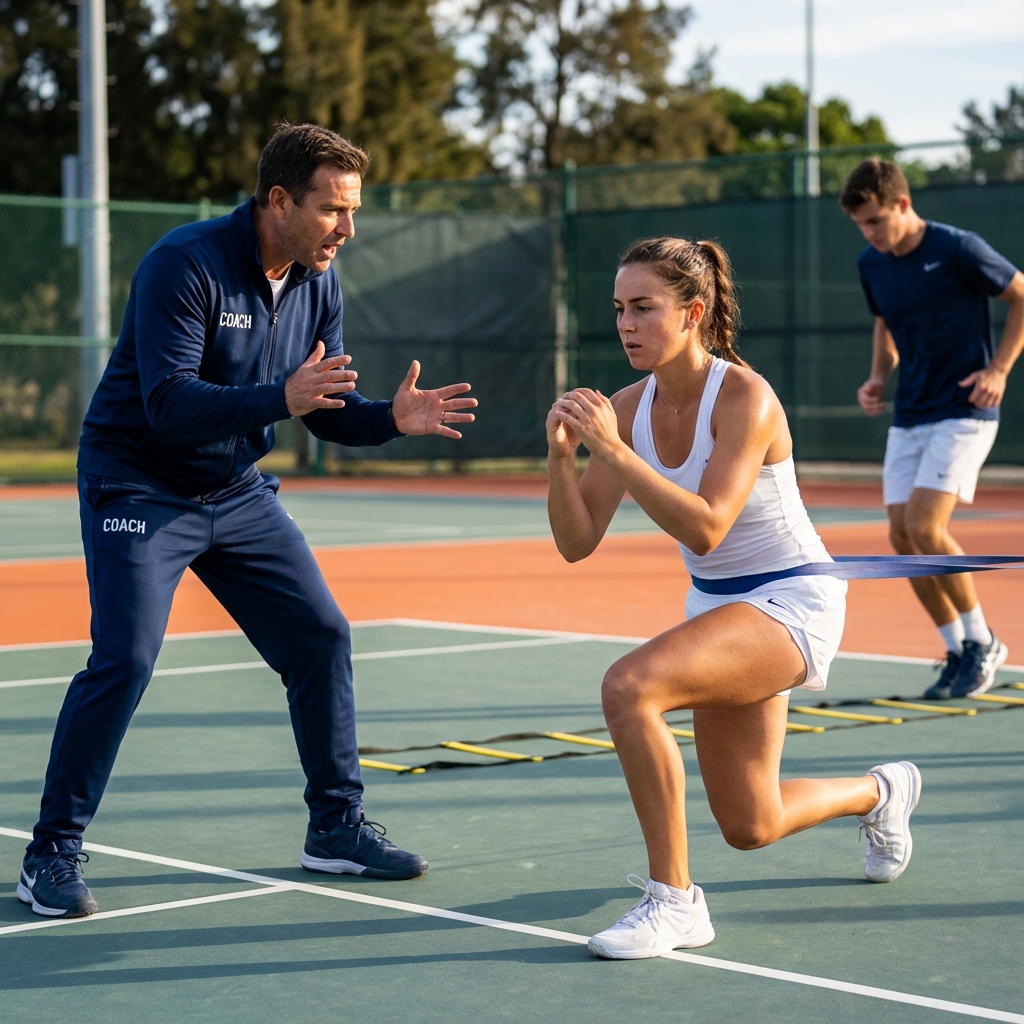
Tennis demands a unique combination of endurance, power, agility, and flexibility. Physical preparation determines how long careers last and how players perform when it matters most.
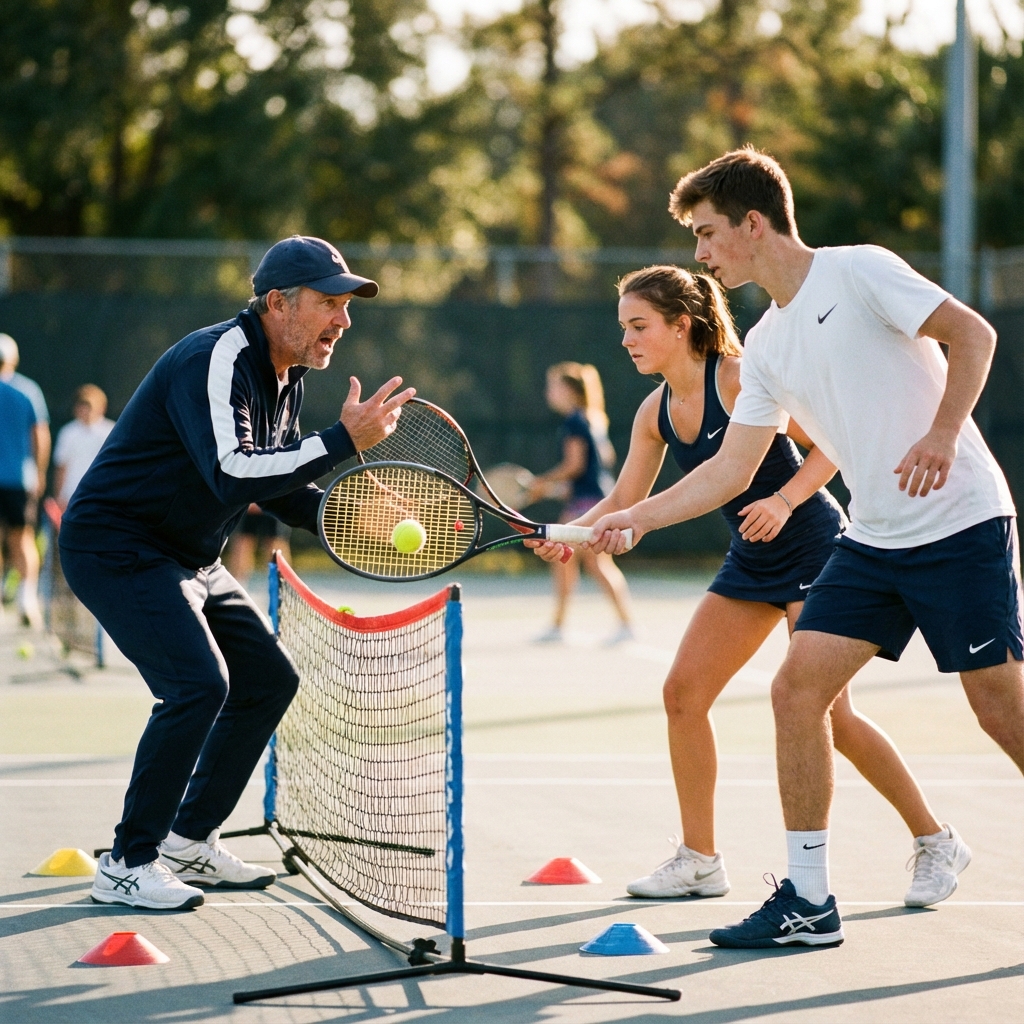
Ecological dynamics is transforming tennis coaching. This constraints-led approach develops adaptable, creative players who can solve problems in competition, not just execute drilled patterns.
The one-handed backhand is becoming rare, but when executed well, it remains one of tennis's most elegant and effective shots. Is it a dying art or a tactical advantage?


Register for FREE and get coaching tips, top drills, session and more every week!