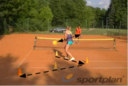
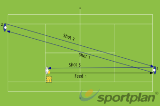
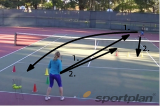
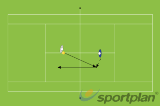
The player serves to the T from the deuce side and the coach feeds a higher ball to the ad side. The player then finishes with deep backhand drive in the air cross-court.
Serve is a primary tool to get advantage on the court so players have to learn how to create this kind of situations. Using the serve to put the opponent into defensive position is a great opportunity to finish the rally with the next shot. Having different skills to end the point is a comfortable scenario that will work against different opponents.
In this drill the player works on the serve placement and backhand in the air. Placing the serve down the T gives the benefit of hitting over the lowest part of the net as also it puts the ball to the rival's backhand. If the serve is executed well enough we can expect easy ball to come over the net. If the ball is higher the player should learn how to take the ball in the air with the swinging volley. It is advised to take air balls with the forehand but we need also the backhand ability to perform this task because one ball in a match can decide about the final outcome and it can be backhand in the air.
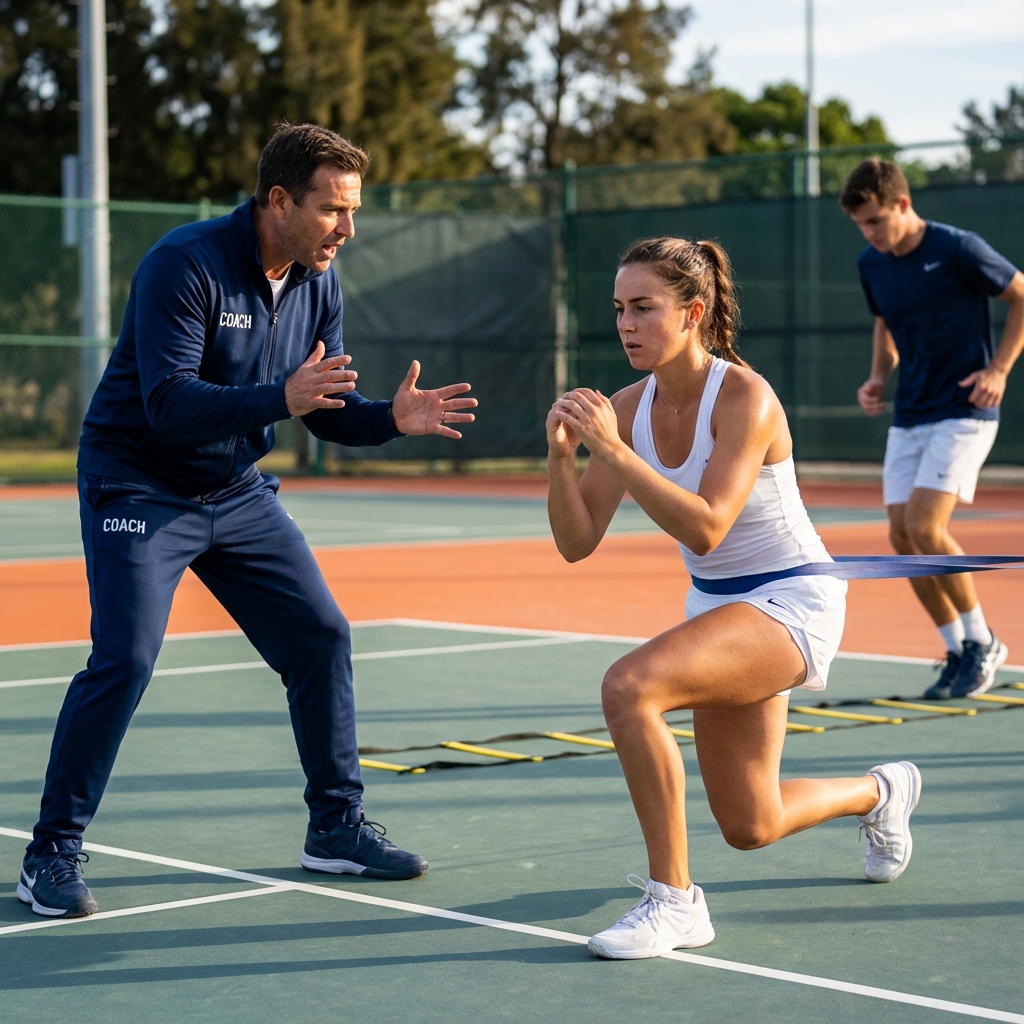
Tennis demands a unique combination of endurance, power, agility, and flexibility. Physical preparation determines how long careers last and how players perform when it matters most.
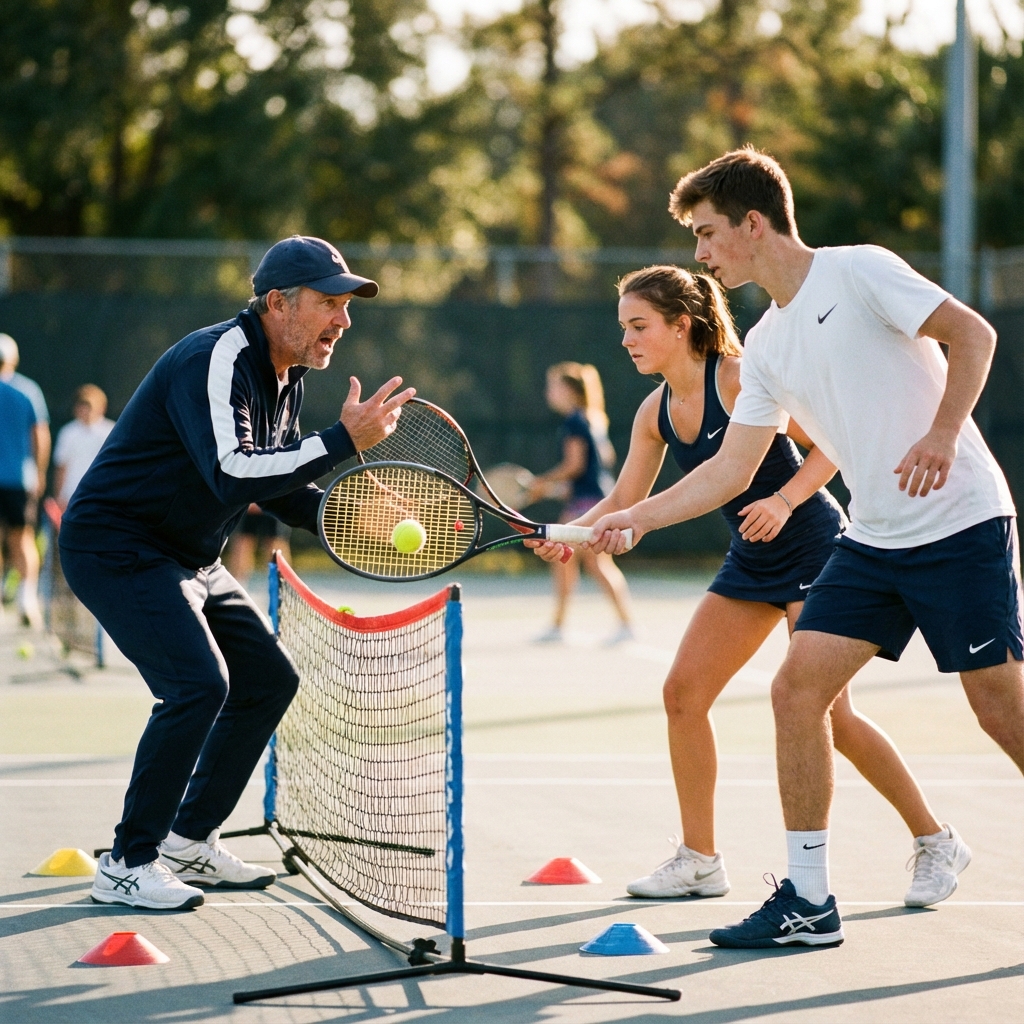
Ecological dynamics is transforming tennis coaching. This constraints-led approach develops adaptable, creative players who can solve problems in competition, not just execute drilled patterns.
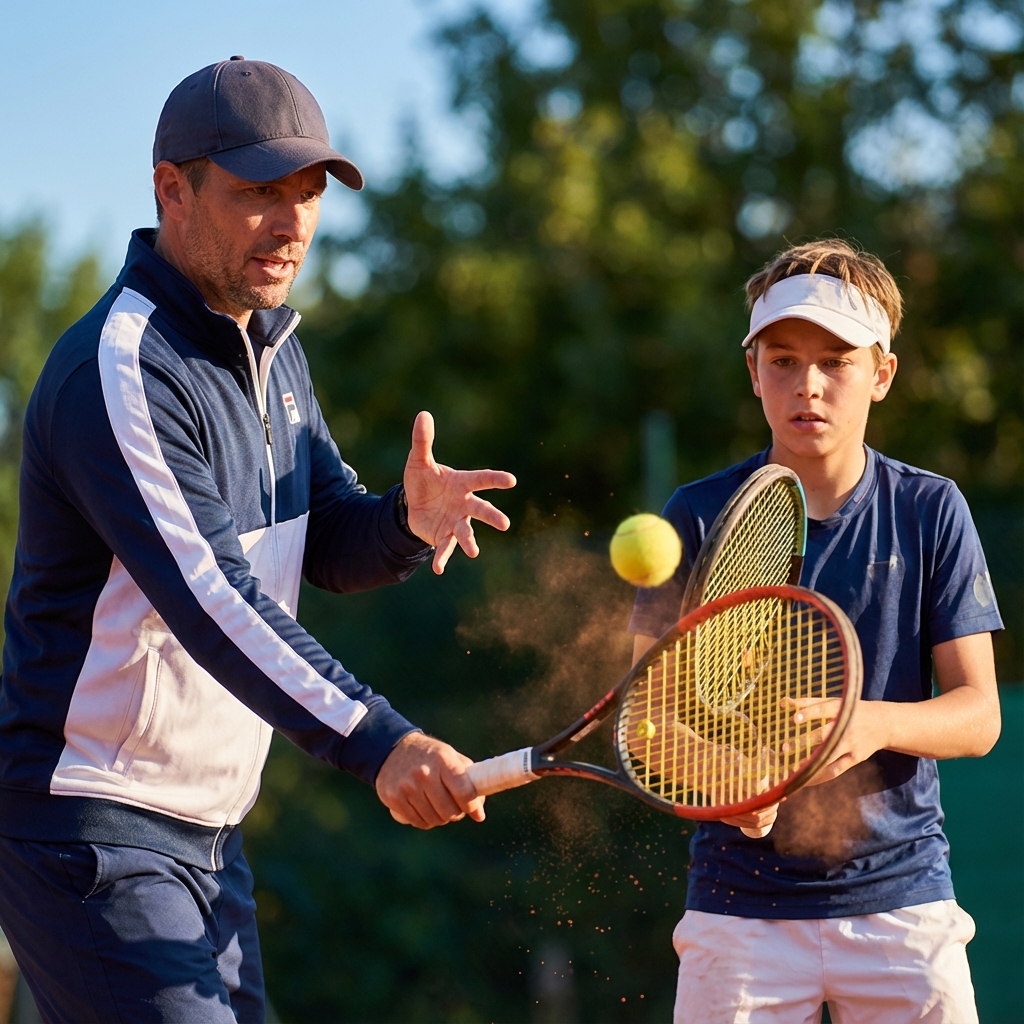
The one-handed backhand is becoming rare, but when executed well, it remains one of tennis's most elegant and effective shots. Is it a dying art or a tactical advantage?


Register for FREE and get coaching tips, top drills, session and more every week!