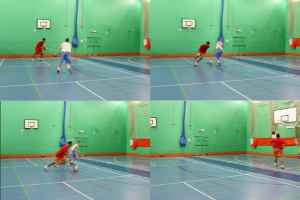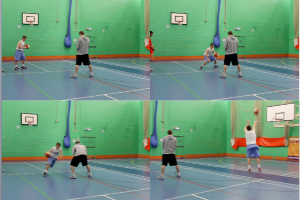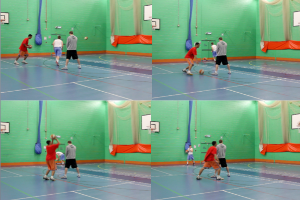
The pick and roll has been basketball's bread and butter for decades. Yet in 2025, this fundamental action has evolved into something far more sophisticated. Teams run more ball screen actions than ever, and defences have developed multiple schemes to counter them.
Understanding modern pick and roll is essential for any coach at any level.
The Basic Action
At its core, the pick and roll is simple:
The screen: A teammate sets a stationary screen on the ball handler's defender, creating momentary advantage.
The roll: After screening, the screener rolls toward the basket, becoming a second threat.
The decision: The ball handler reads the defence and makes the appropriate play - drive, shoot, or pass.
But within this simplicity lies enormous complexity in execution and reading.
Screen Angle and Position
Where and how the screen is set determines options:
Flat screen: Parallel to the sideline. Creates direct downhill driving lanes but easier for defenders to go over.
Angled screen: Set at 45 degrees. Creates better rejection opportunities and forces defenders into difficult decisions.
Step-up screen: Screener steps toward the ball handler. Effective against aggressive defenders.
Re-screen: If the first screen is avoided, the screener repositions for a second attempt.
Reading the Defence
The ball handler must read how the defence plays the screen:
Go over: Defender fights over the screen, staying attached to the ball handler. Counter with pull-up jumpers or snake dribbles.
Go under: Defender goes under the screen, conceding space. Counter with immediate jump shots.
Switch: Defenders exchange assignments. Creates potential mismatches to exploit.
Hedge/Show: Big man steps out to slow the ball handler. Counter with split actions or patience.
Drop: Big man drops toward the paint. Counter with mid-range shots or pocket passes.
Trap/Blitz: Both defenders attack the ball handler. Counter with quick passes to the rolling big or weak side.
The Roll Man's Role
The screener's work doesn't end with the screen:
Hard roll: Sprint to the basket after screening. Best against drop coverage.
Pop: After screening, move to the perimeter for a jump shot. Effective against aggressive hedges.
Slip: Before contact, release toward the basket. Catches overaggressive defenders.
Short roll: Stop in the middle of the paint. Creates passing angles and shooting opportunities.
Spacing Considerations
The other three players matter enormously:
Corner spacing: Players in corners stretch the defence and provide kick-out options.
Weak side action: Movement away from the ball prevents help defenders from loading up.
Lift patterns: Players moving up from the corners create new passing angles.
Poor spacing kills pick and rolls. Great spacing makes them nearly indefensible.
Common Mistakes
Moving screens: The screener must be stationary at contact. Moving screens are fouls and teach bad habits.
Predictable timing: Using ball screens at the same point in the shot clock becomes readable.
No roll: Screeners who set and stand become easy to defend.
Staring at the roller: Ball handlers who telegraph passes get picked off.
Key Coaching Points
- Screen angle affects all subsequent options - teach proper positioning
- Ball handlers must read defence before deciding, not predetermine
- Roll men need multiple tools - roll, pop, slip, short roll
- Spacing from other three players determines pick and roll effectiveness
- Practice against all defensive coverages