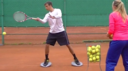
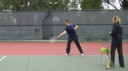
Player stands on the baseline. Coach feeds balls to the forehand side. Player hits forehands using an open stance only.
Working on technical aspects requires gradual development. Too many times players are impatient and want to quickly move-on to more difficult exercises before achieving the necessary skills. Hurrying up can lead to waste of previous work so it is Coach's job to make players aware of how the process works and when they are ready to move on to the next step. After working on individual parts of the new stroke and achieving good results, Coach should move on to putting all the pieces together and let players experience the final result of improvement.
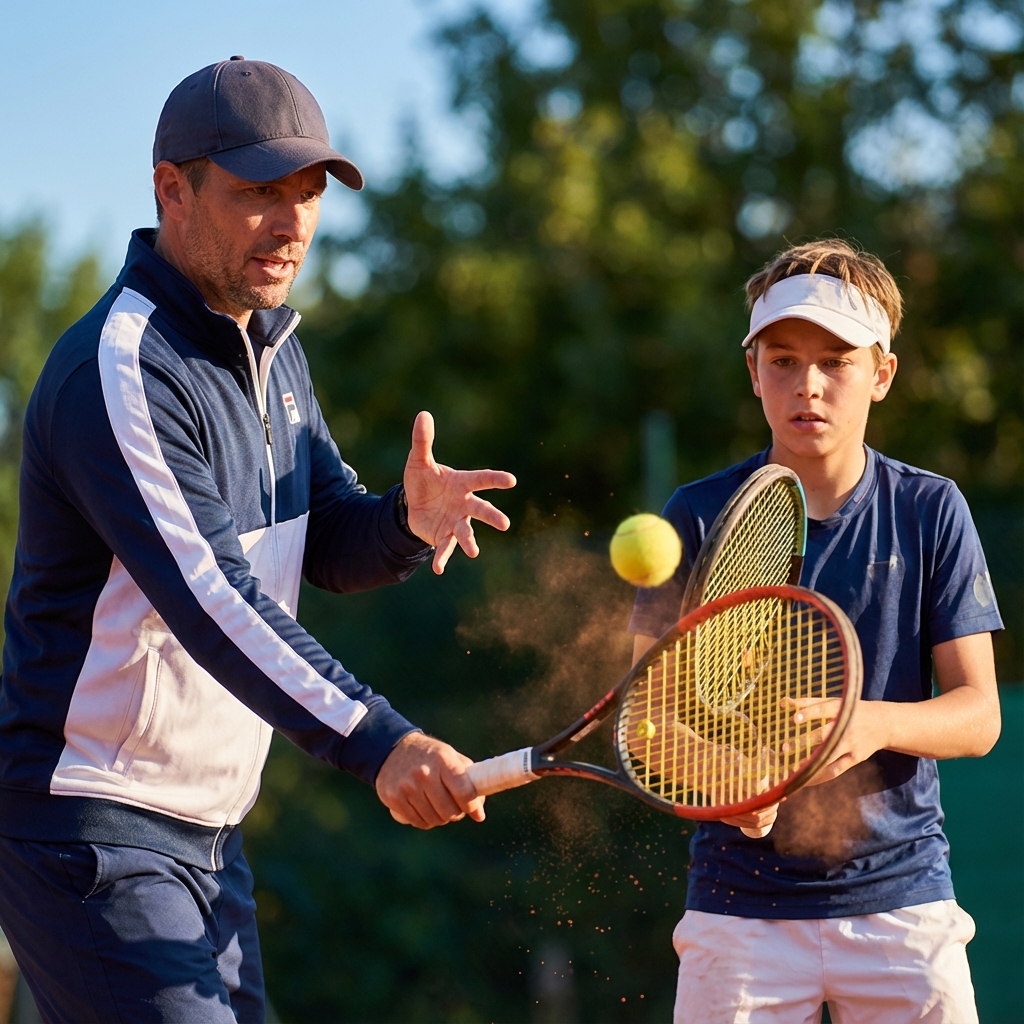
In this final drill, Player works on a complete forehand with an open stance. During this exercise, Coach can pay attention to how player uses lower and upper body to develop successful forehand using an open stance. Emphasis is put on the technical aspects so Player should pay attention to the body and the racquet – not necessarily to where the ball is going. After successful attempts with good technical quality, Coach can set targets and see how Player can connect their technical and tactical improvements.
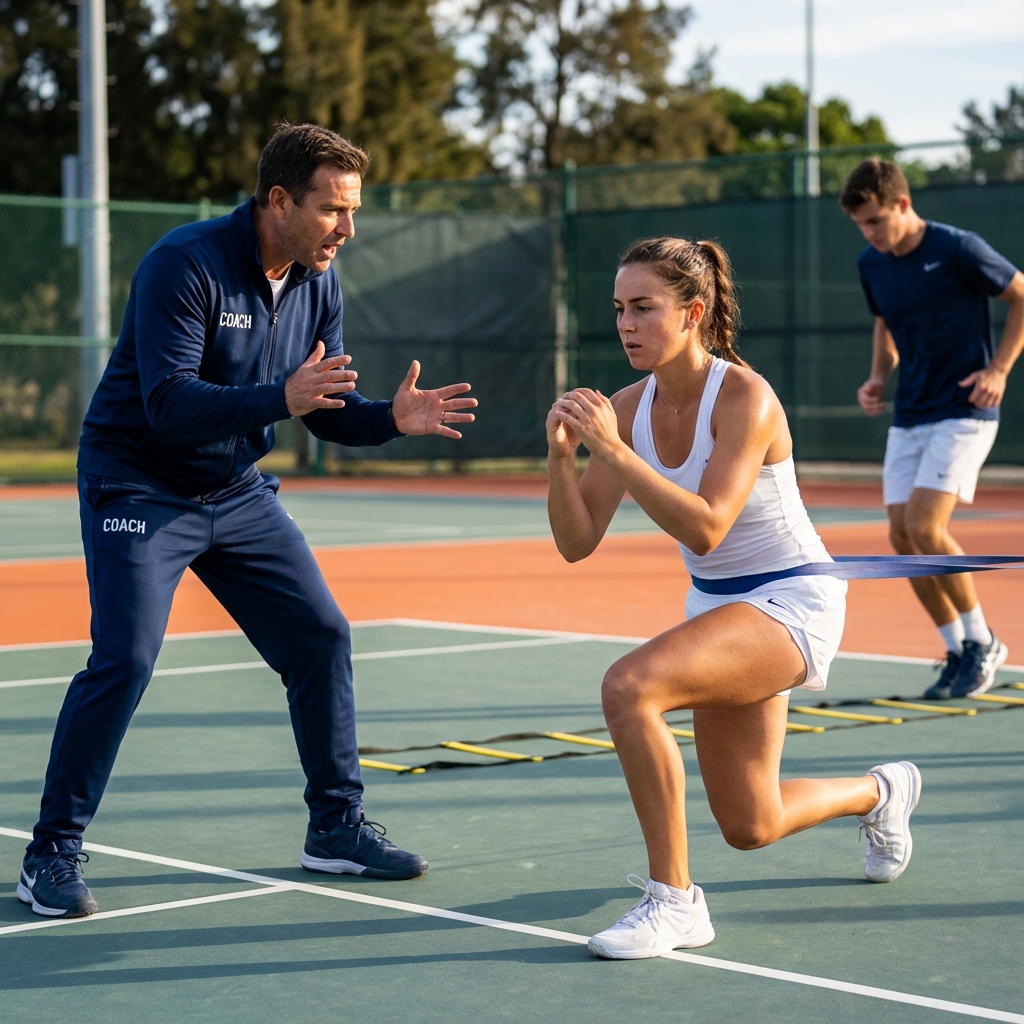
Tennis demands a unique combination of endurance, power, agility, and flexibility. Physical preparation determines how long careers last and how players perform when it matters most.
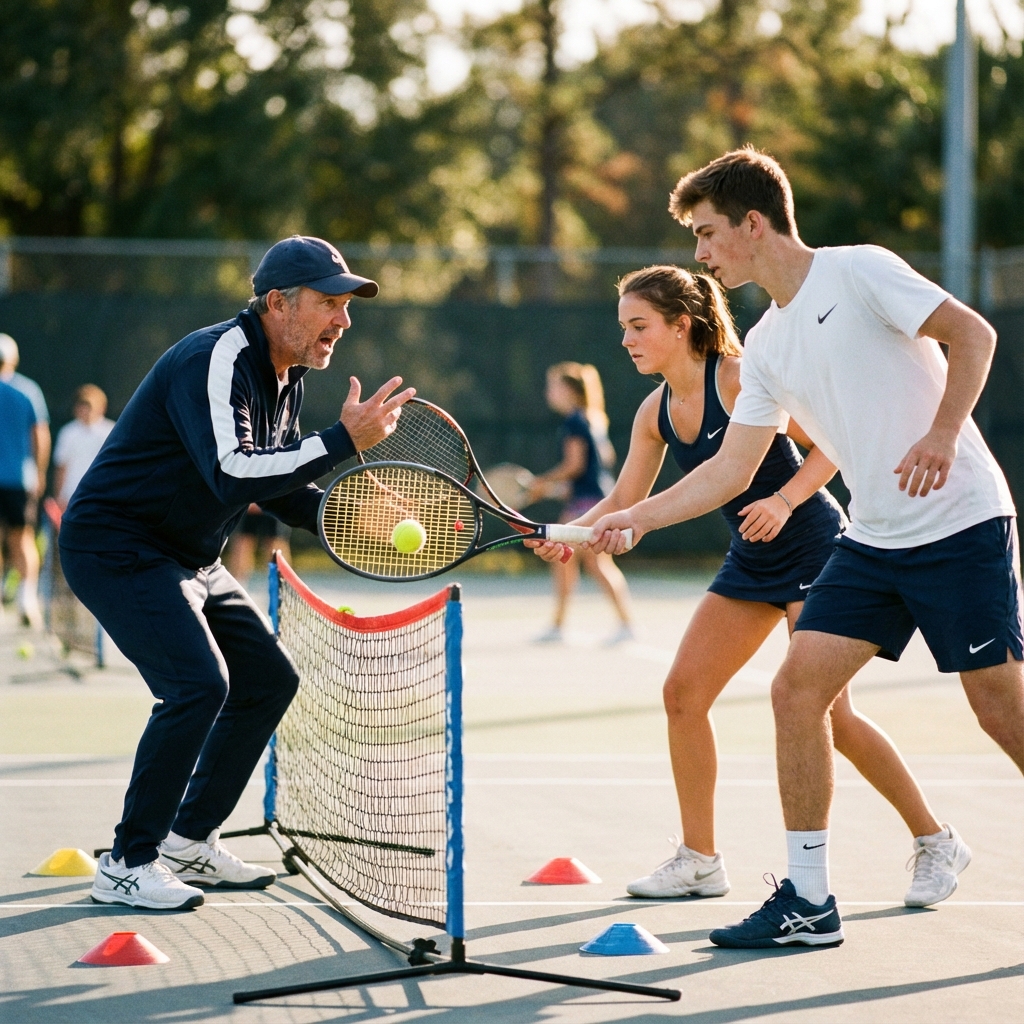
Ecological dynamics is transforming tennis coaching. This constraints-led approach develops adaptable, creative players who can solve problems in competition, not just execute drilled patterns.
The one-handed backhand is becoming rare, but when executed well, it remains one of tennis's most elegant and effective shots. Is it a dying art or a tactical advantage?


Register for FREE and get coaching tips, top drills, session and more every week!