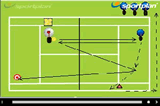
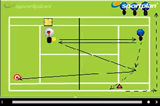
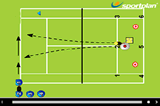
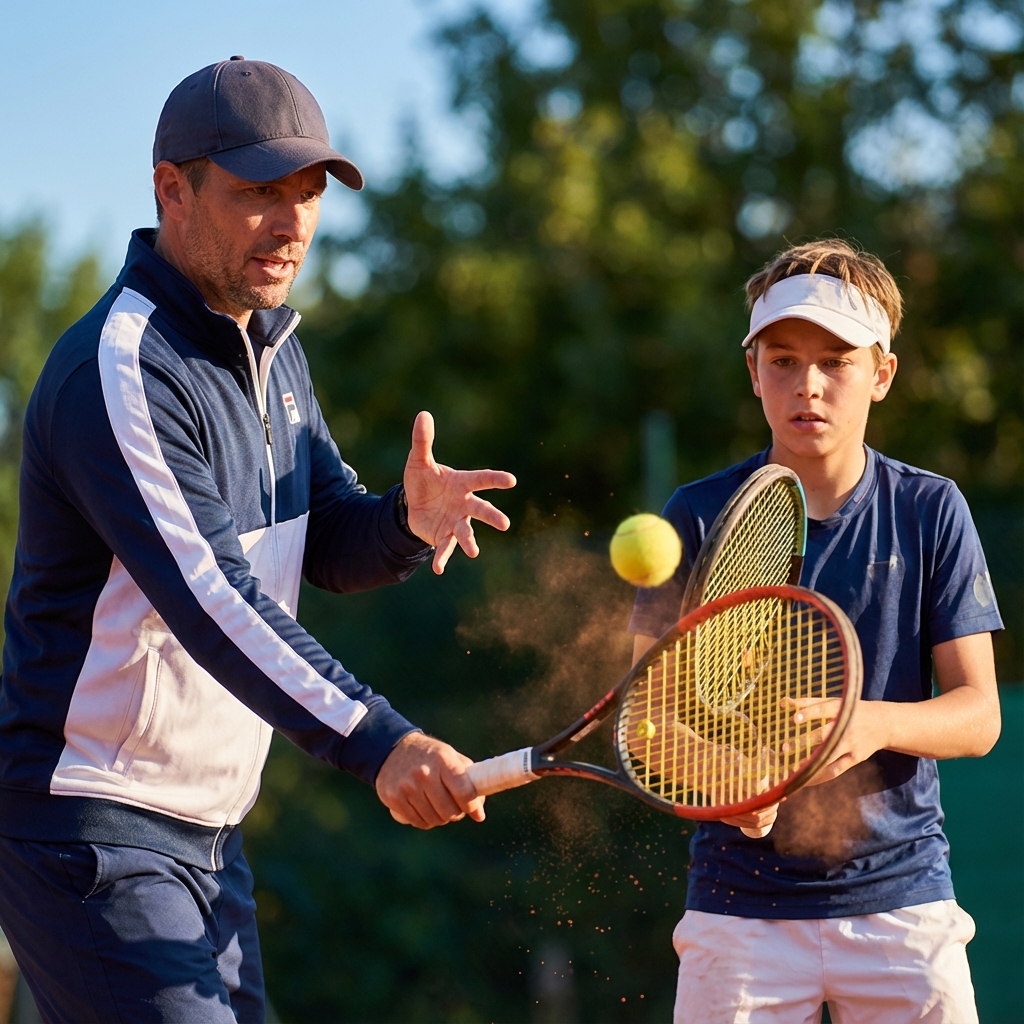
Coach feeds the ball from the forehand side of the court.
Players start in the centre and hit the first backhand back to the coach. The player should try to recover back to the centre to then move towards the short ball and hit a backhand cross-court.
Two-handed backhands have some important advantages over one-handed backhands:
The backhands are generally more accurate because by having two hands on the racquet, this makes it easier to impart topspin on the ball allowing for more control of the shot.
Two-handed backhands have a chance to be closer in power and/or accuracy to the forehand, possibly even better, unlike the one-hander. People with a noticeably weaker one-handed backhand tend to get balls returned to them on that wing, giving them a disadvantage.
Two-handed backhands can be hit with an open stance, whereas one-handers usually have to have a closed stance, which adds further steps (which is a problem at higher levels of play).
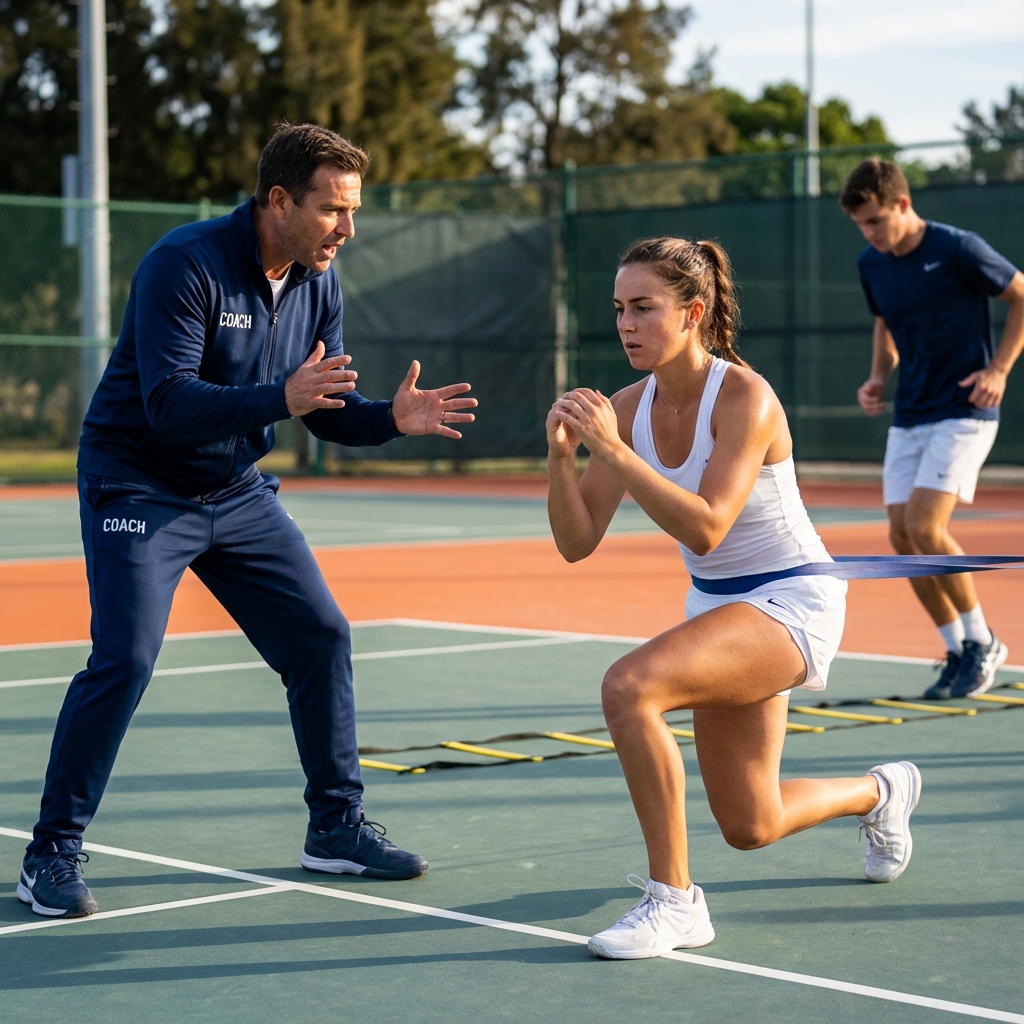
Tennis demands a unique combination of endurance, power, agility, and flexibility. Physical preparation determines how long careers last and how players perform when it matters most.
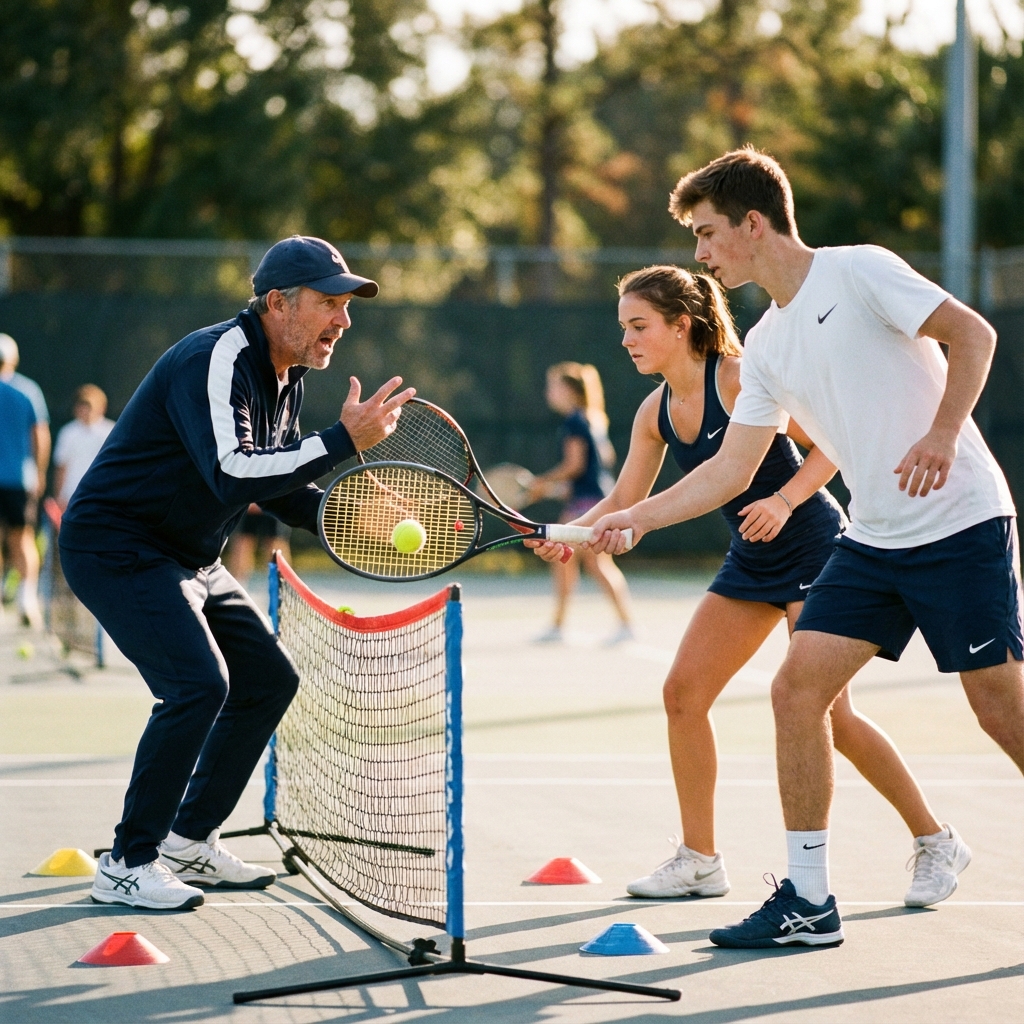
Ecological dynamics is transforming tennis coaching. This constraints-led approach develops adaptable, creative players who can solve problems in competition, not just execute drilled patterns.
The one-handed backhand is becoming rare, but when executed well, it remains one of tennis's most elegant and effective shots. Is it a dying art or a tactical advantage?


Register for FREE and get coaching tips, top drills, session and more every week!