Why Basketball Runs on Session Fees
Every grassroots sport has a money story, and basketball's is written on the booking sheet for the sports hall. Unlike sports played on a field the council mows for free, basketball needs an indoor court - a school sports hall or leisure-centre floor - and that is hired by the hour, at a rate that quietly dwarfs every other cost you have. A single weekly session can cost more in hall hire than a season's worth of bibs and balls. That one fact shapes how almost every basketball club takes money.
Because the big cost is per-hour and variable, most clubs charge a pay-per-session fee - turn up, pay for that night - and many also run termly or monthly subs on top for committed members. Add the smaller, fixed costs - Basketball England affiliation and player registration, insurance, kit, the occasional coaching course - and you have the full picture of what your fees need to cover. The session fee tracks the floor; the subs and affiliation cover everything around it.
The Pay-As-You-Play Model, and Why It Fits
The pay-per-session model is popular in basketball for a simple reason: it mirrors your cost. You pay the leisure centre for the hour; the players pay you for the hour. If twelve turn up one week and twenty the next, the income flexes roughly in line with how full the hall is. It is also fair on the player who can only make one session in three - they pay for what they use rather than committing to a term up front, which keeps the door open to casual and trial players you would otherwise lose.
The trade-off is predictability. Pure pay-as-you-play income rises and falls with the weather and the school calendar, and you still have to commit to - and pay for - the hall booking whether eight turn up or twenty-eight. That is why so many clubs settle on a blend: termly or monthly subs for regular members to give you a dependable base you can budget a hall around, plus a drop-in session fee for occasional players. You get steady income and you still welcome the casual player. Whichever way you lean, the maths underneath has to work.
Working Out What to Charge Per Session
Setting the fee is not guesswork - it is arithmetic you do once a season. Work backwards from the cost of putting on a session, not forwards from what feels about right. The single most common mistake is dividing your costs by your best-ever turnout; price for a realistic, slightly cautious night and the good nights simply build a buffer.
How to Set Your Session Fees and Subs
- Start with the hall hire. Find the exact hourly rate for your court and multiply by the length of the session. This is your biggest and most fixed cost per night - everything else is built around it.
- Add the other per-session costs. Any coaching fees, a share of the season's insurance, and wear-and-tear on equipment. Spread the annual fixed costs across the number of sessions you run.
- Fold in affiliation and registration. Basketball England affiliation and player registration are annual - divide the total across your members and add a slice to each subs figure rather than asking for a lump sum.
- Divide by a cautious turnout. Use a realistic average attendance, not your record night. If you break even at twelve and usually get sixteen, you have a healthy margin for quiet weeks.
- Add a small buffer. A modest margin on top covers a rained-off week, a kit replacement or a price rise from the leisure centre mid-season. Aim to end the year a little ahead, not scrambling.
- Sense-check against the area. Compare your figure with nearby clubs. You do not have to be the cheapest, but a fee wildly out of step with the local norm will cost you players.
Run that once and you will have two numbers you can defend to any parent: a per-session drop-in fee and a termly or monthly subs figure for committed members. Both are grounded in real costs rather than a finger in the air, which makes them far easier to explain - and to raise, when the hall hire inevitably goes up.
The Real Problem: Collecting It at the Door
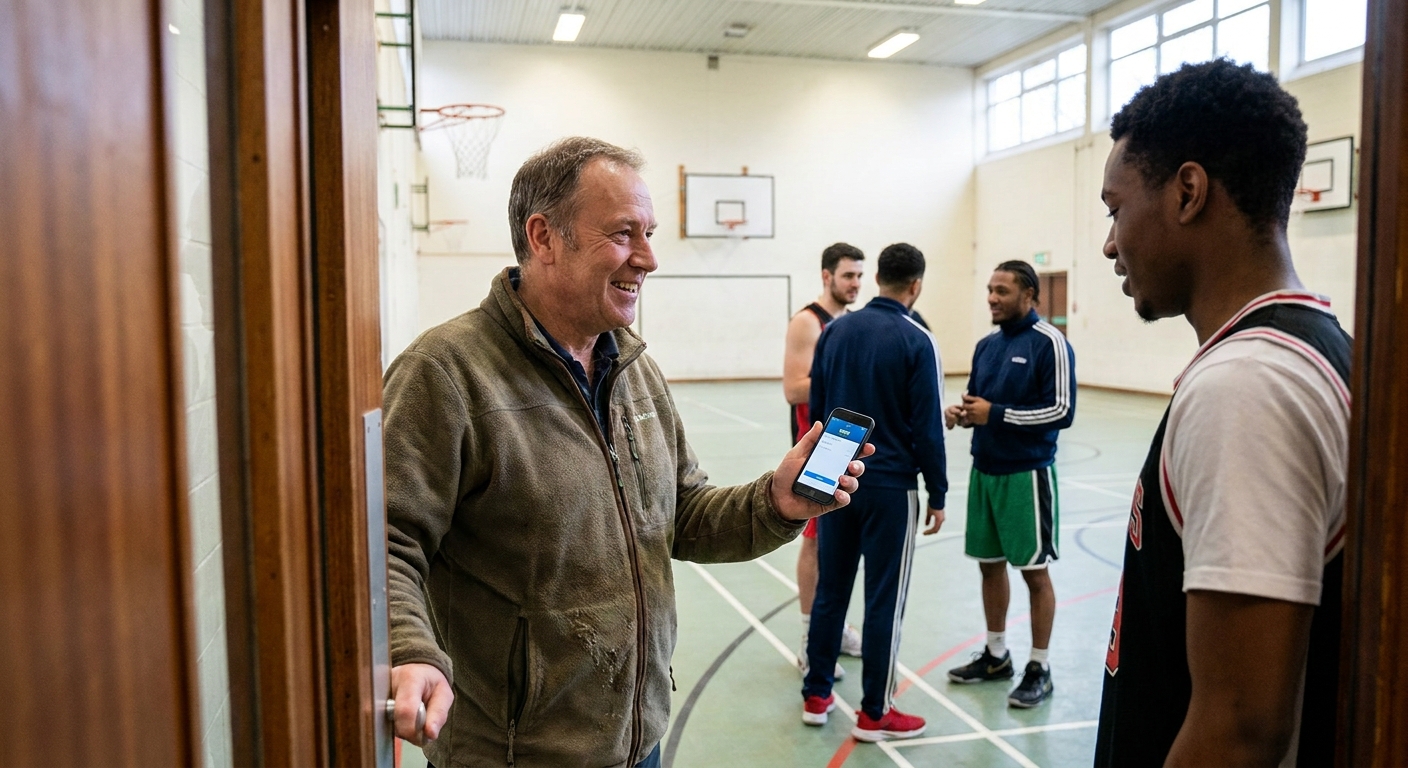
Here is where the evening actually disappears. Setting the fee takes an afternoon once a season; collecting it takes a slice of every single session, forever. Picture the usual scene - you are trying to set up cones and get a warm-up going while also holding a cash bag, making change from a tenner, remembering that two players owe from last week, and mentally noting that someone's mum will "sort it next time". The cash float, the coins, the scrap of paper with names and amounts, the quiet awkwardness of asking a teenager for £4 they have forgotten to bring - it is a job nobody volunteered for and it never ends.
Cash at the door is slow, it goes missing, it is impossible to reconcile cleanly, and it puts you - the volunteer who came to coach - in the uncomfortable role of debt collector every week. Multiply a few unpaid session fees across a season and a small club can quietly lose real money, not because players will not pay but because nobody can keep track of who has. The fix is not to chase harder. It is to stop chasing at all.
Let the Money Collect Itself
The way out is to take the whole thing digital and automated. Instead of a cash bag, players and parents pay session fees and subs online; instead of you remembering who owes, the system sends the reminders automatically; and instead of arriving to a chase, you arrive to a register that already shows who is paid up. The collection stops being a weekly task and becomes something that runs quietly in the background.
This is where a club app or payment platform earns its keep. The good ones let you take recurring subs by Direct Debit, take one-off session fees and event money by card, chase late payers automatically, and - critically for a busy treasurer - keep clean, exportable records so the year-end accounts are a download rather than a reconstruction. It also handles the human side better than a cash bag ever could: concessions and instalments so a family on a tight budget can split a termly sub or pay a reduced rate, meaning nobody is quietly priced out of basketball. And because everyone pays the same way, there is no visible difference at the door between the player on a concession and everyone else.
One option worth a look comes from our own stable, so we will say that plainly: Teamo is built by the Sportplan team, the same company behind this website, so weigh that as you would any recommendation from the people who make the thing. It is built for the whole club rather than a single team, and the payments side is aimed squarely at the basketball treasurer's problem. Direct Debit runs at 2% + 20p - a lower percentage than card, which makes it cheaper for the recurring subs you collect every term - while card is 2.5% + 20p for one-off session fees and events. It does pay-per-session collection as well as recurring subs, and an auto-pay option bundles a member's subs, session fees and event costs into a single payment, so you pay that fixed 20p once rather than on every separate charge. Because live payment status sits right on the team sheet, unpaid balances surface at selection rather than in an awkward doorway chase, which is how clubs collect the large majority of what they are owed. It does that privately, too - managers see only a treasurer 'traffic-light' health indicator, never who individually owes what - and payments post straight through to Xero so the books reconcile themselves. Fees are right at the time of writing; rates change, so check the current ones. If that sounds like your weekly headache, you can see how Teamo collects subs and session fees for the whole club.
Clean Records, Happier Treasurer
There is one more reason to ditch the cash bag that has nothing to do with convenience: the person who keeps your accounts. A treasurer working from a cash tin and a notebook spends hours reconstructing who paid what, and lives in mild fear of the year-end. A treasurer working from a payment platform sees every transaction logged automatically, exports a clean statement whenever they need one, and can answer "are we in the black?" in seconds. That is the difference between a volunteer who burns out and one who happily does another season.
It also makes raising fees painless and transparent. When the leisure centre puts up the hall hire - and it will - you can show members exactly why the session fee is going up, with the numbers to back it. Honest, visible pricing keeps trust, and trust keeps players.
Where Fees Sit in the Bigger Picture
Subs and session fees are one piece of running a club, and they connect to everything else. If you are setting fees for a young squad, our guide to running a junior basketball team walks through the wider season, and there is real money to recover on top of subs: a registered club can reclaim 25% on eligible member payments through Gift Aid for basketball clubs, which can more than offset your processing fees. Fair fees also tie into fair play - our guide to team selection and rotation covers giving everyone court time, the same principle that says nobody should be priced out in the first place.
And of course the fees only matter because of what happens on the floor you are paying for. Once the money side runs itself, the evenings go back to coaching - browse the full Basketball drills library for hundreds of practices to fill the sessions your members are paying for.
Frequently Asked Questions
How much should basketball session fees be?
Work backwards from your court hire, because that is the dominant cost in basketball. Add up the hourly sports-hall hire for a session, any coaching costs, a share of insurance, affiliation and kit, then divide by a realistic, slightly cautious turnout - not your best-ever night. Most grassroots clubs land somewhere around £3 to £6 per junior session and a little more for adults, but the right figure is whatever covers your hall hire and overheads at a turnout you can actually expect, with a small buffer for quiet weeks.
Should I charge per session or termly subs?
Many basketball clubs do both, and the reason is court hire. A pay-per-session model - turn up, pay for the session - matches your biggest cost, which is per-hour hall hire, and it is fair on players who only come occasionally. Termly or monthly subs give you predictable income to commit to a hall booking and are far less admin to collect. A common answer is termly subs for committed members plus a drop-in session fee for casuals, so you get steady income and still welcome the occasional player.
How do I stop collecting cash at the door?
Move it digital. Use a club app or payment platform that lets players pay session fees and subs online, sends the reminders automatically, and shows you who has paid before you set foot in the hall. The cash bag, the float, the someone-owes-a-fiver note in your phone - all of it disappears. You arrive to a sheet that already tells you who is paid up, which means no awkward doorway chase and clean records for whoever does your accounts.
Are there card fees on collecting club payments?
Yes - taking money online carries a small processing fee whichever platform you use, so budget for it. As a rough guide, card payments are commonly around 2.5% plus 20p per transaction. Direct Debit is usually cheaper for recurring subs, around 2% plus 20p, because the percentage is lower. Some platforms also let you bundle subs, session fees and events into one payment, which saves paying that fixed 20p several times over. Fees change over time, so check the current rates before you decide.