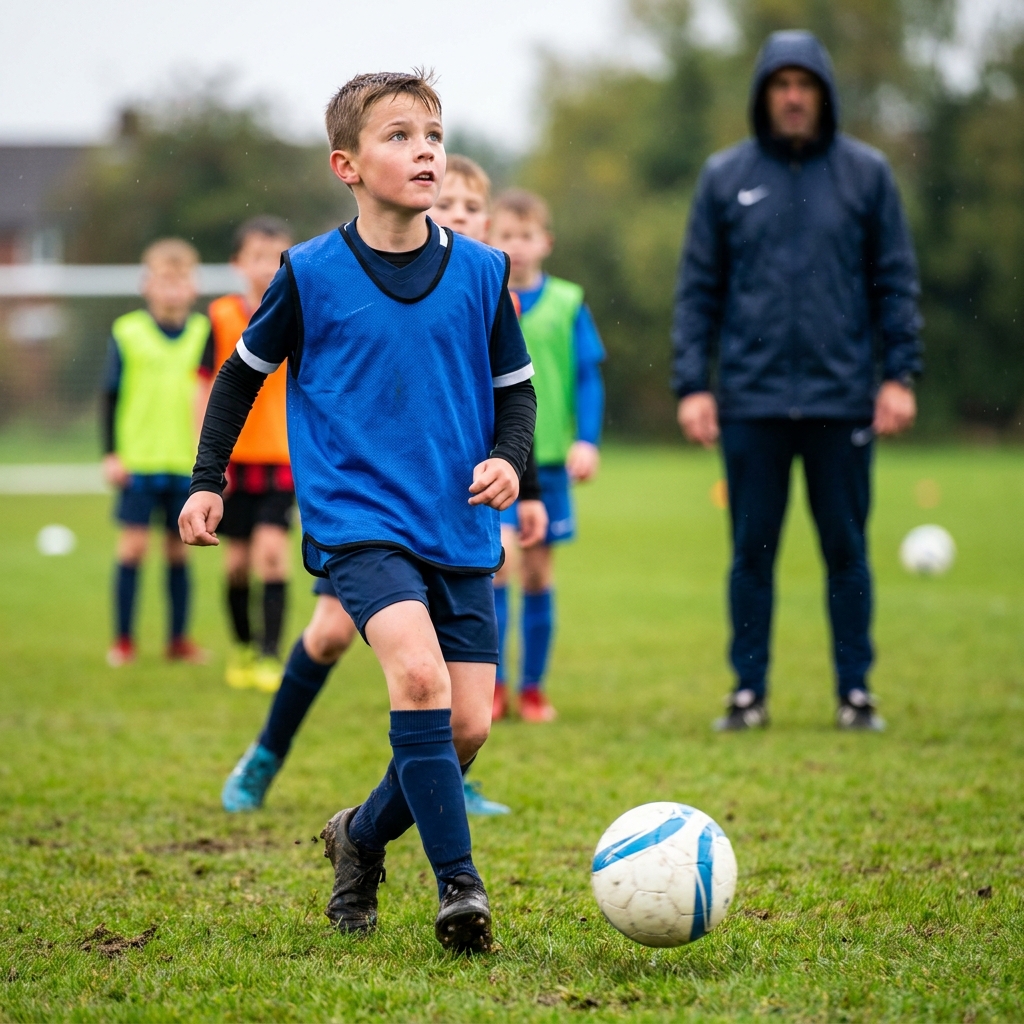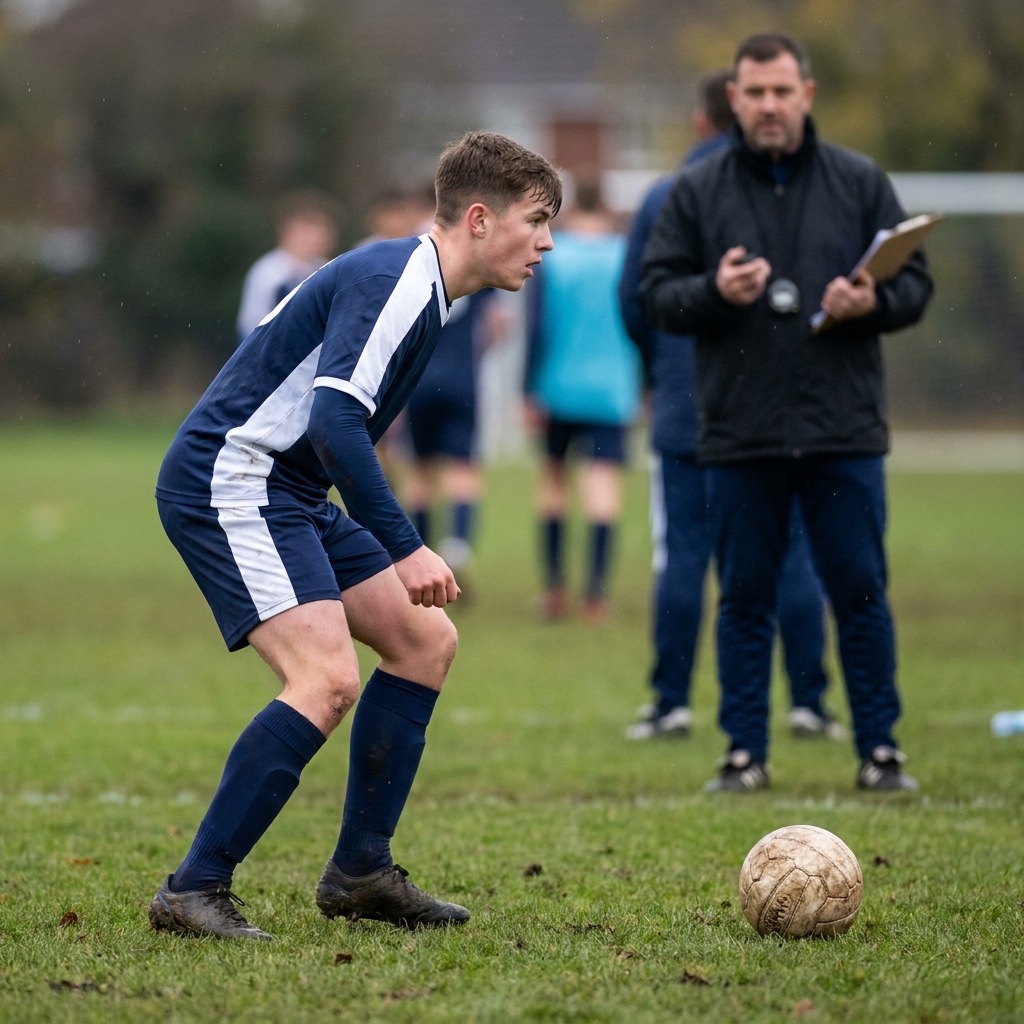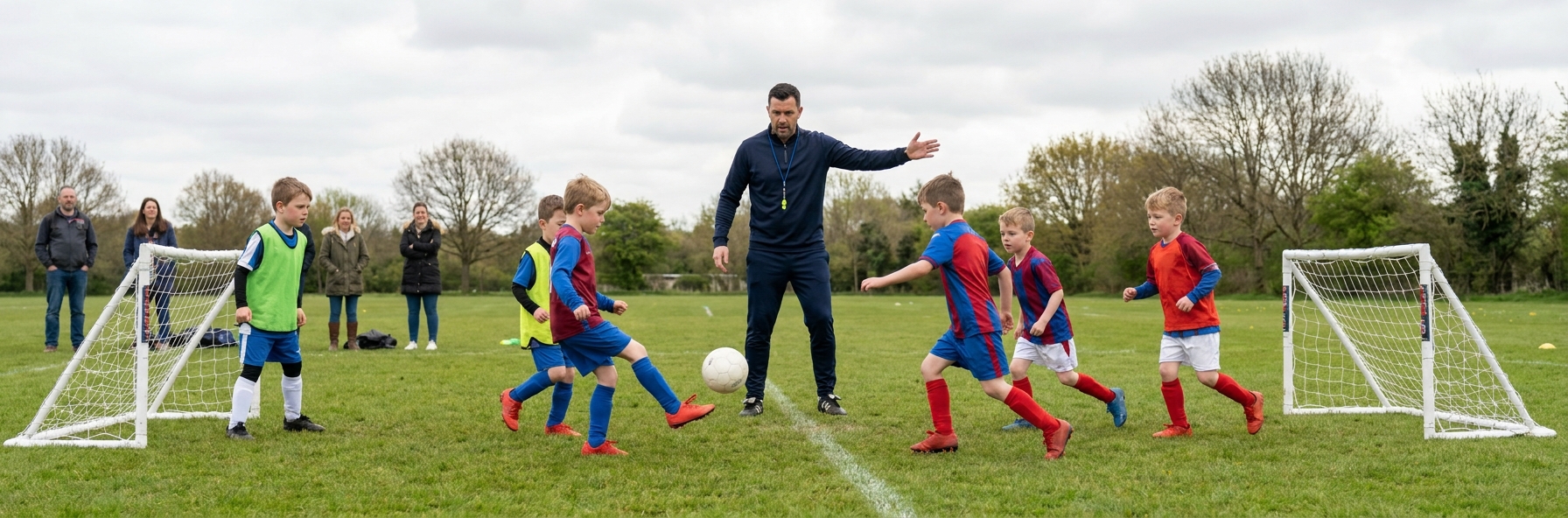
Football: under 10

June 2026

The rise of the dedicated set-piece coach is one of the most significant tactical shifts of the past five years. Aston Villa's Austin MacPhee, Arsenal's Nicolas Jover, and Brentford's set-piece team have shown that a handful of well-designed attacking routines can be worth between five and ten extra goals a season. At the elite level, that can be the difference between European football and a relegation scrap.

The good news is that the principles behind these routines are not secret. With a clear framework and a willingness to spend ten minutes per session on set pieces, any team from grassroots to semi-professional can transform their dead ball threat. Here is what the specialists actually do, and how to translate it to your own team.

The Numbers That Started a Revolution

Just eight matches into the 2025/26 Premier League season, there had already been 56 set-piece goals. Across a full season, set pieces account for around 21 percent of all goals scored in the top flight. At grassroots and youth level, that figure climbs above 35 percent because defensive organisation is weaker and individual mismatches are easier to exploit.

The clubs taking set pieces most seriously are reaping the rewards. MacPhee's routines at Aston Villa have produced an estimated 28 percent of their goals from corners and attacking free kicks alone. Arsenal have built whole game plans around the threat of their corner deliveries. Brentford have made a name for themselves with imaginative throw-in routines that confuse defences and create chances from nothing.

The Three Principles Behind Every Great Routine

Principle One: Disguise. The best routines start in ambiguous positions. Teams like Brentford and Tottenham line up in starting formations that could lead to half a dozen different deliveries. The defending team cannot organise effectively because they do not know what is coming until the runs have already begun.

Principle Two: Movement creates space. Static attackers are easy to mark. Specialists design routines built around crossovers, dummy runs, and blockers. The aim is to create a single moment where one attacker arrives unmarked at a specific spot. Everything else in the routine exists to create that moment.

Principle Three: Specific delivery to specific zones. Coaches and analysts identify the zones most likely to produce goals from each set piece type. The penalty spot. The near post six-yard area. The edge of the box for second balls. Once the zone is chosen, the deliverer practises hitting it until they can do it under pressure.

Corner Kick Innovations You Can Steal

The all-up corner. Some teams now commit all ten outfield players to attacking corners, leaving nobody on the halfway line. The logic is that the chance of a goal from the corner is higher than the chance of conceding from a long counter. At grassroots level this is bold, but if you face a team with a slow goalkeeper distribution it can be highly effective.

The screen and pull. Two attackers stand close together near the penalty spot. As the ball is delivered, one acts as a screen, blocking the path of a defender. The other pulls away into the space created. Practise this until the timing of the screen and the run are perfectly synchronised.

The short corner with purpose. Short corners are often dismissed as a waste of the threat. Done properly, they pull defenders out of the box, change the angle of delivery, and can lead to better crossing positions. Have a planned second action after the short pass: a one-two, a cutback to the edge of the box, or a switch to a deep crosser on the far side.

Attacking Free Kicks Around the Box

Free kicks in dangerous areas are too often wasted on direct shots that fly into the wall. Specialists treat them as another set piece opportunity with multiple options. The deliverer should be able to choose between four or five routines depending on what they see from the defenders.

A simple framework: design two routines for free kicks from the right channel, two from the left, and one central. Train each of them weekly. When match day comes, the deliverer signals which routine before stepping up, and every player on the pitch knows their job.

Throw-Ins as a Genuine Attacking Weapon

The most underused set piece in the game is the long throw. Stoke City built an entire era around Rory Delap's throws, and Brentford have brought the long throw back into modern fashion. If you have a player who can deliver a flat throw into the six-yard box, you have a corner you can take from forty different positions on the pitch.

Even without a long thrower, throw-ins can be productive. The combination throw - where two players combine to free a third for a cross or shot - is a low-risk, high-reward weapon. Design two or three throw-in patterns and practise them weekly. Your players will be amazed how often opponents are unprepared for them.

Training Set Pieces Without Boring Your Squad

The biggest barrier to better set pieces is that players find them tedious to practise. The solution is to make set piece training competitive. Award points for goals scored, deduct points for chances missed, and run a season-long leaderboard. Suddenly the ten-minute set piece block at the end of training becomes the most engaging part of the session.

Use video too. Show your players clips of professional teams scoring from the routines you want them to copy. Once they see why a specific run or screen matters, they will execute it with much more conviction in training and on match day.

Key Coaching Points

  • Disguise your starting positions: do not give the defence time to organise
  • Build every routine around a single, specific moment where one attacker arrives unmarked
  • Train deliverers to hit precise zones, not just whip the ball into the area
  • Have a planned signal so every player knows which routine is about to be used
  • Always plan for the second ball: arrange players around the edge of the box
  • Train set pieces weekly, briefly, with clear measurement of goals scored and conceded

Recommended Drills

VIEW ALL SET PIECE DRILLS

Unfortunately there were no results for your search! Please try again
under 10 ANSWERS
View All

tips for goal keeper training for under 10's

tips for goal keeper training for under 10's

Archived User Coach

U10 boys - How to build confidence on the ball?

hi i coach a under 10's boys team.i am looking for help.unfortently we are not the best team around!all my player,s have not been playing long so we are a long way behind other teams we play i am trying to build conferdence on the ball at present they just wak it aways give up the balli am new to coaching and was wondering am i doing the right thing or should i be doing something else with them.

Archived User Coach

Any good drills to teach my under 10's switching play?

Any good drills to teach my under 10's switching play quicker when play is congested on one side

Mike Lindsay Coach, Scotland

does anyone know if my mates son can join another team?

does anyone know if my mates son can join another team even tho he's in one now? does he need to resign from his main team first?

Archived User Coach

Disciplining for misbehaviour during practice?

Disciplining for misbehaviour? 8-11 year olds, they dont really get bored because i know that sometimes that can be the cause. How or what can i apply a bit of strictness into the team.

Archived User Coach

Hi, ive just started coaching, im 17 and am helping?

Hi, ive just started coaching, im 17 and am helping a friend of my dad coach his under 10's he wants me to take a session on my own, im confident of my abilities to coach but is it nornal to feel a bit nervous before your first training session or am i just over reacting? haha

Archived User Coach

Does anyone have any good corner set pieces?

Does anyone have any good corner set pieces for 7 a side U11 team (short or long). Have a tournament coming up most games finish 0-0. i think if we can get a goal or two from corners it will be enough to get us close to winning. Thanks Dean

Dean Casson Coach, England

Formation 433 under 12

Hello fellow coaches and friends. I have been coaching for two years now. Started off incharge of a new under 10's team and we have now stepped up to 11 aside as under 12's. I wanted to ask about formations at this level, my fellow coaches who also help have been playing 433 whilst i have been away. Is this too advanced at this level?

Archived User Coach

How can I create a fair team roster for 14 players?

How can I fairly do up a roster for 14 kids including

Archived User Coach

Advice on no-shows for training please...

I usually plan my session the Friday night before Saturday training . I anticipated 12 players but then this sequence of events happened. Friday 8.36pm, parent texts amp; says child can't come as he is doing 11+ mocks (did he only just realise this?). Saturday 8.57am, another parent texts amp; says as they went to a wedding the night before, child is in no fit state to train (again, was this something that only just occured to them may happen?). Saturday 9.26am, parent phones amp; says child is throwing up (fair enough, I guess). Saturday 9.57am, parent texts, another puking child (a bug perhaps doing the rounds? Bit late notice though as we start training in 18 mins). Saturday 9.58am, another text from another child's parent to say child is throwing up (Hmmm, another one. Late notice again?). Saturday 10.15am, training starts but another child is missing. I give it 5 mins then phone. Parent says they are off to theme park amp; he sent me a text. I said that I never received text amp; asked if I sent an acknowledgement to aforementioned text to which he said no which I said meant his text wasn't receieved. I went from 12 players training @ 8.36pm Friday to 6 by start of training in under 10 hours. My session plan went in the bin. I realise the sickness is one of those things but think the last 2 were rather late in notifying me. As for the other 3, I feel these to be lame excuses. What can I implement to try to stop or reduce these issues? Fines? Suspensions? Nothing? #frustrated

Archived User Coach

Best trial ideas for U10s and how to break bad news?

I am taking over a team next season who will be under 10's and I am wanting to bring in a few new players but don't know what will be the best way to trail them and how long I would trail them for. There are many tournaments pre season would that be a good idea. Also what is the best approach with the lads who are not good enough, how do you break it to them

Archived User Coach

How can I get my defenders to get back?

My under 10's defenders keep getting caught forward when the opposition counter attack and we concede goals because we don't get back quick enough. How can I improve this please?

heath davies Coach, England

Under 10’s girls drills

I’m looking for good basic drills to use for U10’s to use, beginner level.Thanks in advance Asked using Sportplan Mobile App

william gilligan Coach, Scotland

positioning and nervousness

we Played a Under 10 tournament on Sunday. My team lost 2 - 1o. My players have good ability , but they panicked a lot , they were very nervous. i thought them the formations and the roles of their respective positions , they understood all and they answered me while i asked questions to check out how much they understood. but inside the game they forgot everything and were ball watching and chasing the ball. This was their first tournament Playing outside . how to make kids understand their positioning and take away their nervousness

FootballBones98 Coach, India

No subs-Under 10's 9 a-side

Hi all, due to lack of recruits I only have 9 players this season for my 9 a-side U10 boys team. I have tried very hard looking for recruits but no luck....so far. My season is starting and I have to work with what I have. I just want to see what tips do you have for me? What can I focus on to ensure this is not too much of an disadvantage!

Craig Killian Coach, Australia

communication

i am a under 10-12 coach and i want to work on communication what can i do?

Damon Wessels Coach, United Kingdom

U10 boys - How to build confid...

hi i coach a under 10's boys team.i am looking for help.unfortently we are not the best team around!all my player,s have not been playing long so we are a long way behind other teams we play i am trying to build conferdence on the ball at present they just wak it aways give up the balli am new to coaching and was wondering am i doing the right thing or should i be doing something else with them.

Archived User Coach

Disciplining for misbehaviour ...

Disciplining for misbehaviour? 8-11 year olds, they dont really get bored because i know that sometimes that can be the cause. How or what can i apply a bit of strictness into the team.

Archived User Coach

hello ive got a under 10s team...

hello ive got a under 10s team im trying to make them pass and move and get the player who has the ball support we are playing seven a side at the moment i play 3-2-1

gavin prince Coach, England

Team thrashed every week - whe...

Team keep getting thrashed every week - where to start? Having been the sole coach/manager of a little league team for the past two years, this year I lost all my senior players. I was therefore presented with 10 brand new lads, some of whom have never played competitive football. We are 8 games in and my lads are getting thrashed every week. The main problems are that they cannot get the ball out of their half, positions are usually a mess, finishing and chance creation are non-existent, and they don't apply any pressure or are unable to tackle. The main problems are keeping the ball as a team, getting it in the opponents half and staying there, and creating/finishing chances. I only have 1 and a half hours a week with them. I don't really know what to do, and I'm a little desperate. Does anybody have any advice? Thanks for literally anything.

Coach, England

JOIN SPORTPLAN FOR FREE

  • search our library of 500+ football drills
  • create your own professional coaching plans
  • or access our tried and tested plans

Sportplan App

Give it a try - it's better in the app

YOUR SESSION IS STARTING SOON... Join the growing community of football coaches plus 500+ drills and pro tools to make coaching easy.
LET'S DO IT