


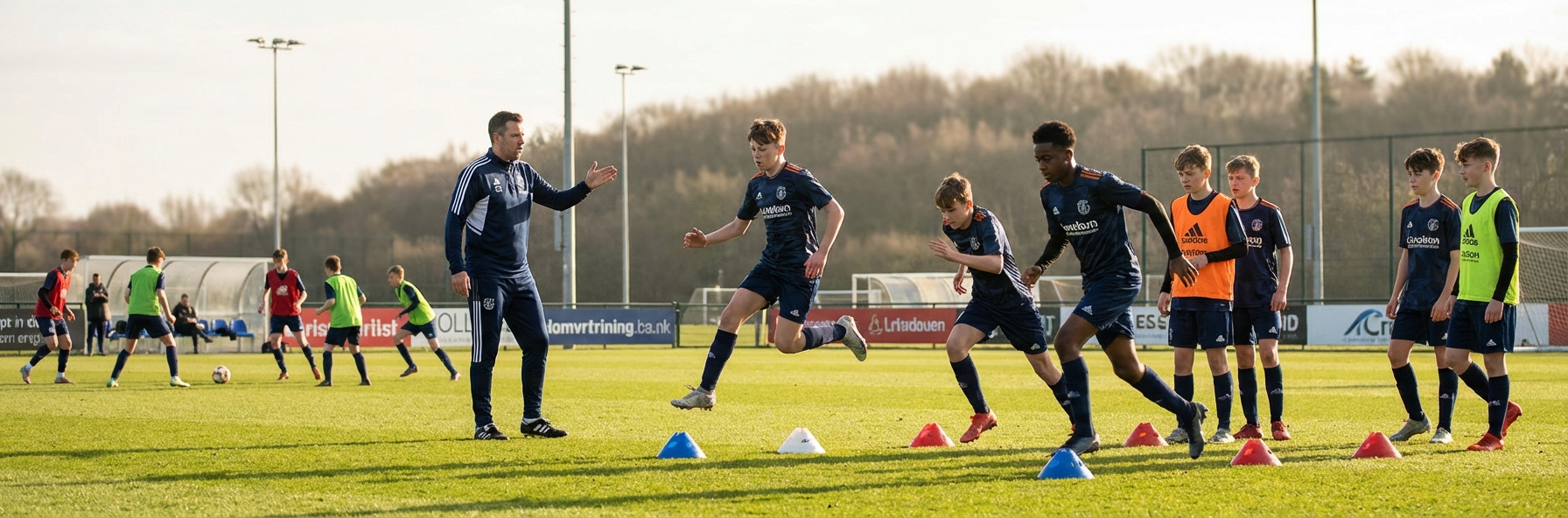
We've all seen it: kids arrive at the pitch, jog half-heartedly around some cones, do a few static stretches, then wonder why they concede in the first five minutes. Traditional warm-ups don't work for youth players because they're boring, they don't replicate match demands, and they completely fail to engage young minds.
A proper warm-up does three things: raises body temperature, activates the neuromuscular system, and sharpens mental focus. For youth players, it needs to do all three while feeling like a game.
Why Youth Warm-Ups Need to Be Different
Children aren't small adults. Their attention spans are shorter, their motivation is different, and their bodies respond better to play-based activity than structured drills. Research consistently shows that game-based warm-ups produce better physical preparation and higher engagement than traditional protocols.
The warm-up also sets the tone for the match. A fun, competitive warm-up creates positive energy. A dull one creates flat, distracted players who take 20 minutes to find their rhythm.
Game 1: Shark Attack (Ages 6-10)
Setup: 20x20 yard area. Two "sharks" without balls. Everyone else has a ball.
Rules: Players dribble around the area. Sharks try to kick balls out of the area. If your ball goes out, you become a shark. Last dribblers standing win.
What it develops: Close control under pressure, peripheral vision, changes of direction. The chase element raises heart rate quickly while the competitive format maintains engagement.
Game 2: Traffic Lights (Ages 7-12)
Setup: 25x25 yard area. All players with balls.
Rules: Coach calls colours. Green = dribble at speed. Amber = slow dribble with sole rolls. Red = stop ball under foot immediately. Add variations: "Reverse" = dribble backwards. "Roundabout" = turn 360 degrees.
What it develops: Ball mastery, listening skills, explosive starts and stops. The unpredictable commands mirror the stop-start nature of matches.
Game 3: Cops and Robbers (Ages 8-14)
Setup: 30x20 yard area with a "jail" zone in one corner. Two cops (no balls), rest are robbers (with balls).
Rules: Robbers dribble around the area. Cops tag them. Tagged players go to jail. Free robbers can release teammates by dribbling through the jail. Game ends when all robbers are jailed or time runs out.
What it develops: Dribbling at speed, awareness of others, decision-making. The team element introduces communication and cooperation.
Game 4: World Cup (Ages 9-16)
Setup: One goal, penalty area marked. Players in pairs, each pair represents a country.
Rules: Coach serves balls into the area. All pairs compete to score. If you score, your country stays in. If you concede or miss, you're eliminated. Last country standing wins the World Cup.
What it develops: Finishing under pressure, defending in chaos, quick transitions. Intensity builds naturally as fewer players compete for the ball.
Game 5: The Rondo Race (Ages 11+)
Setup: Two rondo circles (4v1 or 5v2) side by side.
Rules: Both rondos play simultaneously. First group to complete 10 consecutive passes wins. Defenders rotate on each turnover. Winning group gets to choose the next competition.
What it develops: Quick passing, movement off the ball, competitive intensity. The race element creates urgency while the possession format mimics match patterns.
Structure Your Warm-Up
Use this 12-minute template:
- Minutes 0-4: Free dribbling game (Shark Attack or Traffic Lights)
- Minutes 4-8: Movement game with competition (Cops and Robbers)
- Minutes 8-12: Game-realistic activity (World Cup or Rondo Race)
Build intensity progressively. The first game should be manageable. The last game should have players breathing hard and fully focused.
Common Mistakes to Avoid
Too much standing: If players are waiting in lines, your warm-up isn't working. Everyone should be moving constantly.
Too much instruction: Explain quickly, demonstrate once, play. Young players learn by doing, not listening.
Not enough intensity: The warm-up should feel like a mini-match. If players aren't slightly out of breath by the end, you haven't prepared them properly.
The Psychological Benefit
A brilliant warm-up does more than prepare muscles. It creates confidence, builds team cohesion, and establishes a winning mentality before kick-off. Your players should walk onto the pitch feeling sharp, connected, and ready to compete.
That's the real purpose of a warm-up. Not ticking a box. Building a team that's ready to win from the first whistle.