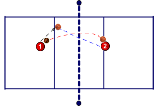
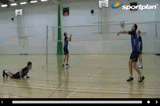
The first player starts the game with a throw over the net.
The two players on the other side of the net communicate - with one moving towards the net and the other who volleys the ball while their partner moves to meet the ball.
The player that has moved to the net faces their partner to receive and return the pass.
The player who first passed the ball moves towards the net and points to where they want the next high pass to be placed.
The player then volleys the ball over the net.
After this both players should return to a side by side playing position ready to play defence and start the drill again.
This sequence is repeated without trying to score points but in a cooperative way so that the format of the game can be learned.
When both teams play this well you can make it competitive, using only the set pass technique (no attacking shots).
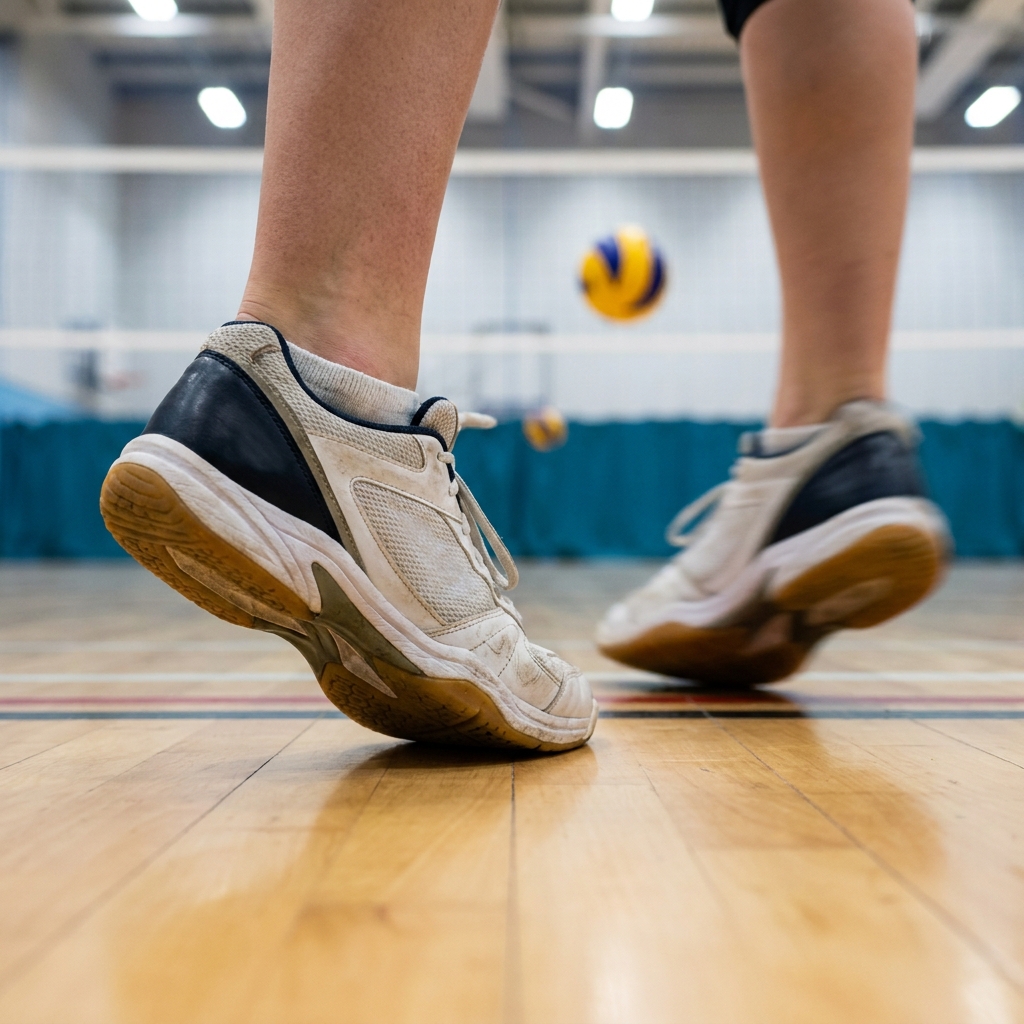
New hitters rarely miss because of their arm. They miss because of their feet. Build a reliable approach, then time it with your setter.
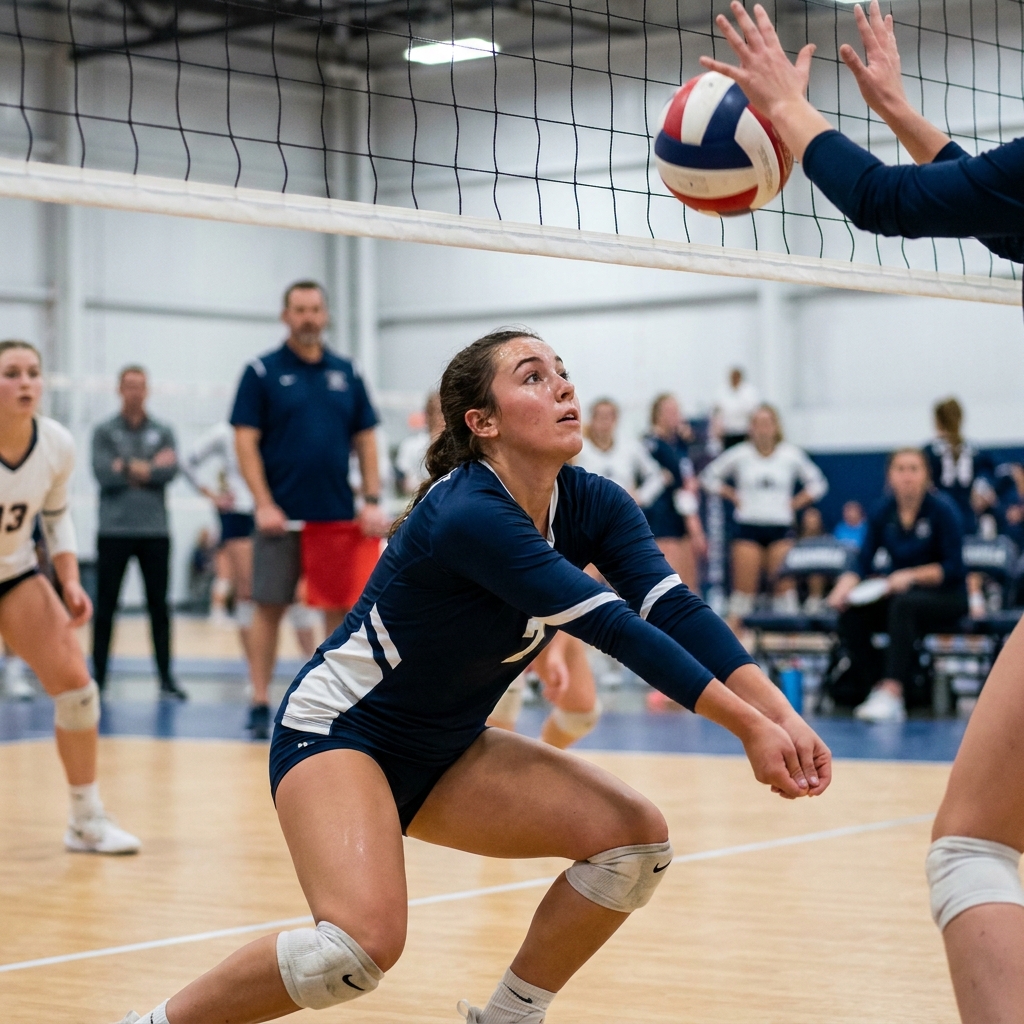
When your hitter gets stuffed, five teammates standing and watching is how you lose the point. Good attack coverage turns a blocked ball into a second swing.

Coaches spend hours correcting arms in serve receive when the real fault is almost always the feet. Fix the movement and the platform fixes itself.


Register for FREE and get coaching tips, top drills, session and more every week!