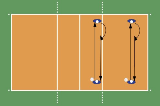
Three players stand on one side of the court with a receiver on the other.
One setter stands near to the net while another is one the baseline, and a spiker is on the wing. The receiver passes the ball to a setter who sets the ball up to the other setter and runs back to the baseline. The other setter now passes to the player on the wing and runs back to the baseline, while the spiker now hits a winner over the net before returning to the baseline.
Tell your players to pass and set high at the beginning so they have more time for returning but after 2-3 minutes they should start playing more flat to speed it all up.
Consecutive spikes require high-performance jumping abilities and endurance development. Running is what make athletes fit and may be combined with technical tasks as it is here in the drill.
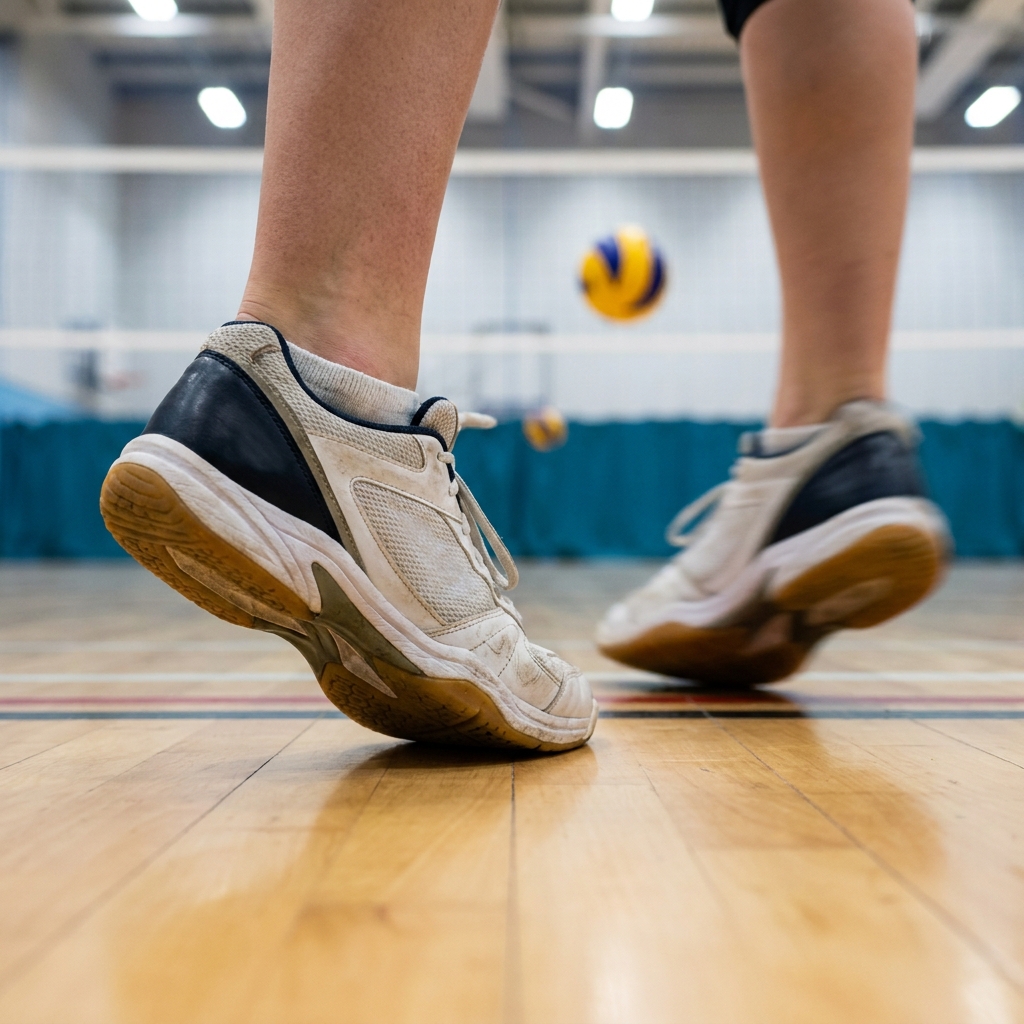
New hitters rarely miss because of their arm. They miss because of their feet. Build a reliable approach, then time it with your setter.
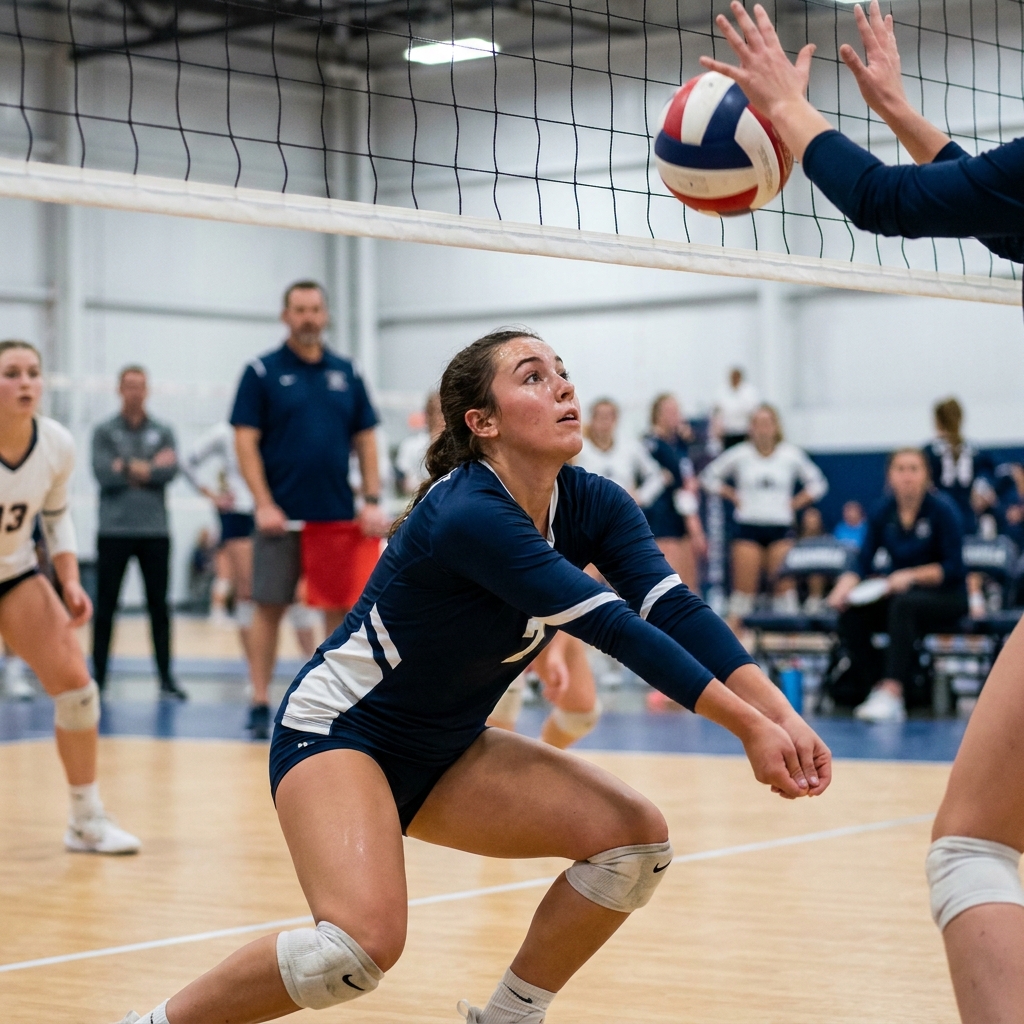
When your hitter gets stuffed, five teammates standing and watching is how you lose the point. Good attack coverage turns a blocked ball into a second swing.
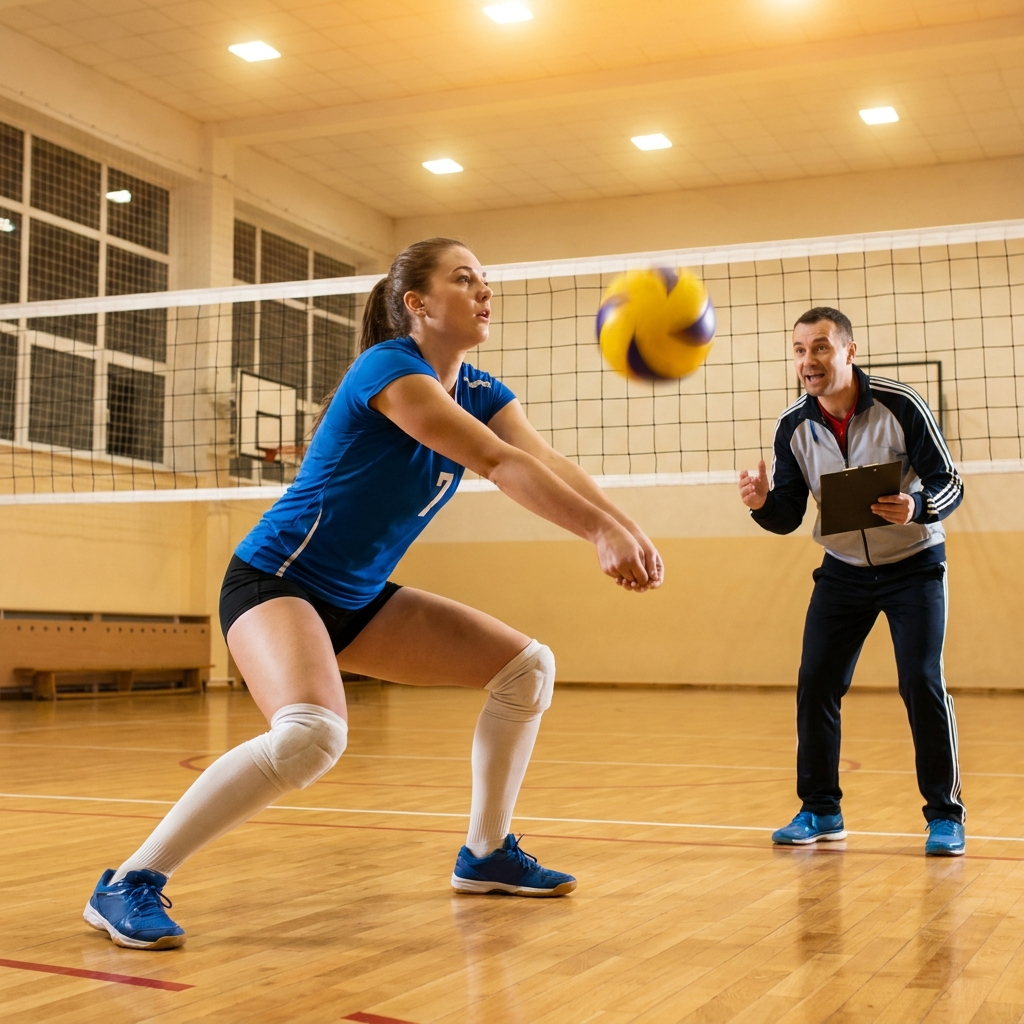
Coaches spend hours correcting arms in serve receive when the real fault is almost always the feet. Fix the movement and the platform fixes itself.


Register for FREE and get coaching tips, top drills, session and more every week!