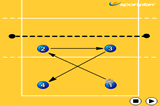
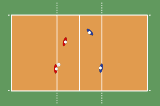
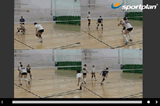
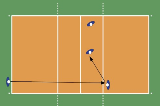
2 players stand on either side of the net, and the receiver starts with the ball by overhand passing it across the net. This player then passes to their team mate who overhand passes it back for the spike. The receivers are ready to dig the ball back across the court. Have receivers changing positions after every 4 attempts.
Digging and changing position requires players to be able to move quickly when in a low position, enabling them to be more efficient when digging. Being in a low position also helps players assess the ball's trajectory.
When coaching pro players, you may ask the receivers to have their back turned to the net and on the coach's call they turn and dig the ball back, requiring them to react quickly.
New hitters rarely miss because of their arm. They miss because of their feet. Build a reliable approach, then time it with your setter.
When your hitter gets stuffed, five teammates standing and watching is how you lose the point. Good attack coverage turns a blocked ball into a second swing.

Coaches spend hours correcting arms in serve receive when the real fault is almost always the feet. Fix the movement and the platform fixes itself.


Register for FREE and get coaching tips, top drills, session and more every week!