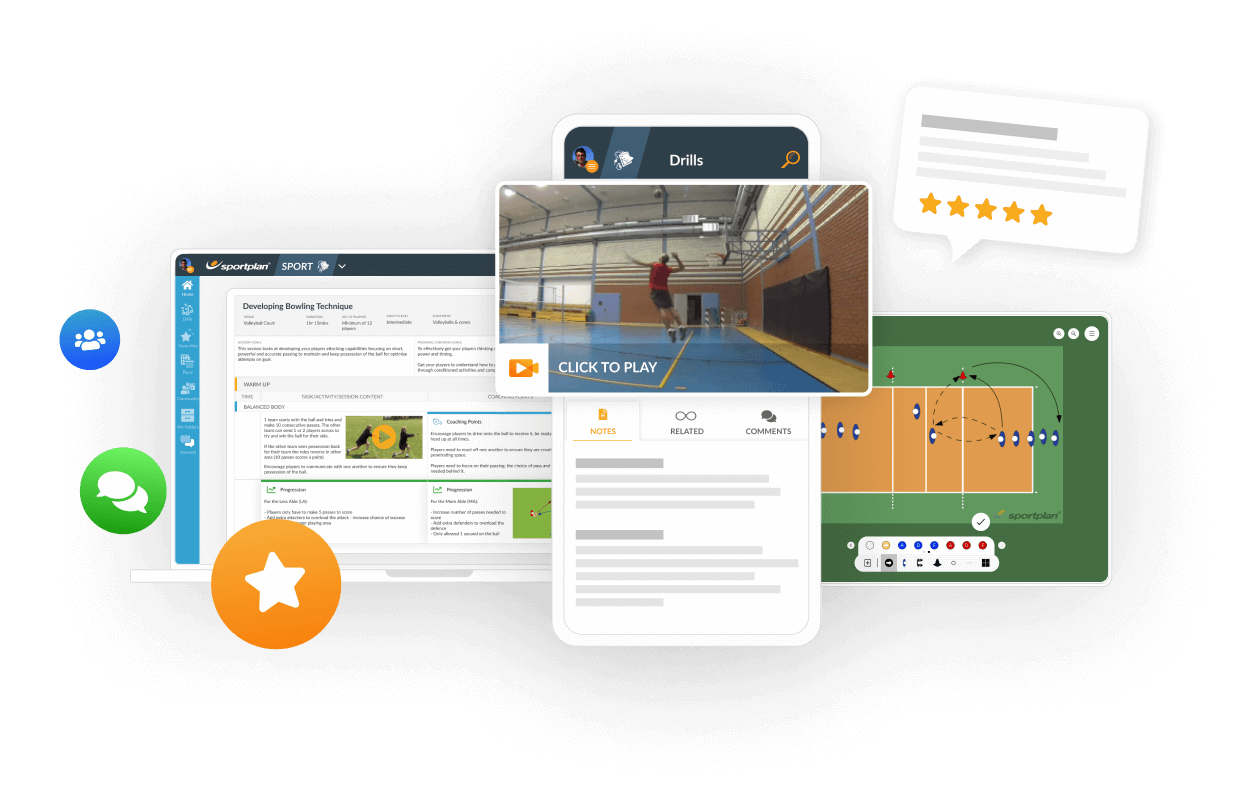
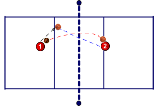
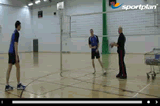
Players start this passing pattern with a defensive dig to themselves, followed by a push into the air and then set the ball across the net to player 2 who repeats this pattern.
Dig - (self) Pass - Set
The Defensive Dig:
Players should stand with their knees bent and legs just wider than shoulder width apart. Eyes on the ball to the point of contact with wrists, ensuring their wrists are together and their head should be level with the ball at point of contact
The Set:
Eyes up looking at ball trajectory and with knees bent, standing on the balls of their feet. Players should bend their elbows outwards and push through the ball with fingers.
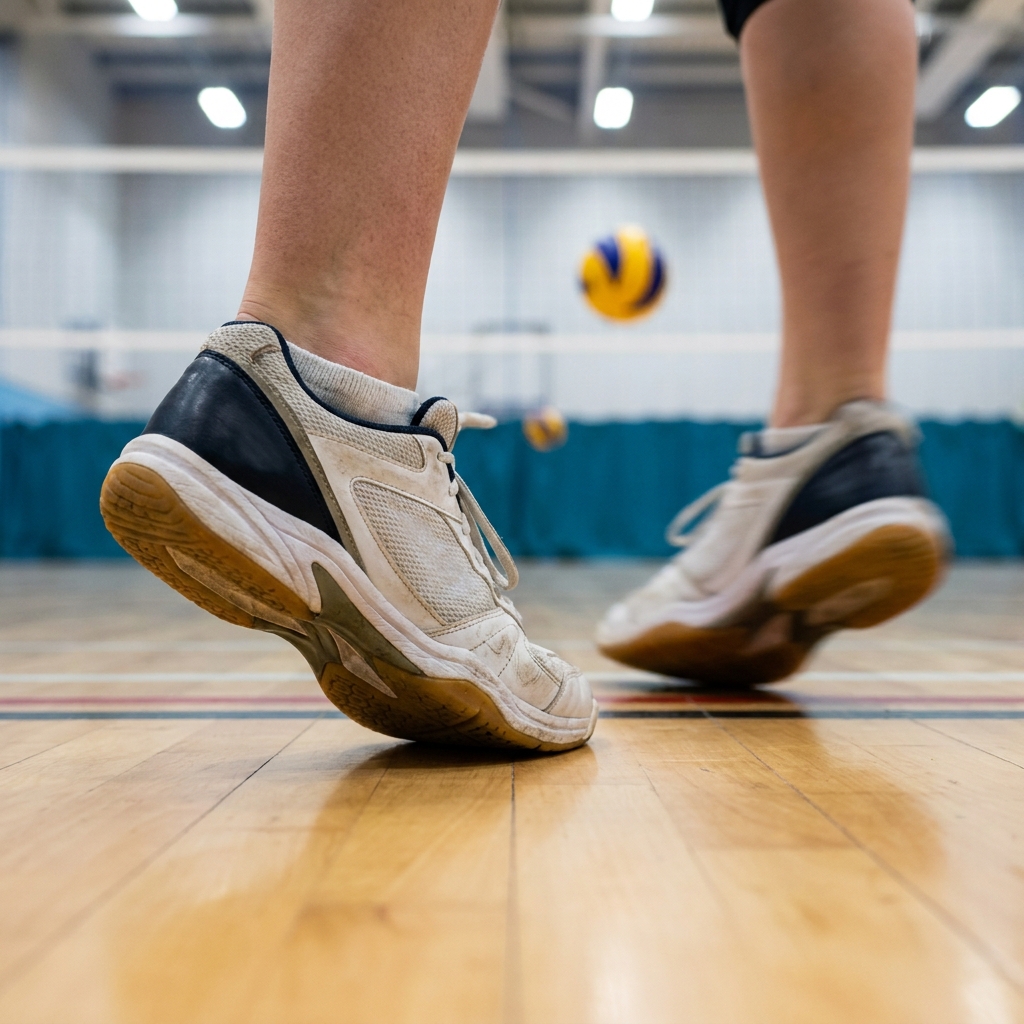
New hitters rarely miss because of their arm. They miss because of their feet. Build a reliable approach, then time it with your setter.
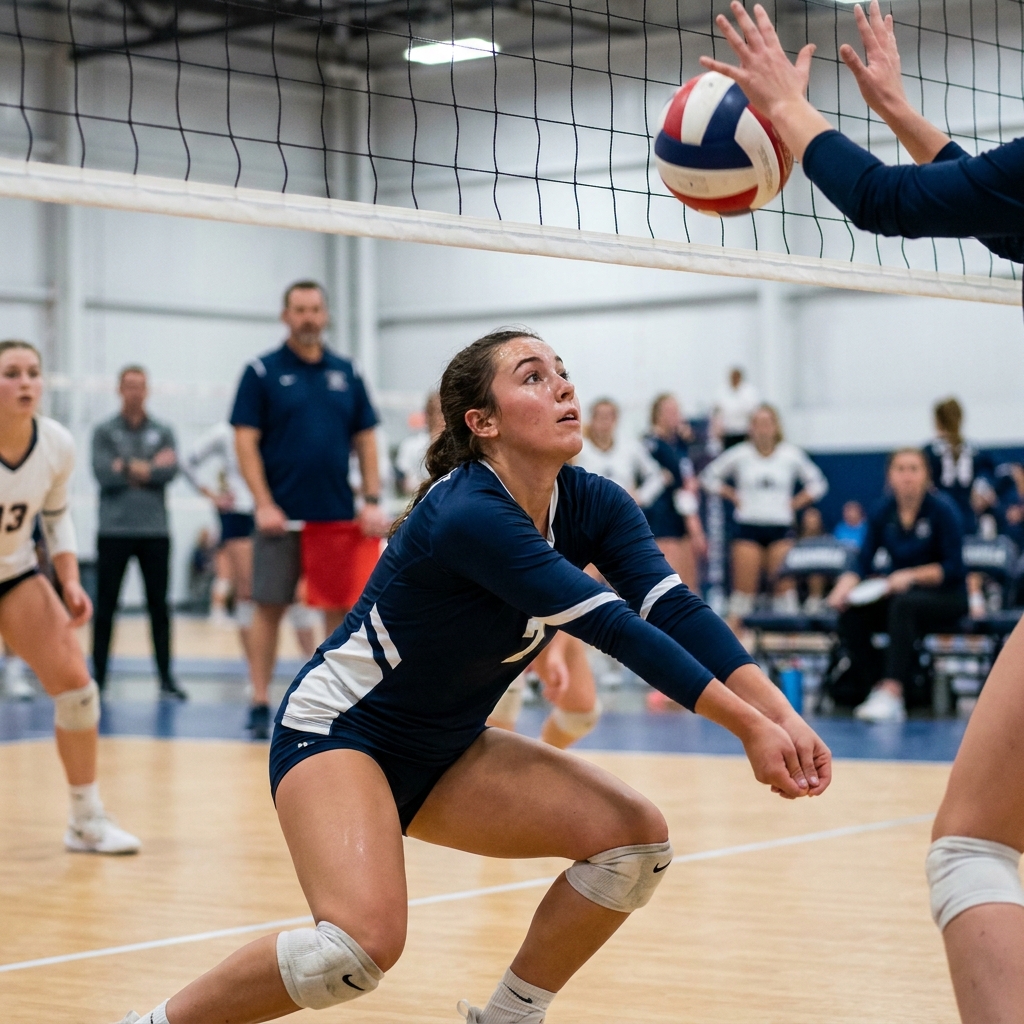
When your hitter gets stuffed, five teammates standing and watching is how you lose the point. Good attack coverage turns a blocked ball into a second swing.
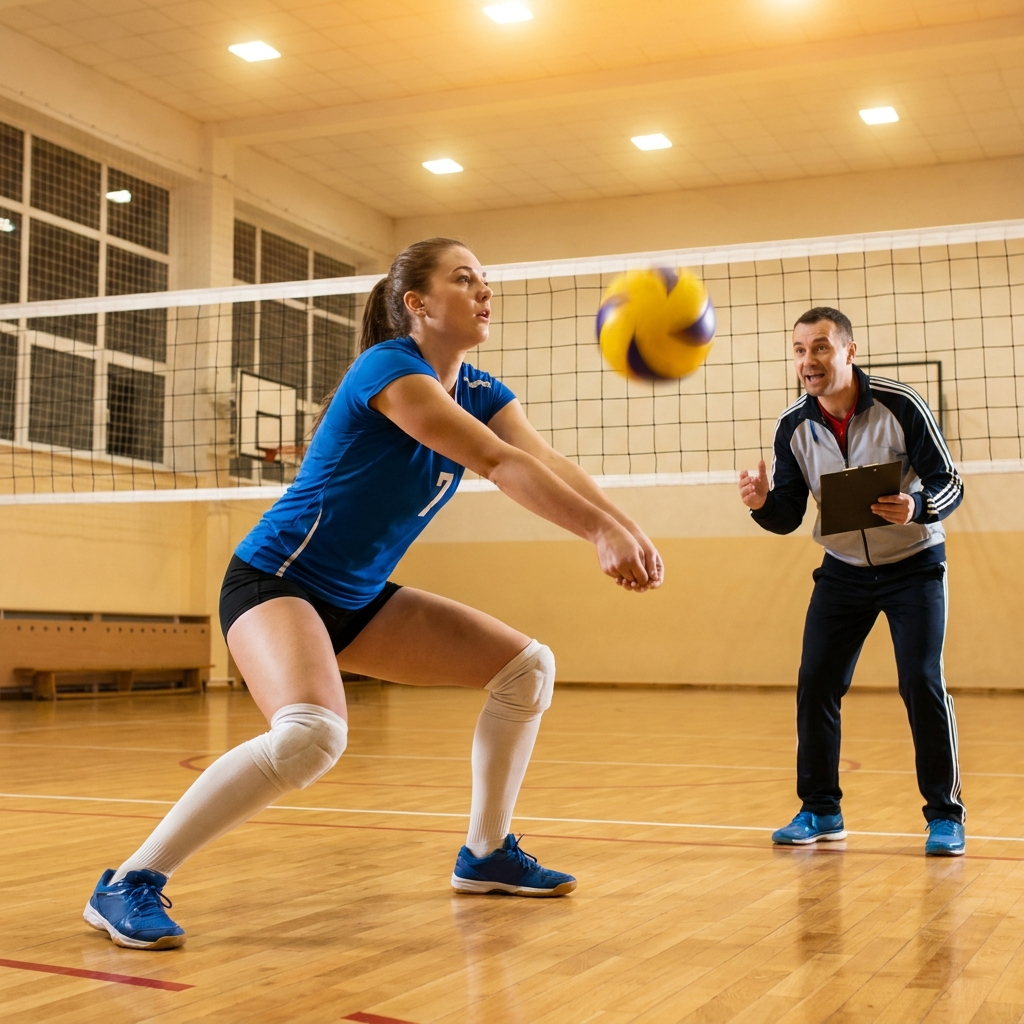
Coaches spend hours correcting arms in serve receive when the real fault is almost always the feet. Fix the movement and the platform fixes itself.


Register for FREE and get coaching tips, top drills, session and more every week!