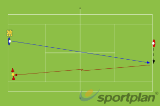
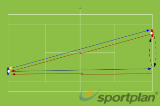
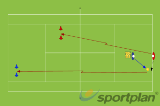
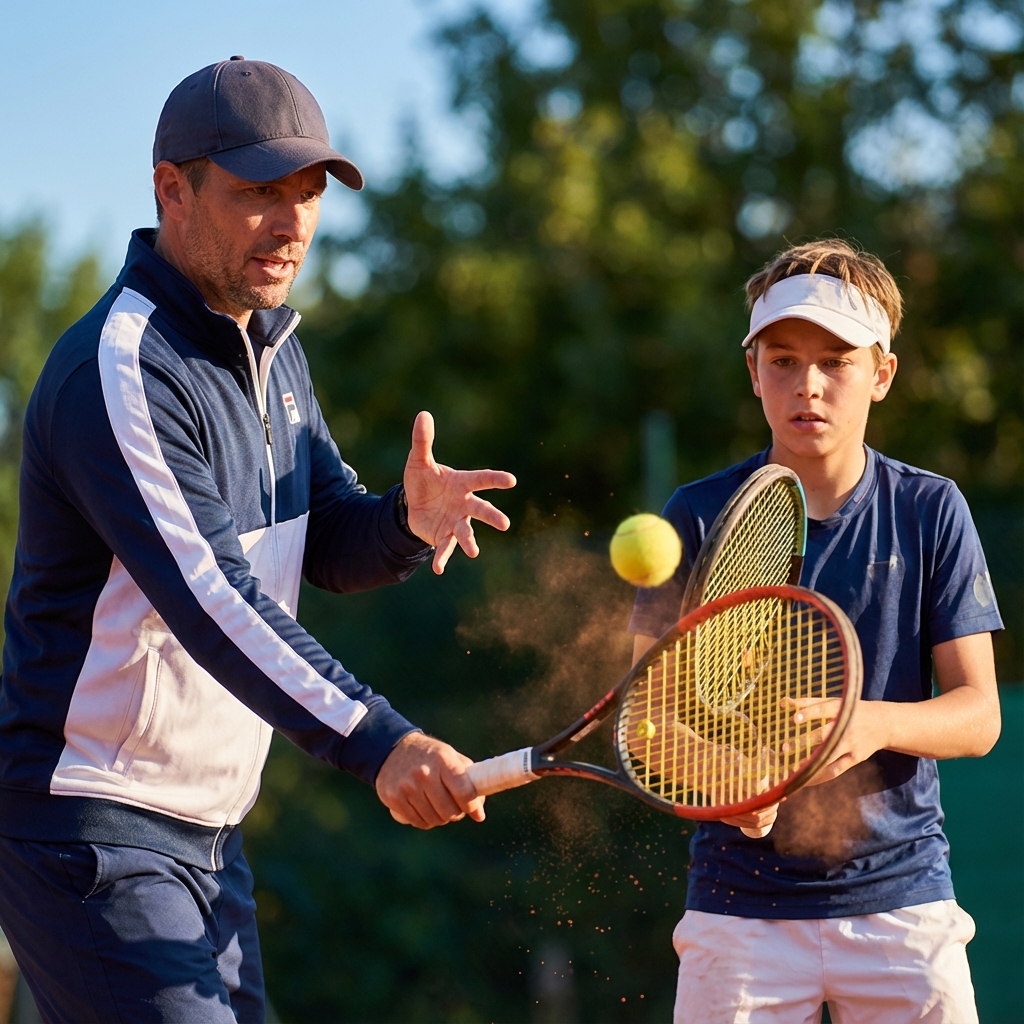
Standing in the deuce corner the coach feeds the ball to the player from the opposite end of the court.
The coach should move the player around the court by feeding the ball to different parts of the court, but the player is only allowed to hit forehands to the deuce corner.
In this exercise, the player works on consistency and placement while using forehand from the full court. The player doesn't know where the coach will hit the ball so the environment resembles match conditions.
For intermediate players, coach can hit slower balls to make players succeed often. For more advanced athletes, intensity and volume should be raised to make significant improvements.
Discussion
Spanish players are great examples of combining 2 skills to win tennis matches - footwork and forehand. Carlos Moya in the past and Rafael Nadal nowadays are players who run from one corner to the other and hit only forehands.
Speed, stamina, strength and technique are areas that have to be addressed to achieve level of these great pros.
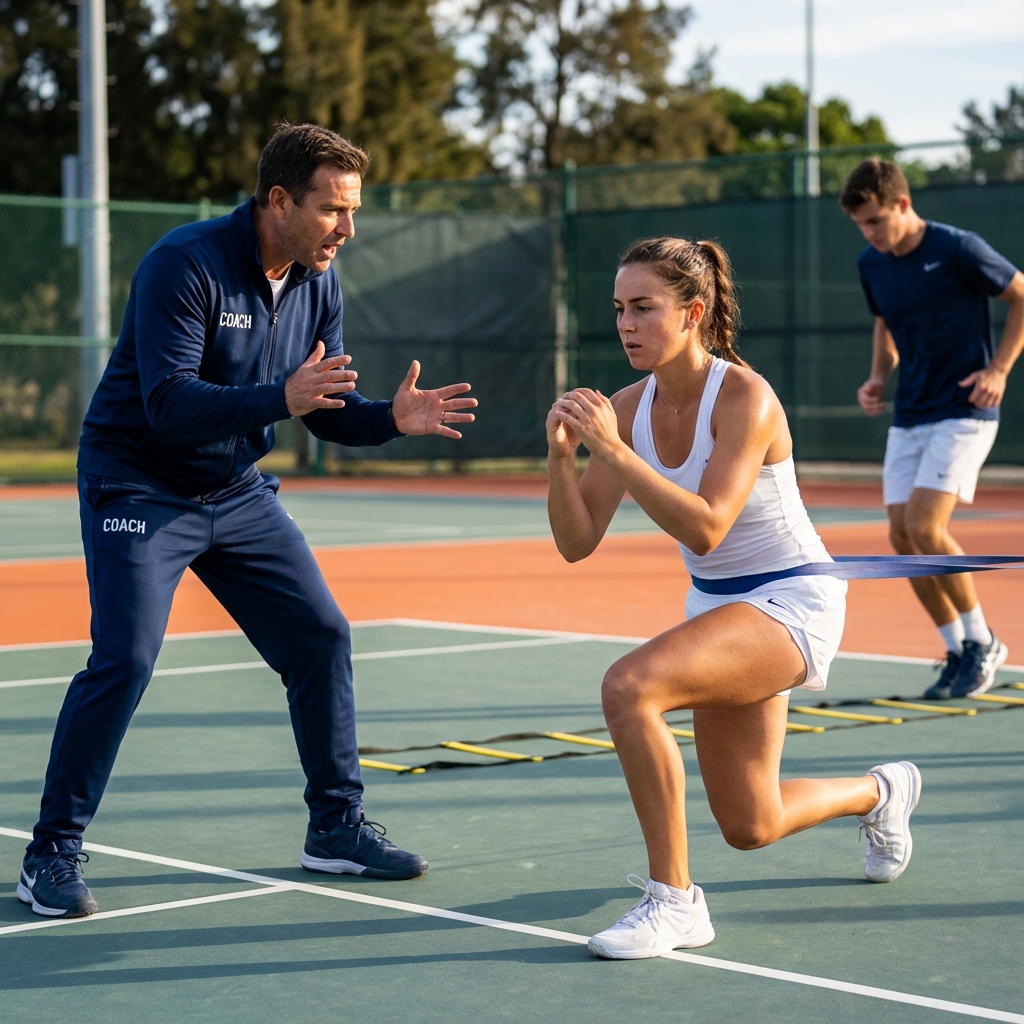
Tennis demands a unique combination of endurance, power, agility, and flexibility. Physical preparation determines how long careers last and how players perform when it matters most.
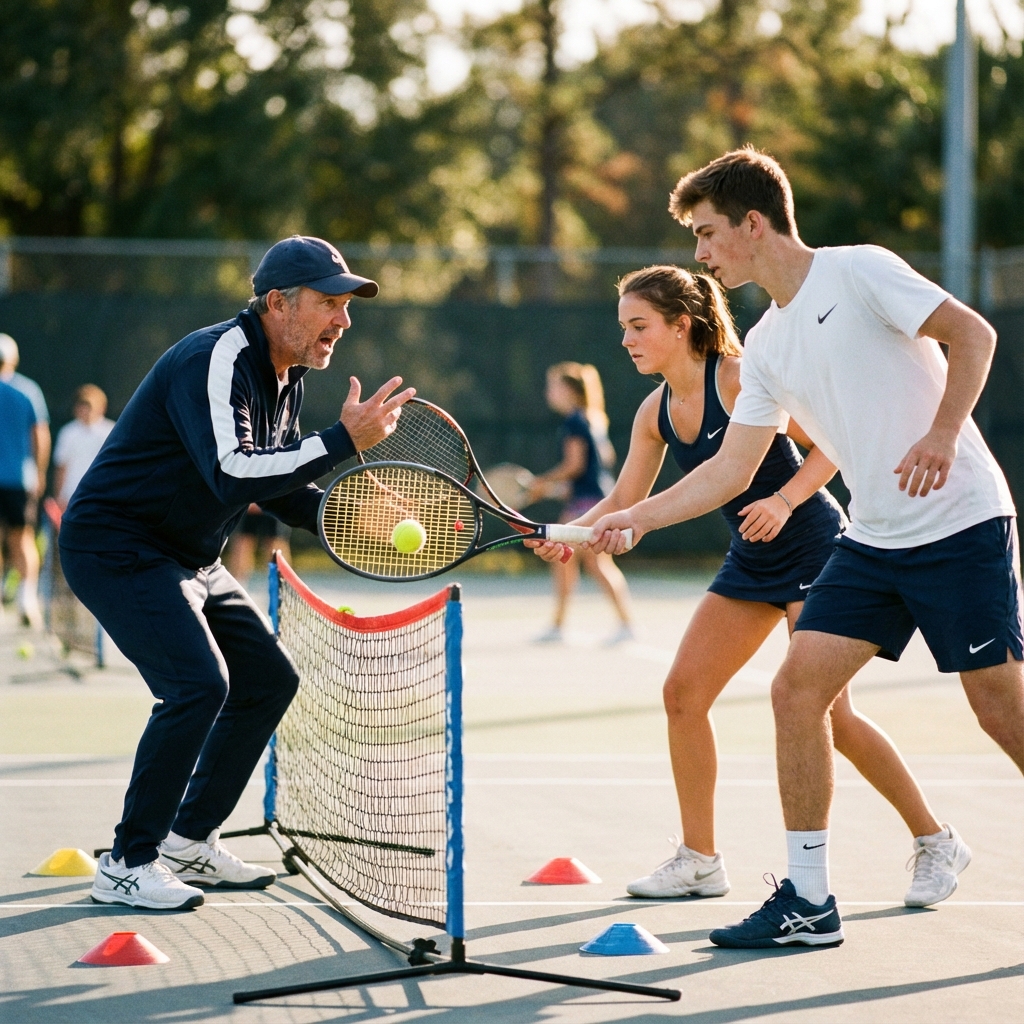
Ecological dynamics is transforming tennis coaching. This constraints-led approach develops adaptable, creative players who can solve problems in competition, not just execute drilled patterns.
The one-handed backhand is becoming rare, but when executed well, it remains one of tennis's most elegant and effective shots. Is it a dying art or a tactical advantage?


Register for FREE and get coaching tips, top drills, session and more every week!