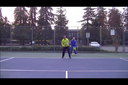
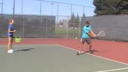
The coach stands behind the player keeping the band in hands. Resistance band is attached to the player's racquet and long enough to allow player to get to solid point of contact. The player imitates backhand stroke with emphasis on point of contact.
The coach stands behind the player keeping the band in hands. Resistance band is attached to the player's racquet and long enough to allow player to get to solid point of contact. The player imitates backhand stroke with emphasis on point of contact.
In this drill the player works on proper motion. Having resistance that restricts the player to go only to the limited spot is a great teaching tool that coaches can use to improve point of contact. By performing the same backhand stroke over and over again and stopping at point of contact the player builds muscle memory that will be helpful while hitting the ball. This drill can be repetitive because of lack of changing environment so coach should always give specific number of repetitions to make sure that high motivation and high quality are present in all strokes.
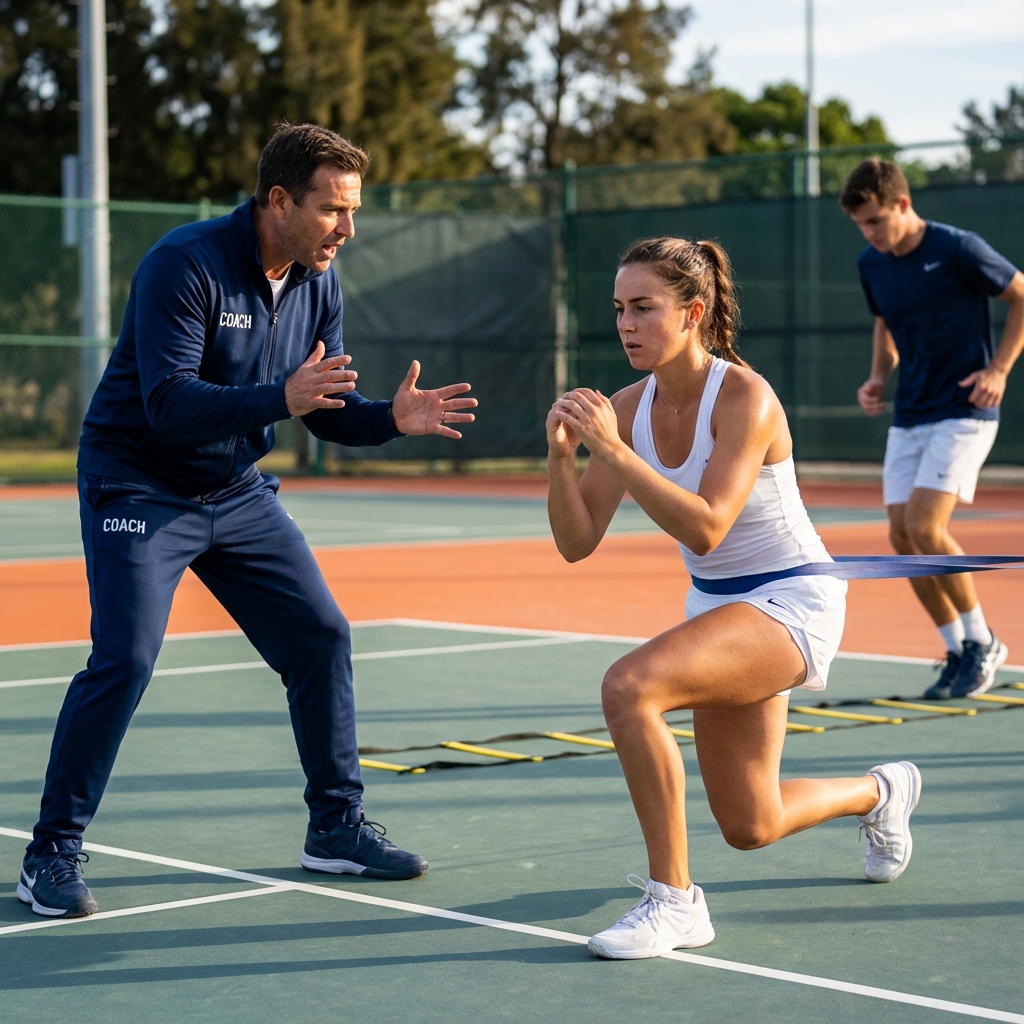
Tennis demands a unique combination of endurance, power, agility, and flexibility. Physical preparation determines how long careers last and how players perform when it matters most.
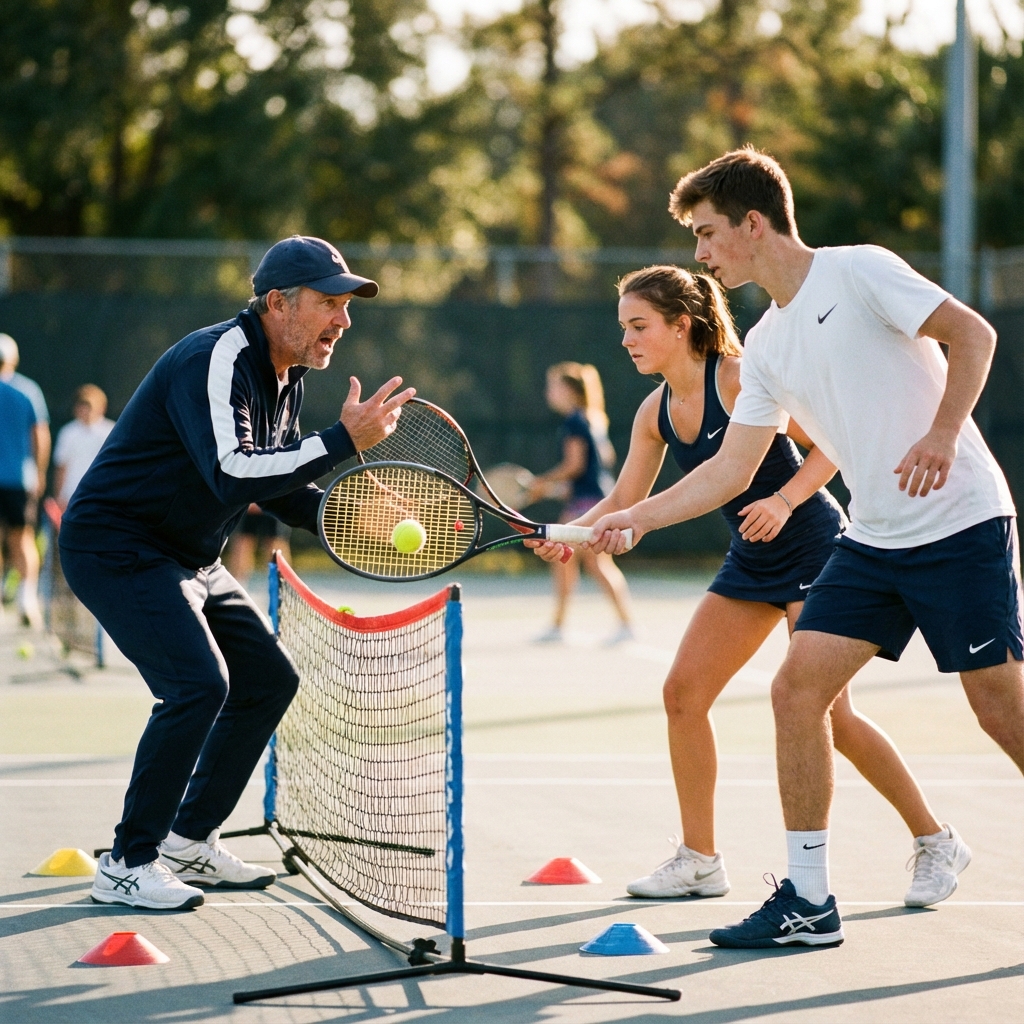
Ecological dynamics is transforming tennis coaching. This constraints-led approach develops adaptable, creative players who can solve problems in competition, not just execute drilled patterns.
The one-handed backhand is becoming rare, but when executed well, it remains one of tennis's most elegant and effective shots. Is it a dying art or a tactical advantage?


Register for FREE and get coaching tips, top drills, session and more every week!