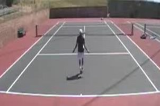
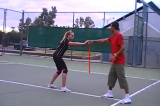
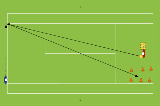
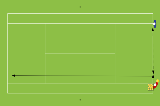
Player stands facing the wall and hits forehand volleys against the wall. After each hit, the player moves forward and closer to the wall. Once at the wall, the player continues to hit the ball against the wall but now moves back to their starting position. The aim is for the ball to not touch the floor.
It is important that players understand the concept of moving while being at the net because lack of knowledge can result in losing many points because of the poor positioning. Moving forward is a crucial part of the net game in singles and doubles while movement back is an important part of doubles game. Watching the best doubles players in the world (Bryan brothers, Alexander Peya, Radek Stepanek), it is clearly visible how big a role footwork plays in the tennis game.
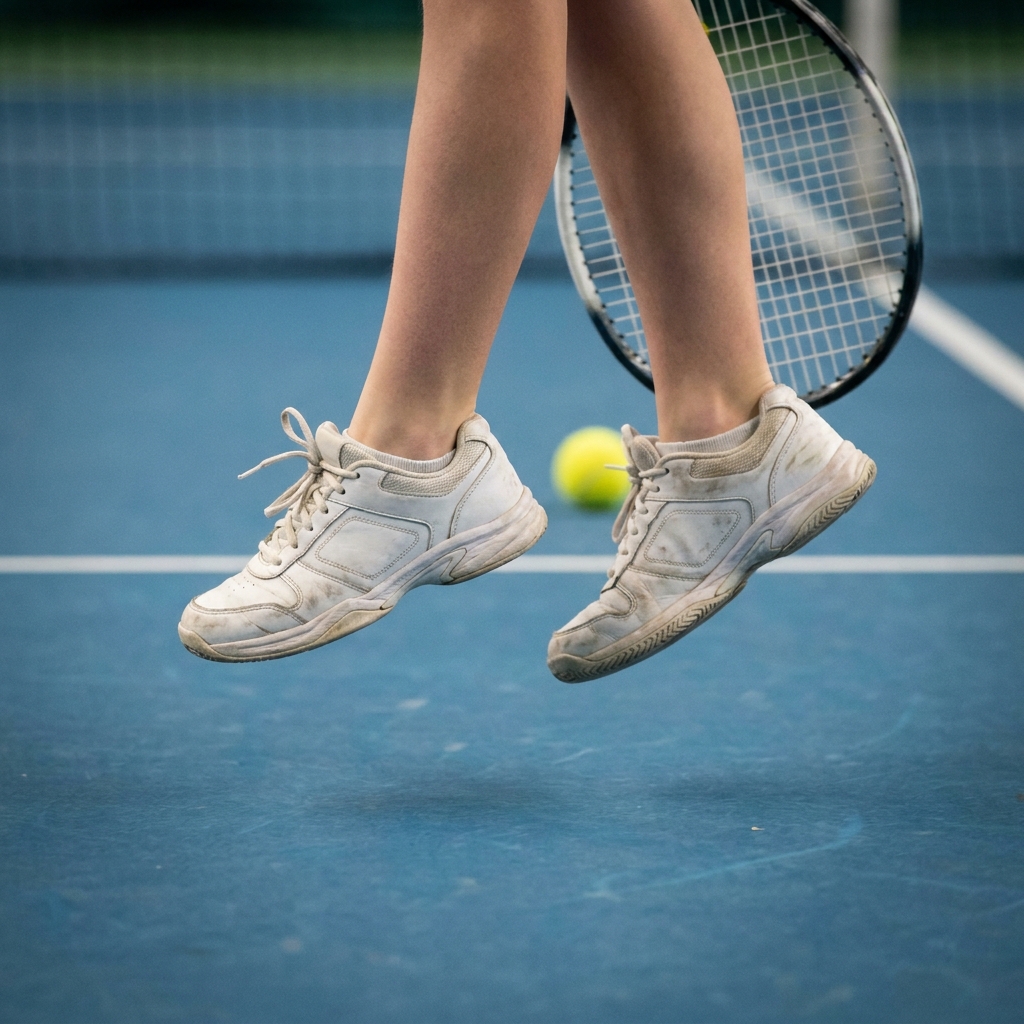
Indoor courts give players less time and less room. Help them sharpen their split step, shorten their swing and stay calm, and winter becomes a season of real progress.

A tiebreak is a short sprint where every point is worth the same as a break of serve. The players who win them are rarely the ones who hit hardest. Here is how to coach the patterns, habits and scoreboard thinking that win the big points.

Most club players practise the serve on its own and then have no idea what to do with the ball that comes back. Serve plus one is the pattern that turns a good serve into a won point.


Register for FREE and get coaching tips, top drills, session and more every week!