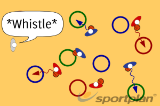
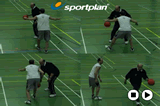
Players are lined up on the baseline. The coach will be on the other side of the court.
When the whistle is blown the players will start to jog. When the whistle is blown again the players will perform a quick stop to simulate them catching the ball in triple threat ready to shoot.
This is continued to the other end of the court.
A quick stop is performed either when dribbling the ball or receiving the ball, you will jump slightly in the air and land on both feet at the same time. Doing this gives you the ability to use both feet as a pivot foot.
Make sure players have a good solid base when landing in the quick stop and that all aspects of the triple threat position are correct:
Knees and back slightly bent, ball just below the shoulder, Feet just over shoulder width apart.
Progression:
After you blow the whistle the players will land on a quick stop and then pretend to shoot an imaginary ball.
Coaches can use this time to see early on what players will need help correcting their form.
Four players standing still make every ball handler's job harder. Teach V-cuts, L-cuts and back cuts so your team gets open and punishes defenders who overplay.
Good team defence is five players guarding the ball, not five separate one-on-ones. The shell drill is where that starts, so here is how to teach help-side positioning and rotations from the first week of the season.
Rebounding is the least glamorous thing in basketball and one of the most decisive. It is also almost entirely a habit, which means it is entirely coachable.


Register for FREE and get coaching tips, top drills, session and more every week!