Divide players into two teams.
One team will be hitting backhands and the other team forehands.
Both teams start on the same baseline.
The coach feeds balls alternating lines.
For every shot that lands in a designated area for example, in the singles court or beyond the service line that team receives a point.
If a player misses a shot they must run and touch the net and then run back and tag the next player in line.
(The coach continues to feed to the other team while a player is running.)
The first team to reach 20 wins the first round and then switch sides.
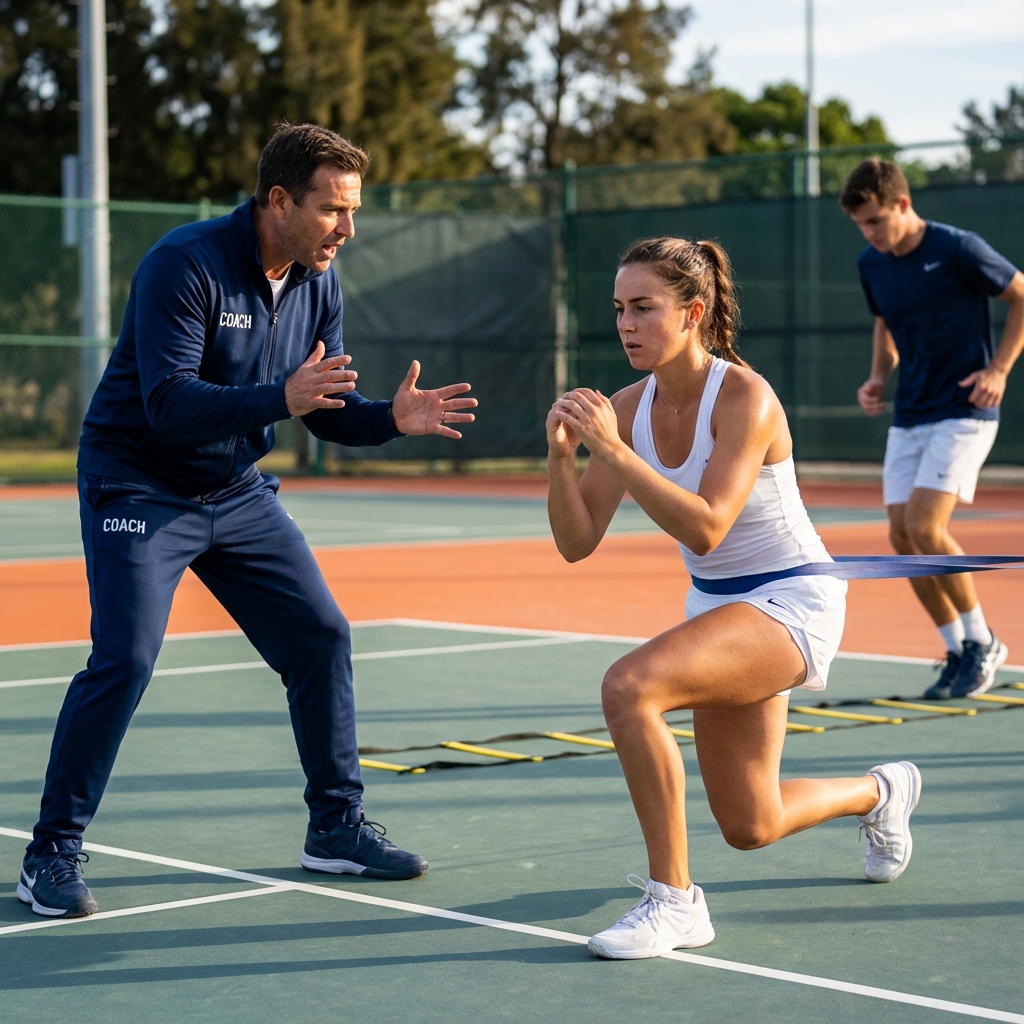
Tennis demands a unique combination of endurance, power, agility, and flexibility. Physical preparation determines how long careers last and how players perform when it matters most.
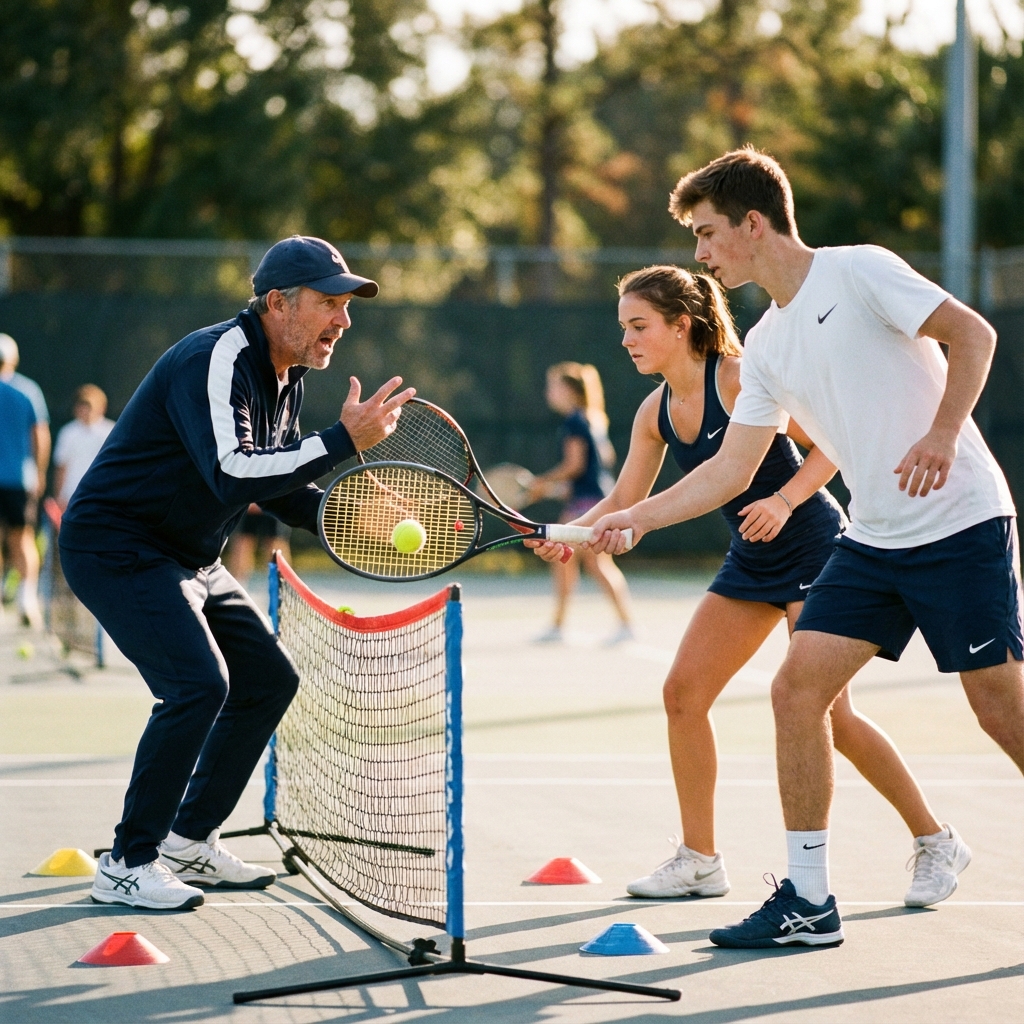
Ecological dynamics is transforming tennis coaching. This constraints-led approach develops adaptable, creative players who can solve problems in competition, not just execute drilled patterns.
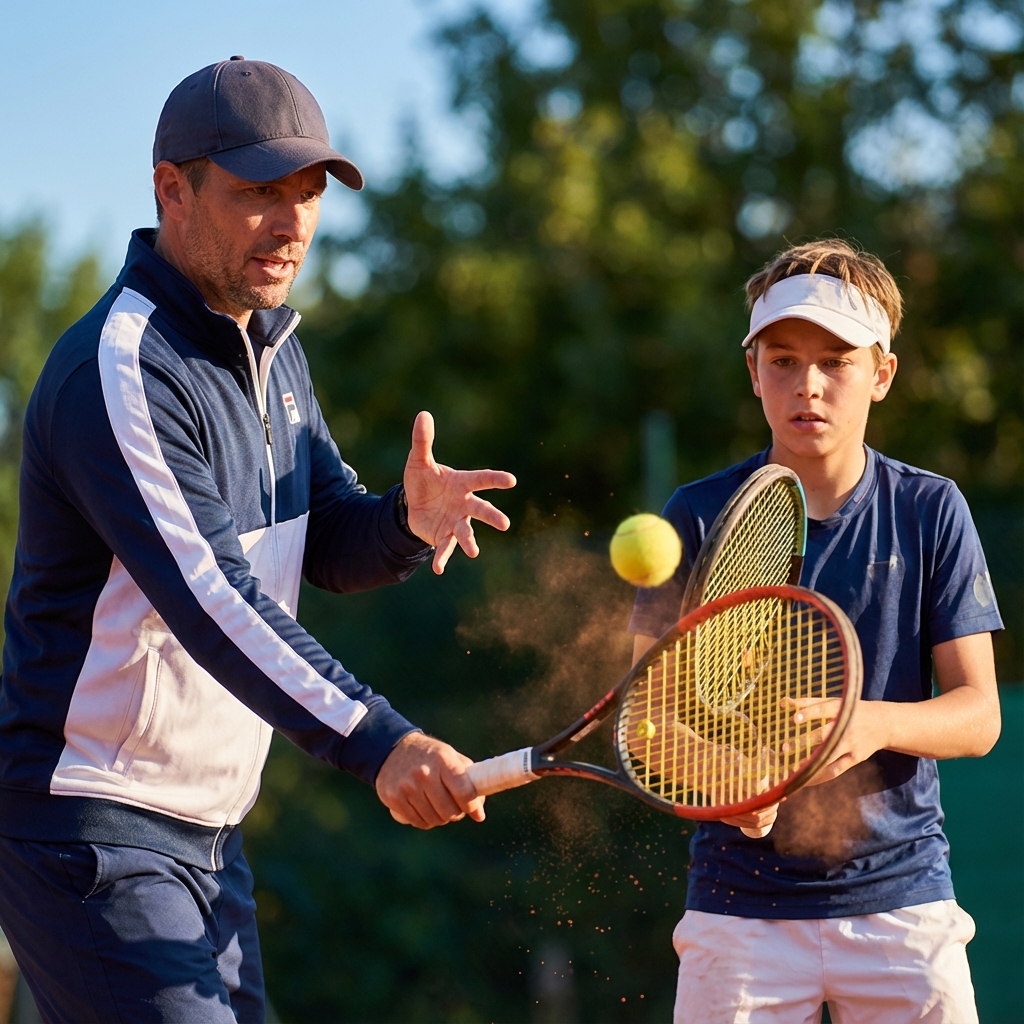
The one-handed backhand is becoming rare, but when executed well, it remains one of tennis's most elegant and effective shots. Is it a dying art or a tactical advantage?


Register for FREE and get coaching tips, top drills, session and more every week!