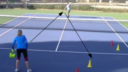
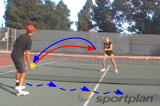
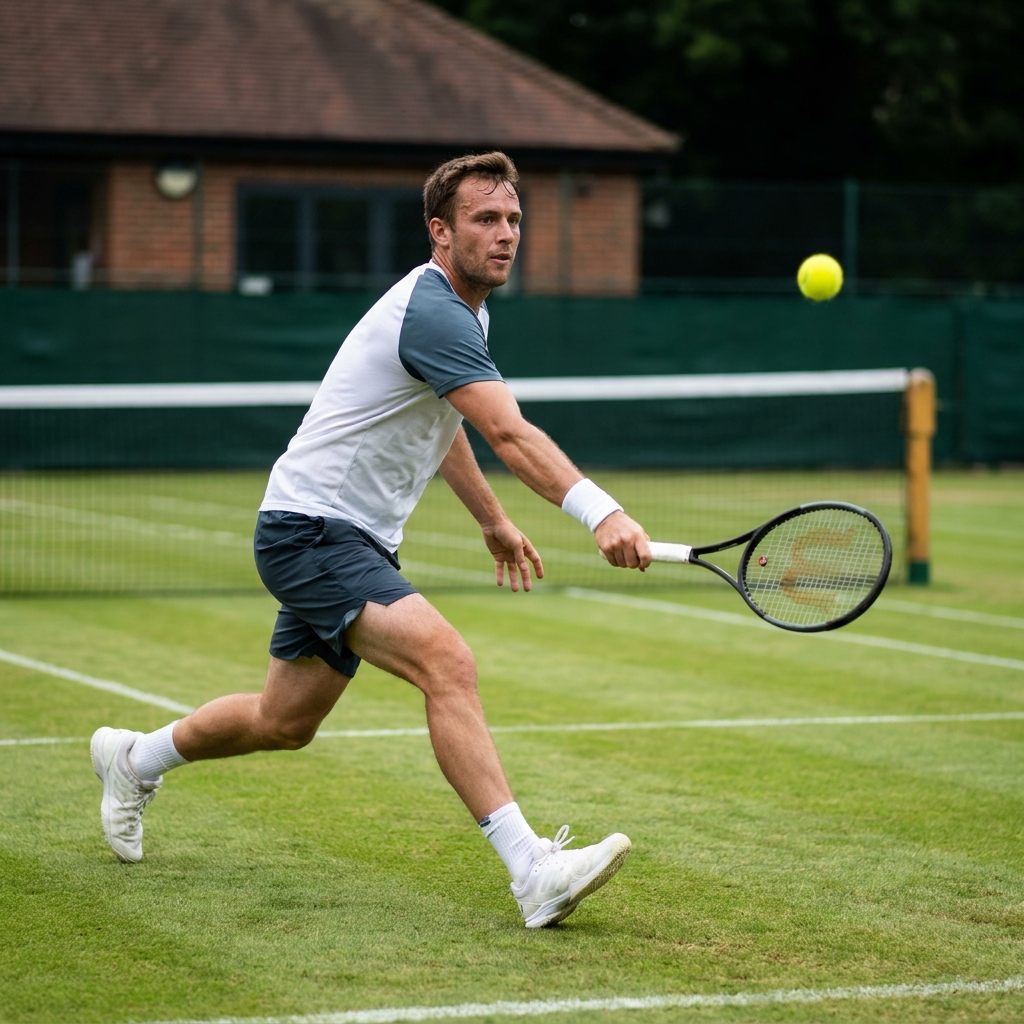
The player and coach stands close to the net. The coach changes positions on the court and throws balls to the backhand side. The player executes backhand volley back to coach with control.
Big backswing and too much power are two most common mistakes made by players while hitting volleys. It is crucial to understand that volley shot uses power from the opponents shot so there is no need to generate additional one. That is why players have to learn how to control the ball and hit it exactly where they want. Especially because the first volley's goal is to hit and have time to come closer to the net so a lack of precision or too much power can give advantage to the opponent.
In this drill, the player works on controlling skills. Good net-game players can vary pace, spin and racquet's face position to achieve control and hit the ball where they want. This exercise gives a good visual feedback to players where they should aim and additionally it looks like a rally between the player and coach so both will try to make it as long as possible. The coach can vary difficulty by changing positions, throwing the ball faster or forcing player to hit from more uncomfortable positions. For more advanced players, the coach can hit with player to shorten reaction time and observe whether control is maintained.
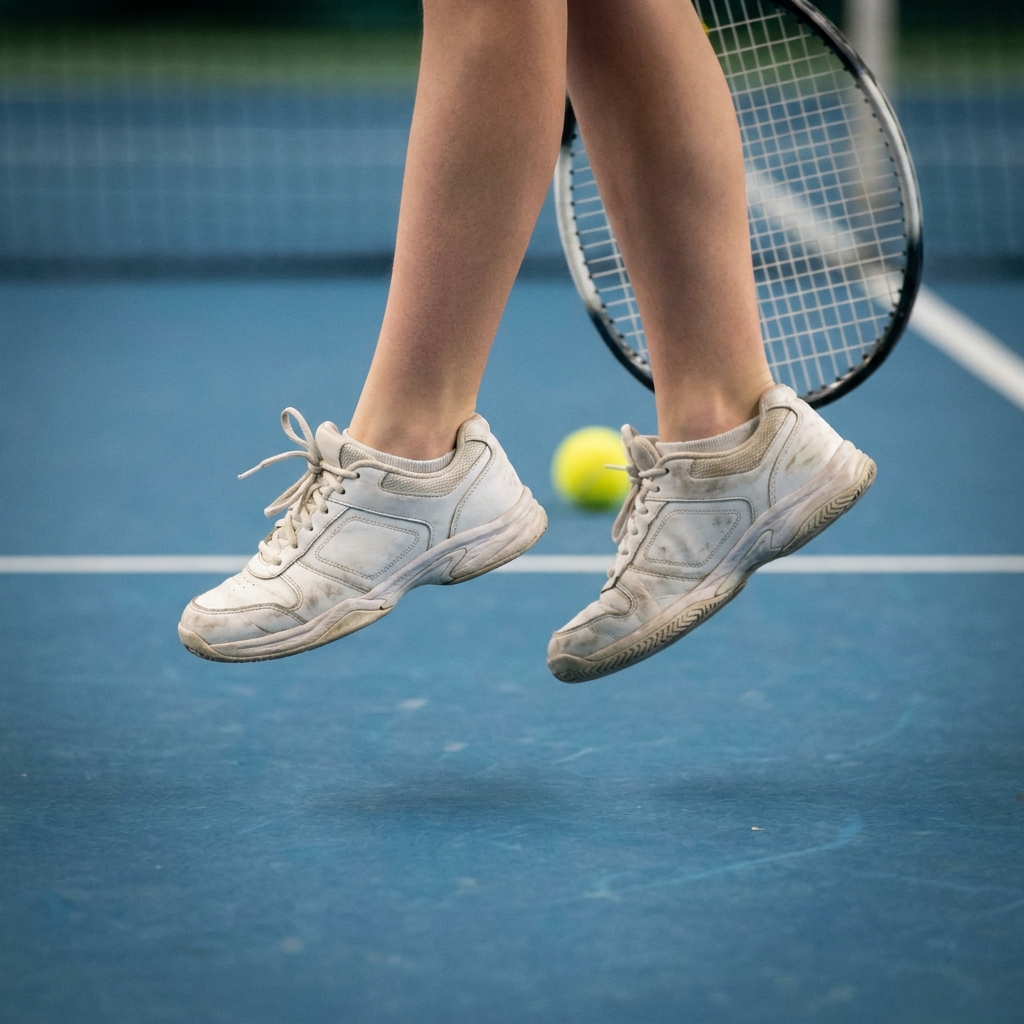
Indoor courts give players less time and less room. Help them sharpen their split step, shorten their swing and stay calm, and winter becomes a season of real progress.
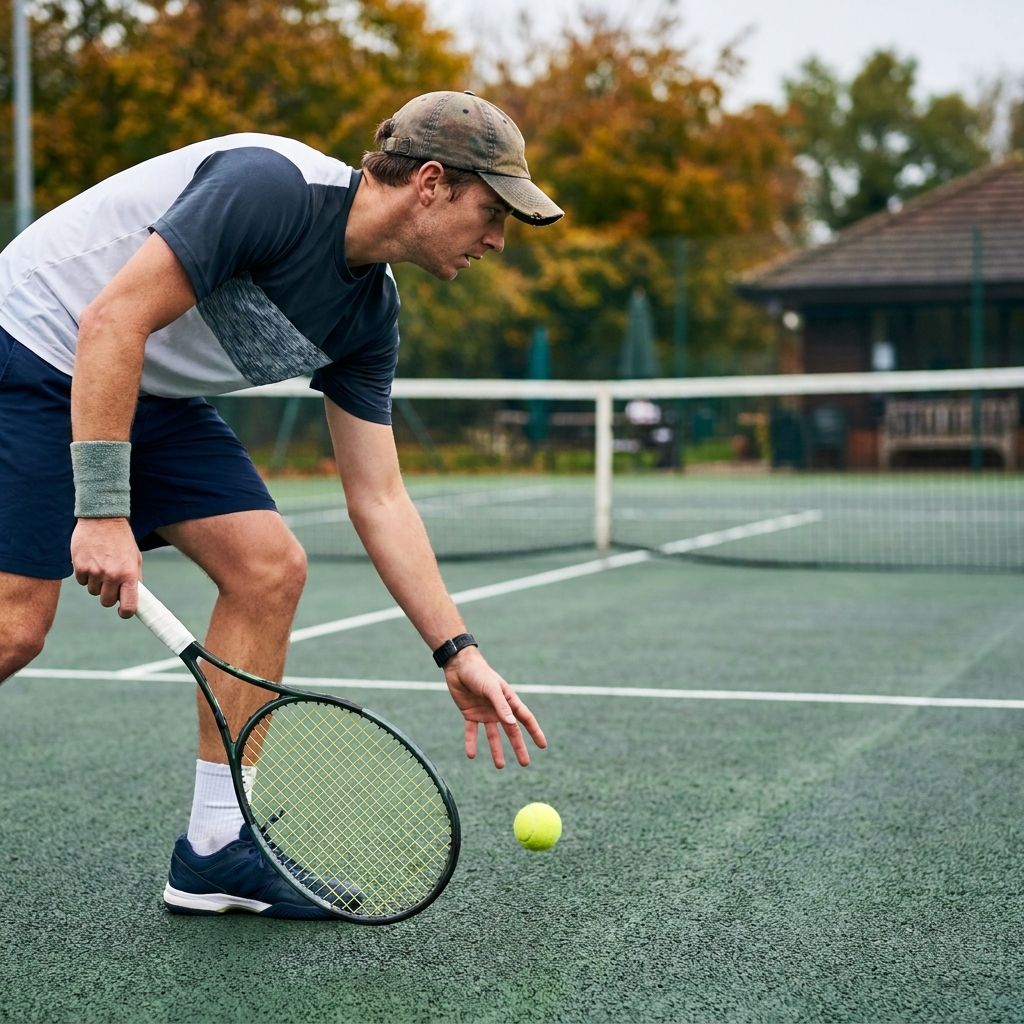
A tiebreak is a short sprint where every point is worth the same as a break of serve. The players who win them are rarely the ones who hit hardest. Here is how to coach the patterns, habits and scoreboard thinking that win the big points.
Most club players practise the serve on its own and then have no idea what to do with the ball that comes back. Serve plus one is the pattern that turns a good serve into a won point.


Register for FREE and get coaching tips, top drills, session and more every week!