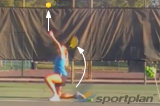
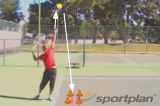
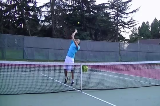
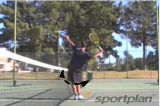
Player stands facing the back fence.
Player imitates serving motion. Player reaches as high as she can with the racquet and touches the fence with the top edge.
In this drill, player works on high point of contact. Using the back fence is a helpful tool that provides immediate feedback for the player. Players who are well coordinated can add leg action to reach the higher spots on the fence.
A high point of contact is a major problem for many beginners. Being able to "reach up" is a first step to avoid net-mistakes and make more serves in.
Coach should explain to players that higher they hit, the better the chance they will clear the net so this visual cue can help players to correct this technical flaw.
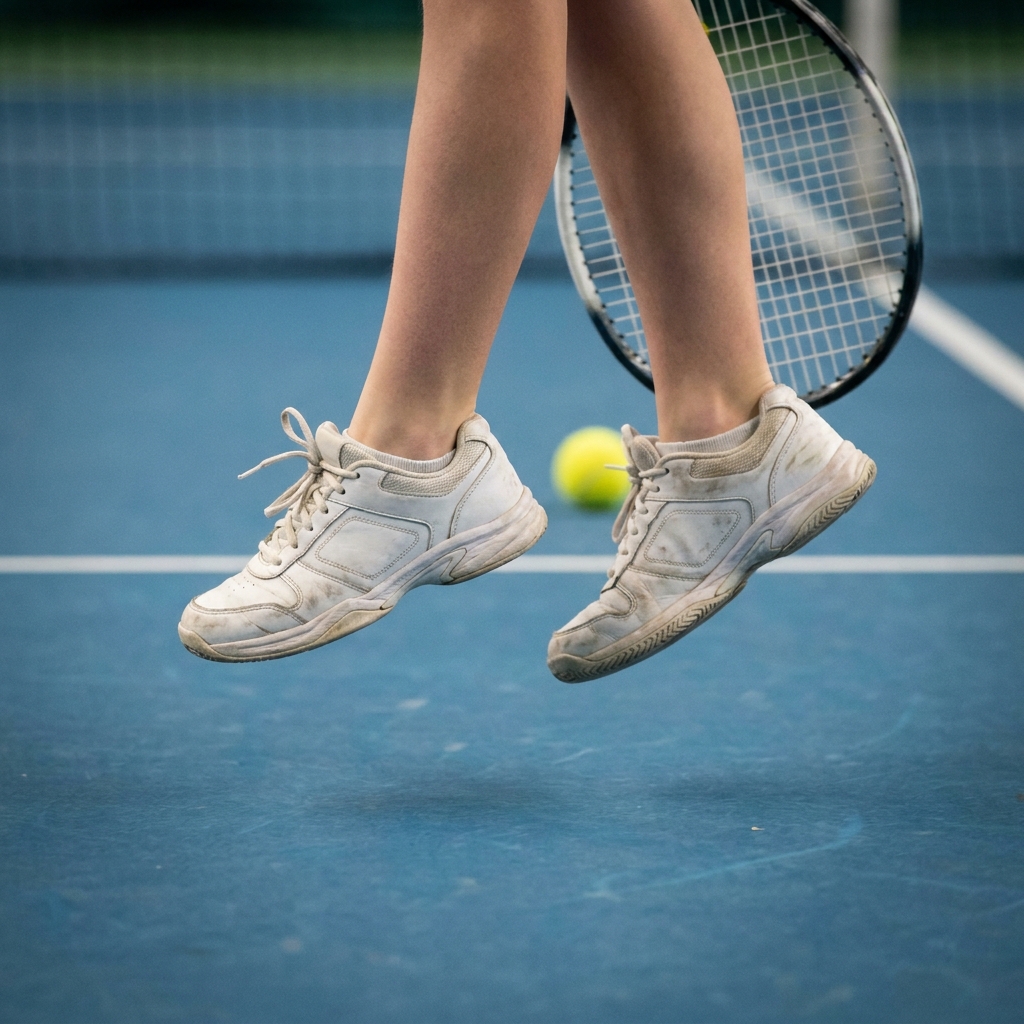
Indoor courts give players less time and less room. Help them sharpen their split step, shorten their swing and stay calm, and winter becomes a season of real progress.
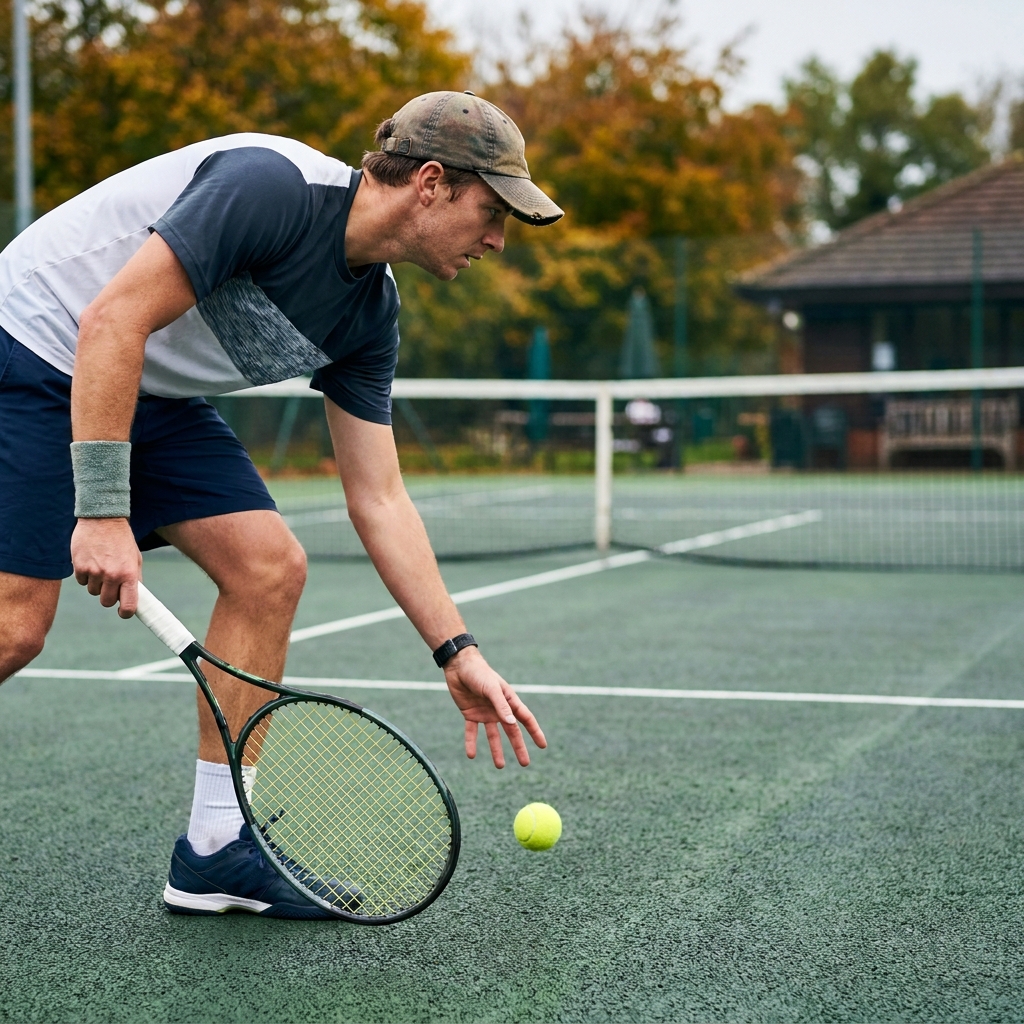
A tiebreak is a short sprint where every point is worth the same as a break of serve. The players who win them are rarely the ones who hit hardest. Here is how to coach the patterns, habits and scoreboard thinking that win the big points.
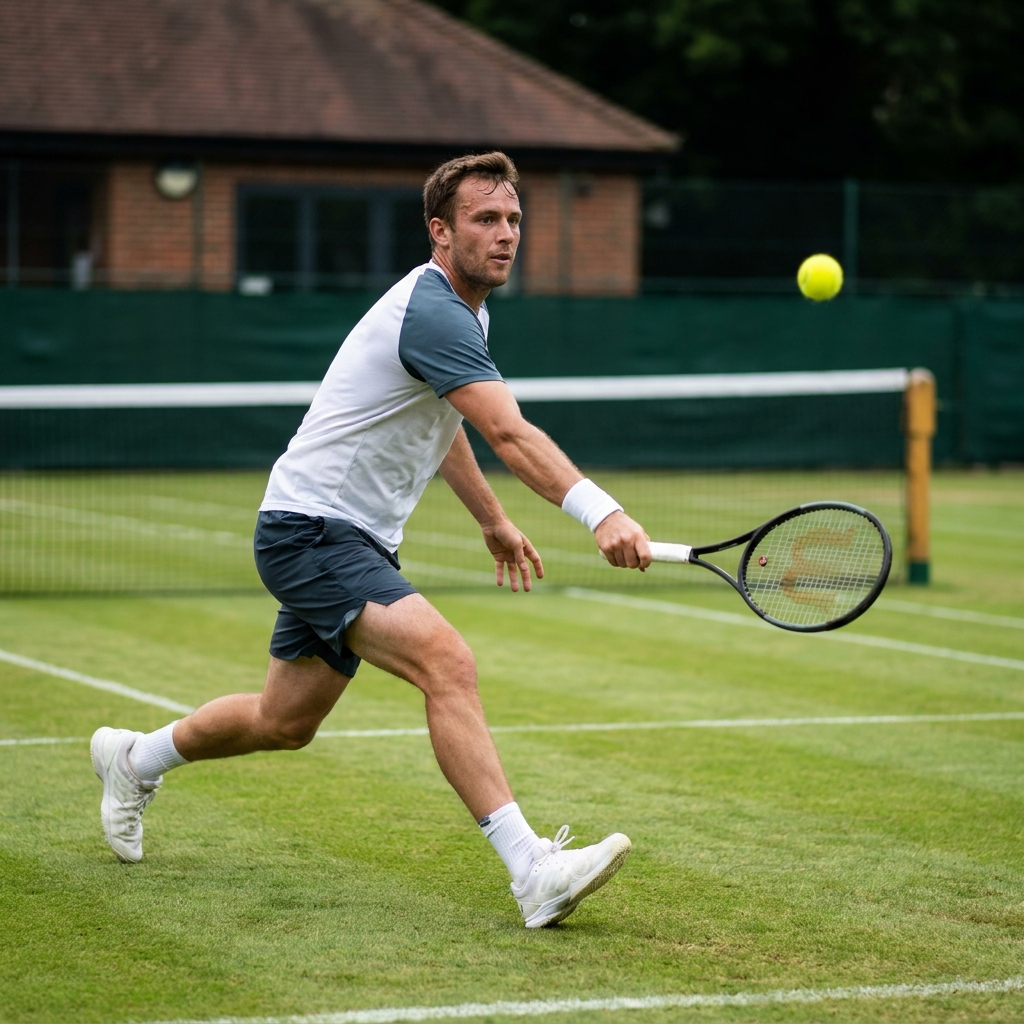
Most club players practise the serve on its own and then have no idea what to do with the ball that comes back. Serve plus one is the pattern that turns a good serve into a won point.


Register for FREE and get coaching tips, top drills, session and more every week!