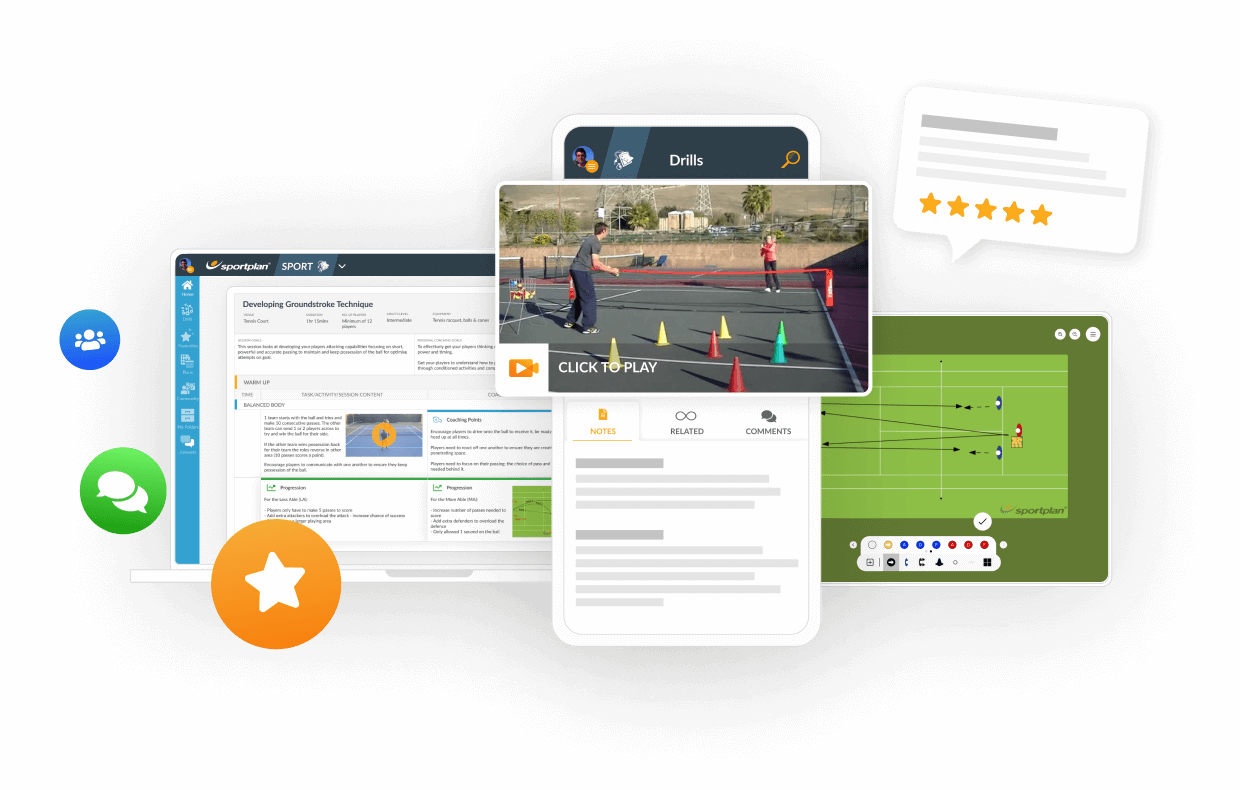
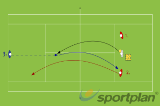
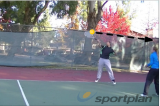
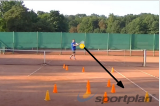
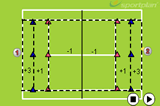
The player stands on the baseline, whilst the coach stands at the net. Both rally together; the player uses only backhand cross court, whilst the coach hits the ball back with a volley.The coach hits randomly a slower and higher ball to allow the player to hit backhand drive in the air.
The next step of every skill is to check how the player can react to a situation where given skill can be used. Setting an environment, where the player is forced to react and use drive in the air, is an opportunity to develop tactical awareness.
In this drill, the player works on incorporating backhand drive in the air into a regular rally. By hitting random slow and high balls, coach can decide where to check player's reaction and technical proficiency.
Indoor courts give players less time and less room. Help them sharpen their split step, shorten their swing and stay calm, and winter becomes a season of real progress.
A tiebreak is a short sprint where every point is worth the same as a break of serve. The players who win them are rarely the ones who hit hardest. Here is how to coach the patterns, habits and scoreboard thinking that win the big points.
Most club players practise the serve on its own and then have no idea what to do with the ball that comes back. Serve plus one is the pattern that turns a good serve into a won point.


Register for FREE and get coaching tips, top drills, session and more every week!