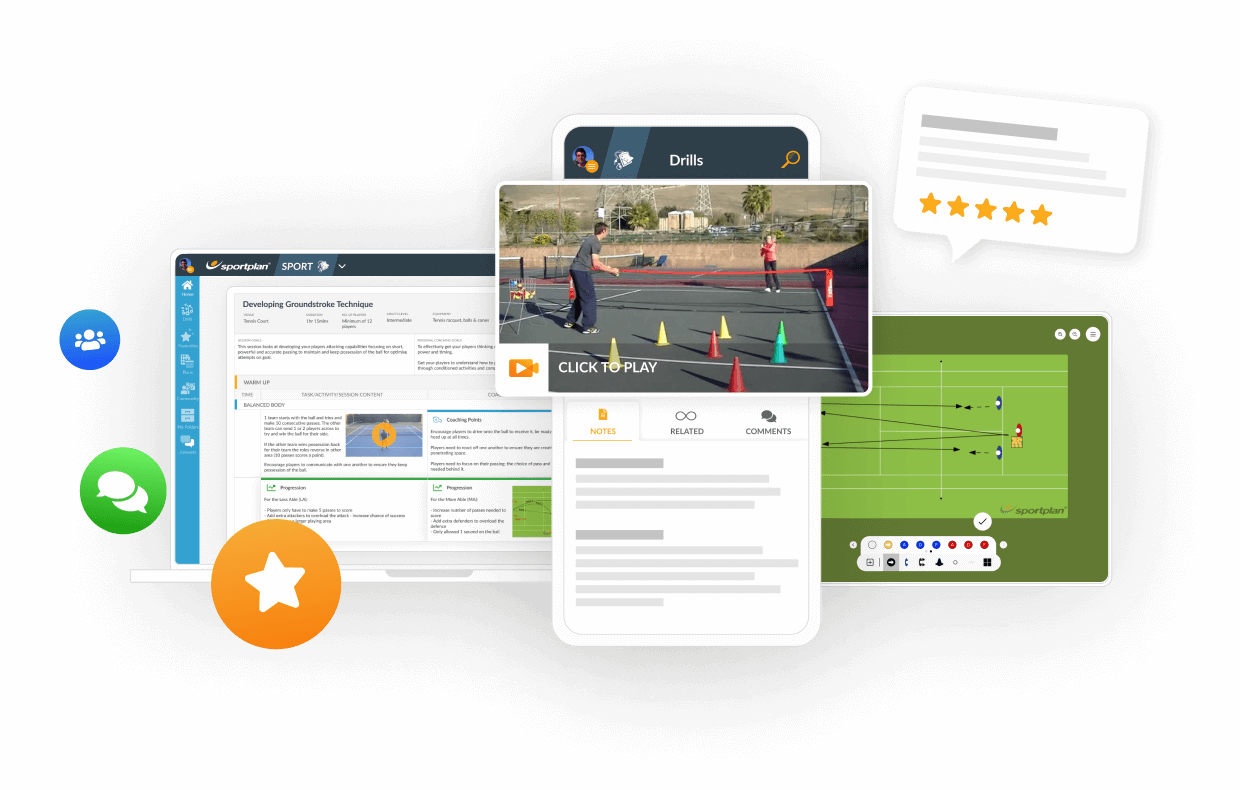
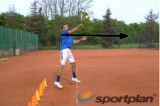
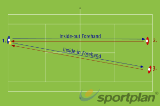
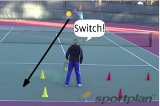
Player stays on the baseline. Cones are set behind the player. Coach feeds deep higher balls. Player takes the ball on the rise and hits aggressively. Cones prevents the player from moving back.
Drill specifications:
6-8 repetitions per set
Other players can watch the playing person to learn from his good and bad attempts or they can perform specific physical activities that will have a positive influence on “hitting on the rise” aspect. That’s why these drills should be focused on shoulders’ strength and power because of physical demands of this stroke.
Hitting on the rise is a good way to become more offensive. By hitting the ball on the rise player shortens opponent’s reaction and recovery times so rival will commit more mistakes than usual. This tactic is especially effective on hard courts because of the regular bounce of the ball. That is why we see more professional players hitting balls on the rise during the US OPEN than during the ROLAND GARROS.
In this drill player works on hitting on the raise. This technical aspect requires good coordination and strength so coach should implement specific physical exercises on a daily basis to supplement this process. Coach should teach players to focus on proper timing because hitting on the rise can’t be performed with regular backswing. Players have to adjust to the incoming ball by shortening the racquet preparation and generating more power from the all body parts than from the racquet.
Indoor courts give players less time and less room. Help them sharpen their split step, shorten their swing and stay calm, and winter becomes a season of real progress.

A tiebreak is a short sprint where every point is worth the same as a break of serve. The players who win them are rarely the ones who hit hardest. Here is how to coach the patterns, habits and scoreboard thinking that win the big points.
Most club players practise the serve on its own and then have no idea what to do with the ball that comes back. Serve plus one is the pattern that turns a good serve into a won point.


Register for FREE and get coaching tips, top drills, session and more every week!