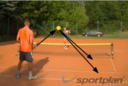
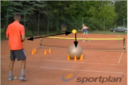
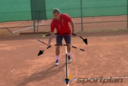
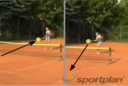
The coach feeds orange, and green balls to the forehand side. The player hits only forehands. If the ball is green, the player has to aim cross-court. If the ball is orange, the player has to aim down the line.
The more time we have to prepare the shot the better we can do that. Players have to learn how to quickly recognise the ball to avoid rushing, and making decisions right before they hit. By performing many drills based on ball perception, players are able to focus, and make decisions much quicker so their level is going significantly up.
In this drill, the player connects ball perception with decision making skills. Basic directional change ability is a must for anyone who wants to learn how to play tennis. The coach can use this drill just to work on change of direction (technical aspect related to different racquet's angle) or he can use it to work on tactical skills (when to hit cross-court/when to hit down the line).
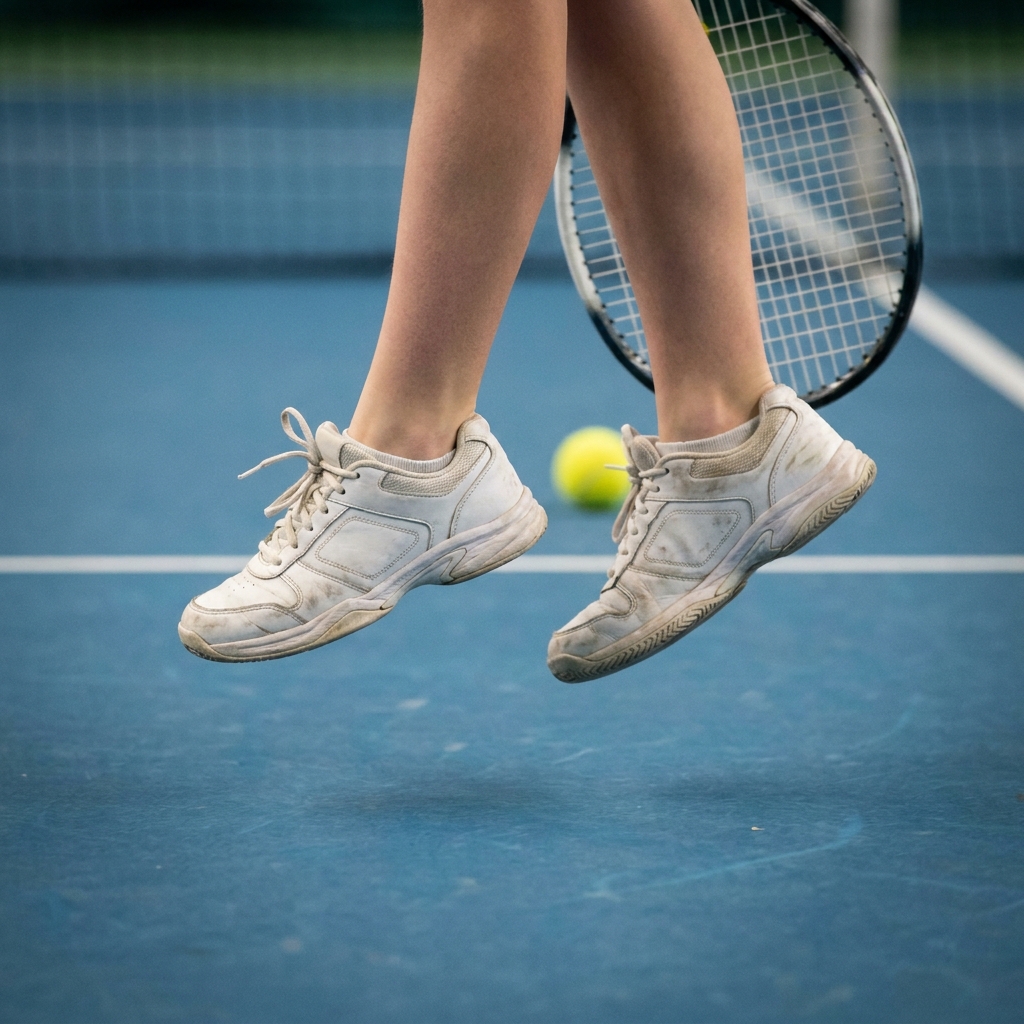
Indoor courts give players less time and less room. Help them sharpen their split step, shorten their swing and stay calm, and winter becomes a season of real progress.
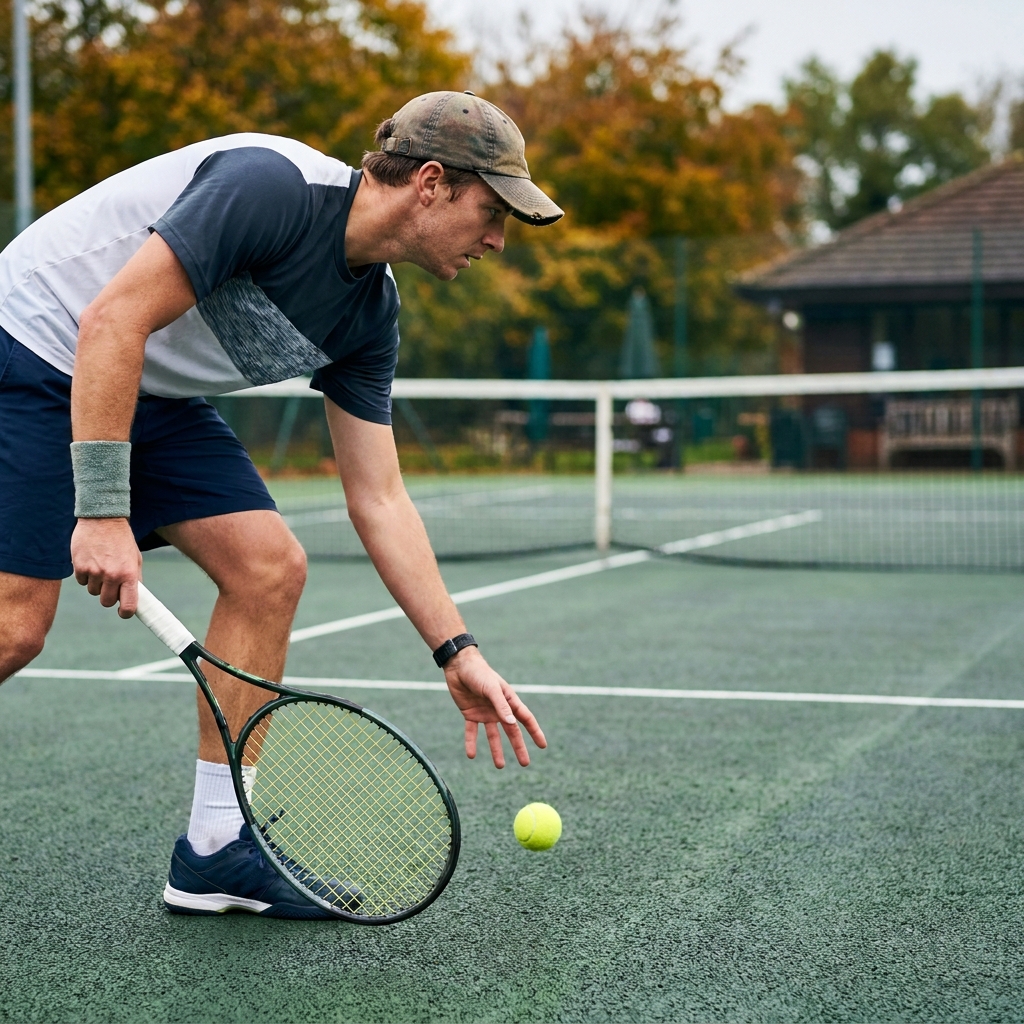
A tiebreak is a short sprint where every point is worth the same as a break of serve. The players who win them are rarely the ones who hit hardest. Here is how to coach the patterns, habits and scoreboard thinking that win the big points.
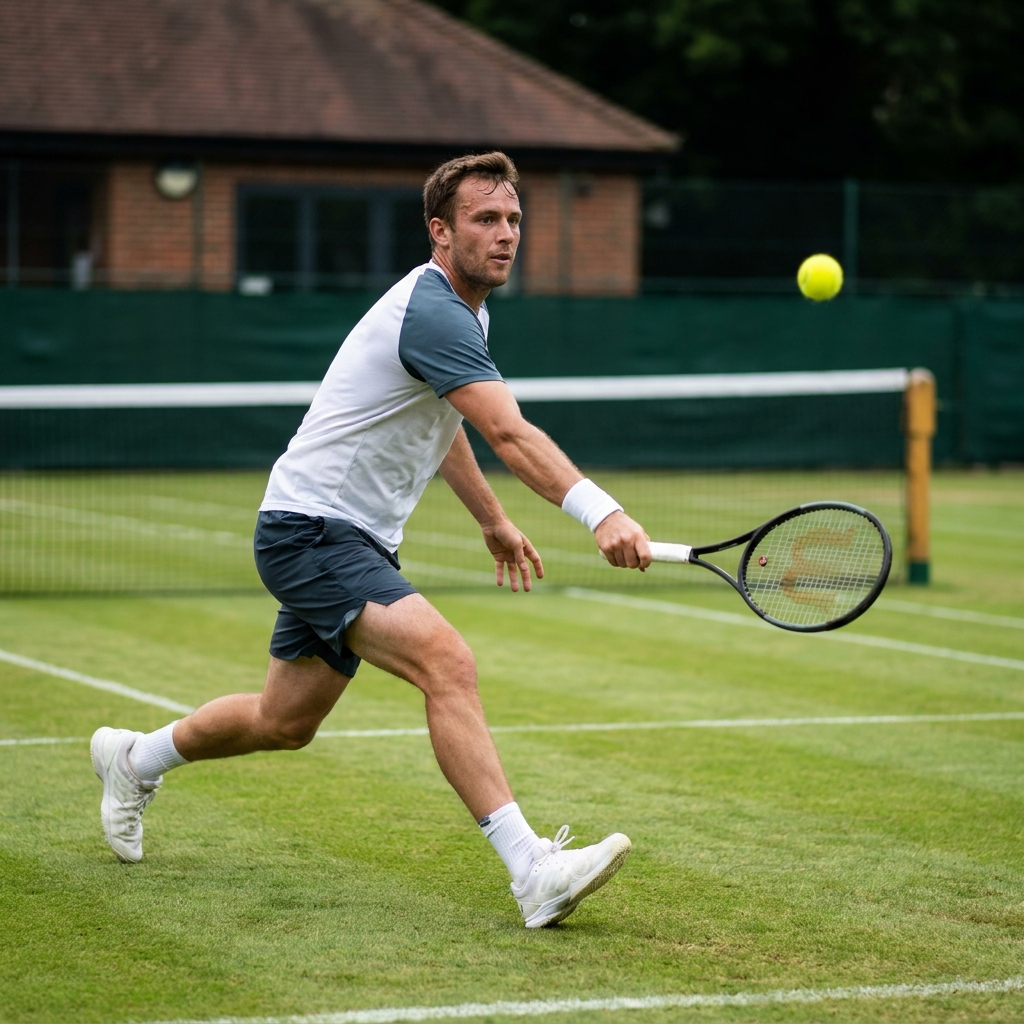
Most club players practise the serve on its own and then have no idea what to do with the ball that comes back. Serve plus one is the pattern that turns a good serve into a won point.


Register for FREE and get coaching tips, top drills, session and more every week!