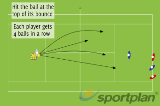
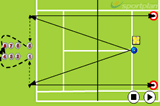
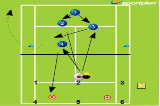
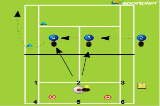
The coach feeds a mixture of 6 balls from the basket around the mid-court area. Players must hit a minimum of 2 dropshots from the set of 6 balls fed.
However, the player must look to disguise the dropshot as best they can, setting up to hit forehands and backhands before changing at the last minute to hit a dropshot.
One player must stand at the far end, where they have a clear view of the working player and try to guess what shot they are going to hit by shouting out just before the working player hits the ball.
The players rotate.
There has to be an element of surprise to the dropshot and disguising the shot helps to do this.
Clay court players use this shot particularly well off the forehand wing.
Players may find it hard to change extreme grips quickly round to play the diguised dropshot, but should remember that as long as the take-back is the same, the opponent may well still be flummoxed!
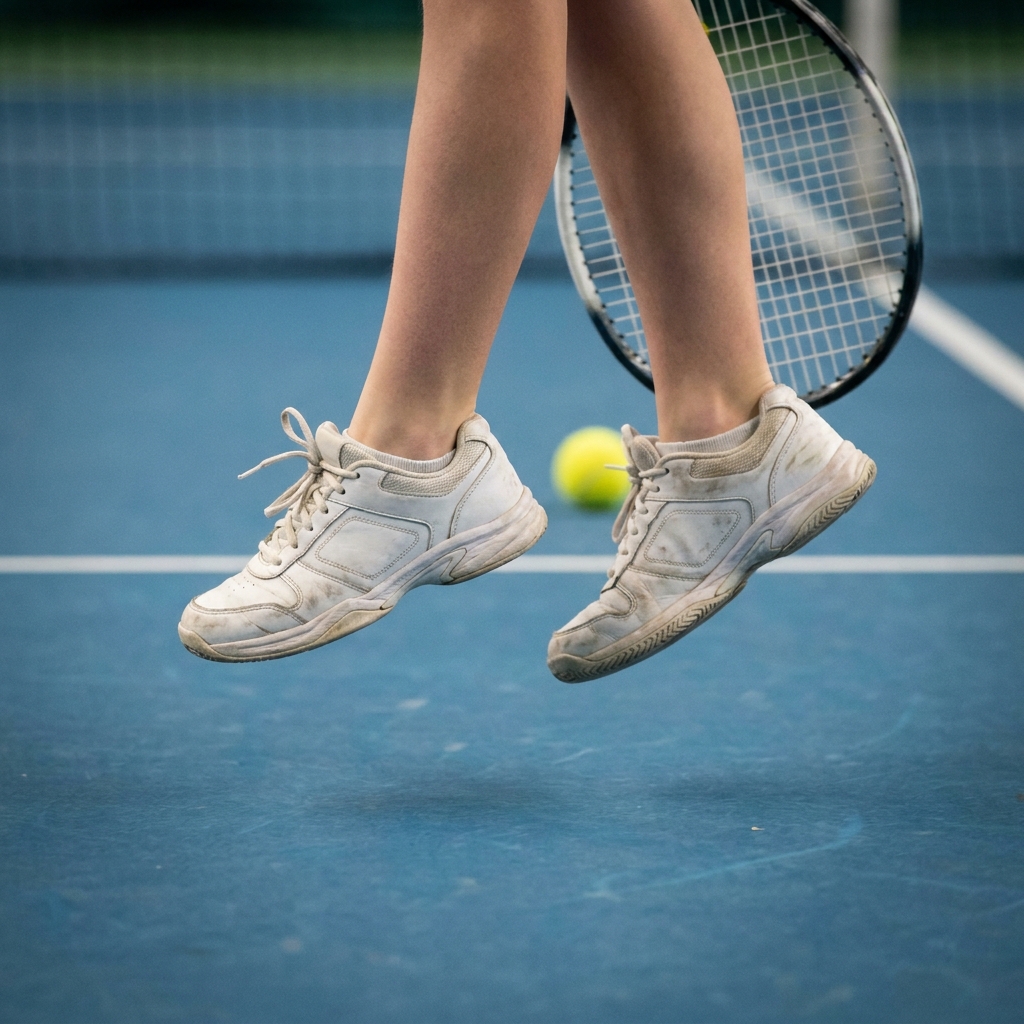
Indoor courts give players less time and less room. Help them sharpen their split step, shorten their swing and stay calm, and winter becomes a season of real progress.
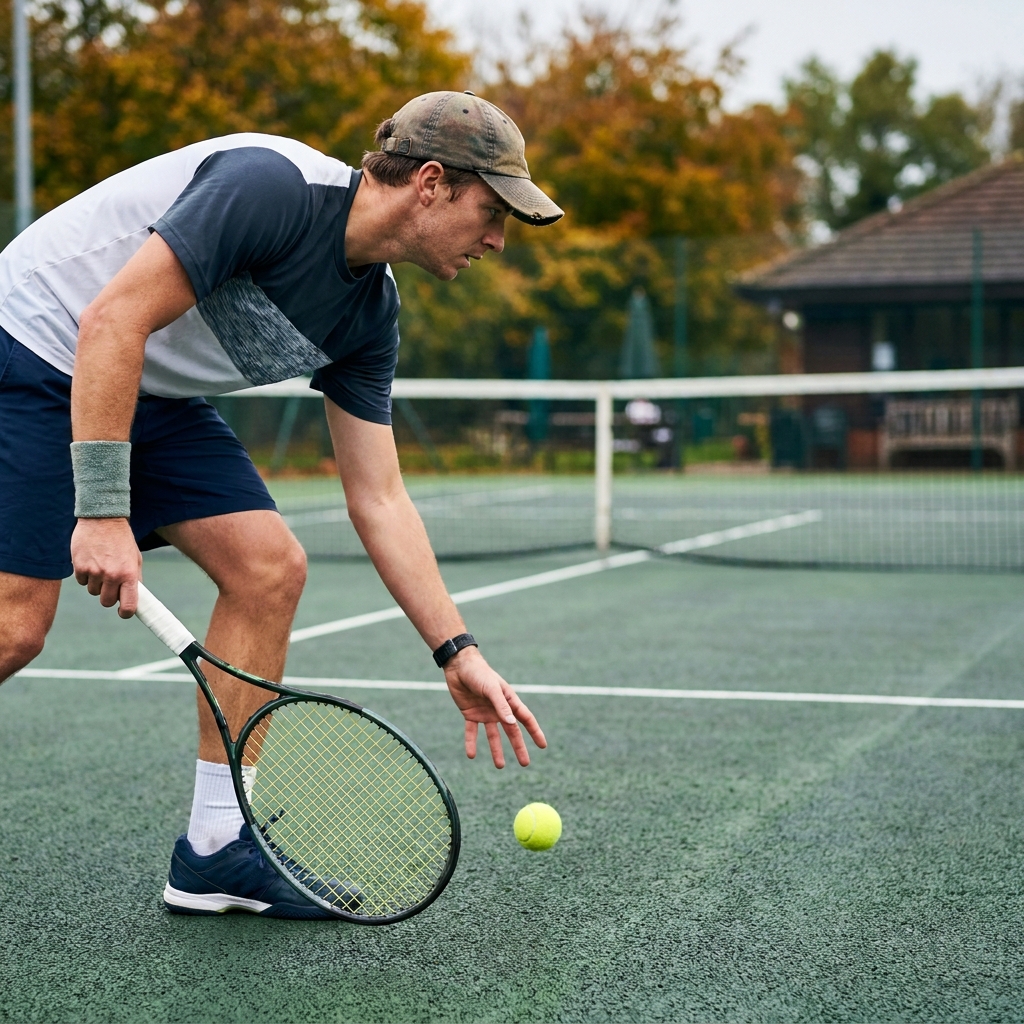
A tiebreak is a short sprint where every point is worth the same as a break of serve. The players who win them are rarely the ones who hit hardest. Here is how to coach the patterns, habits and scoreboard thinking that win the big points.
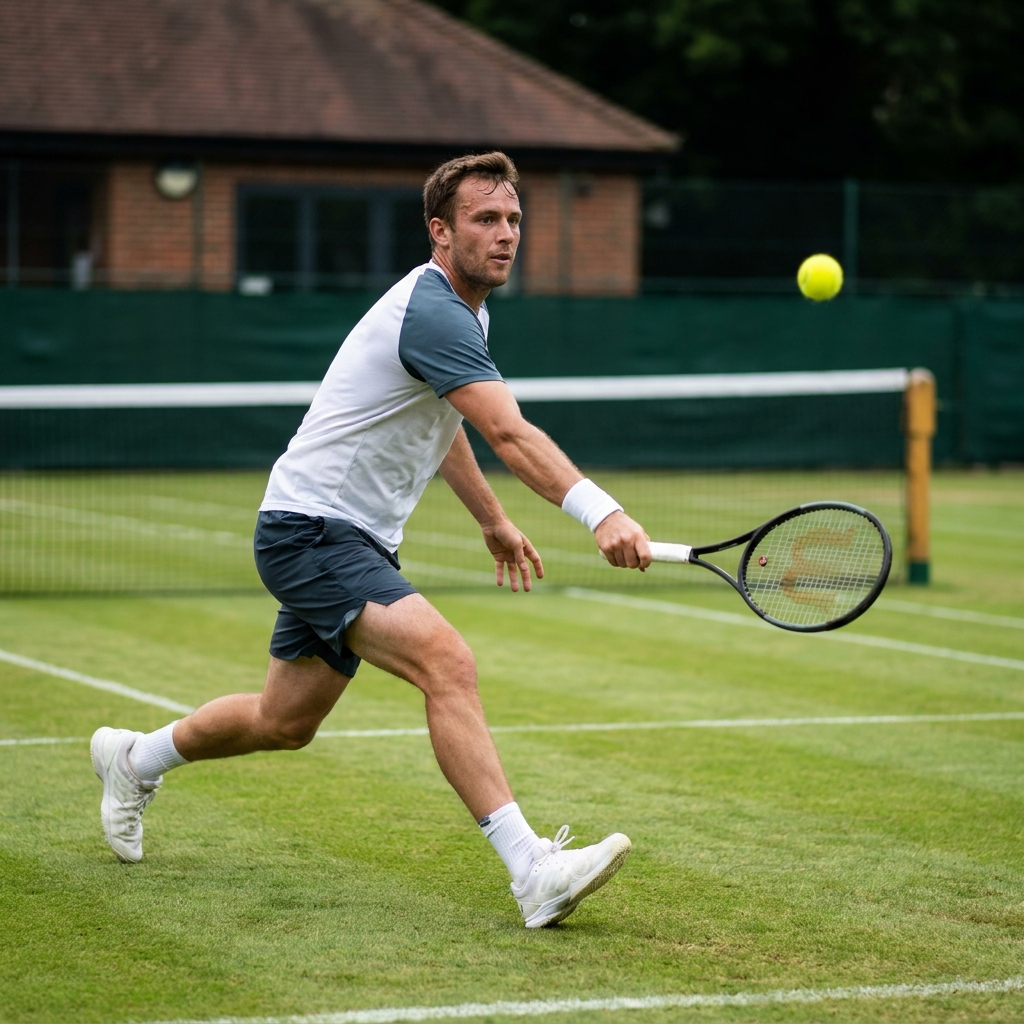
Most club players practise the serve on its own and then have no idea what to do with the ball that comes back. Serve plus one is the pattern that turns a good serve into a won point.


Register for FREE and get coaching tips, top drills, session and more every week!