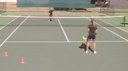
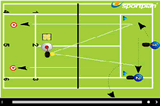
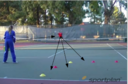
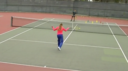
Coach feeds the balls to the 'ad' side. Player alternates hitting backhand down the line and forehand inside out.
Most of the players have weaker backhands than forehands so opponents tend to hit many balls into the backhand side; that it is why it is important to be able to create different tactical solutions using this stroke as it will put pressure on the opponent. By being able to hit a consistent and deep backhand, Player opens up a lot of offensive variations that will allow him to put the opponent into defensive positions and force them to make mistakes or hit short balls that are easy to attack.
Coaching Points
In this drill, Player works on a specific tactical pattern. Player hits first ball down the line using their backhand. After that, Player runs around the ball and hits a forehand inside out. This pattern teaches Player good directional change from the opponent's backhand cross-court shot and also how to take the opportunity of an easier ball on the 'ad' side by using their own forehand. With these skills, Player will know how to effectively answer to opponents who try to hit most of the shots to backhand side. Coach should set up targets to make Player hit a particular number of good shots.
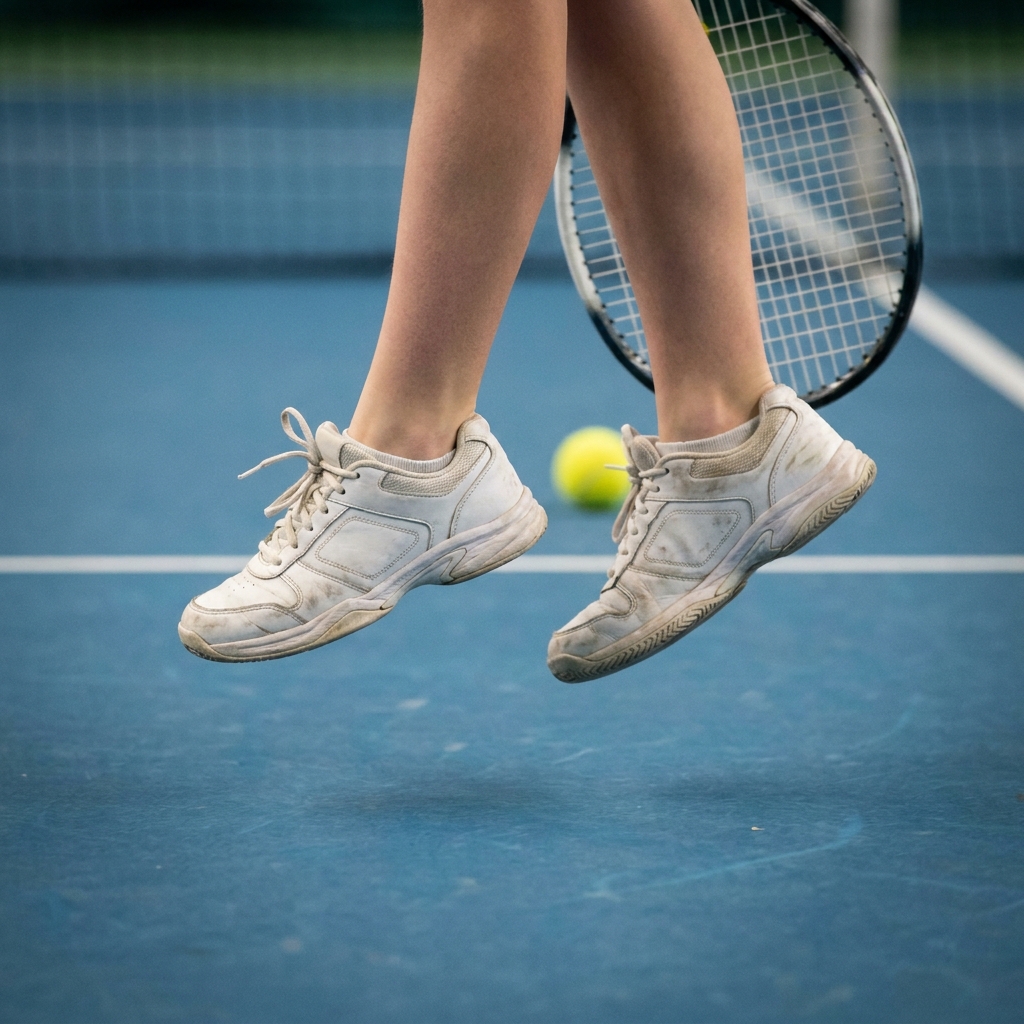
Indoor courts give players less time and less room. Help them sharpen their split step, shorten their swing and stay calm, and winter becomes a season of real progress.
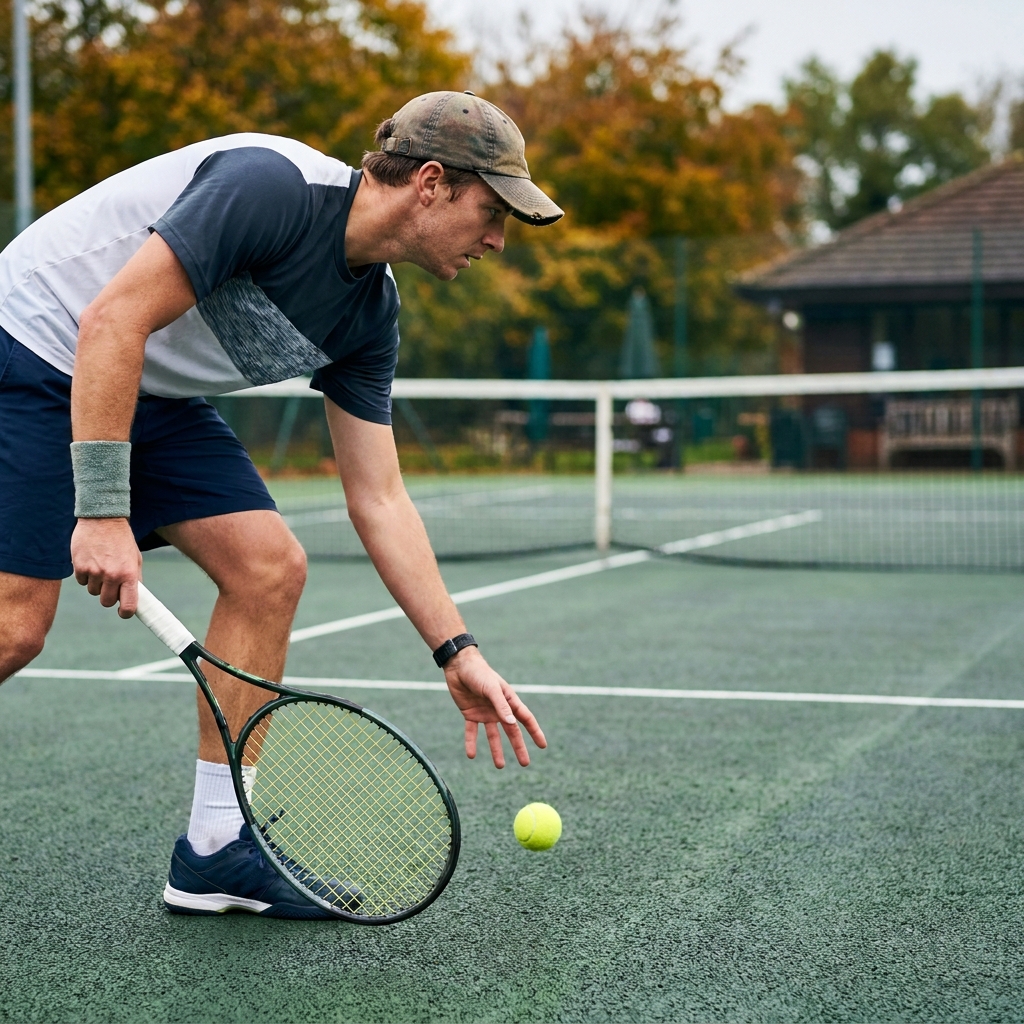
A tiebreak is a short sprint where every point is worth the same as a break of serve. The players who win them are rarely the ones who hit hardest. Here is how to coach the patterns, habits and scoreboard thinking that win the big points.
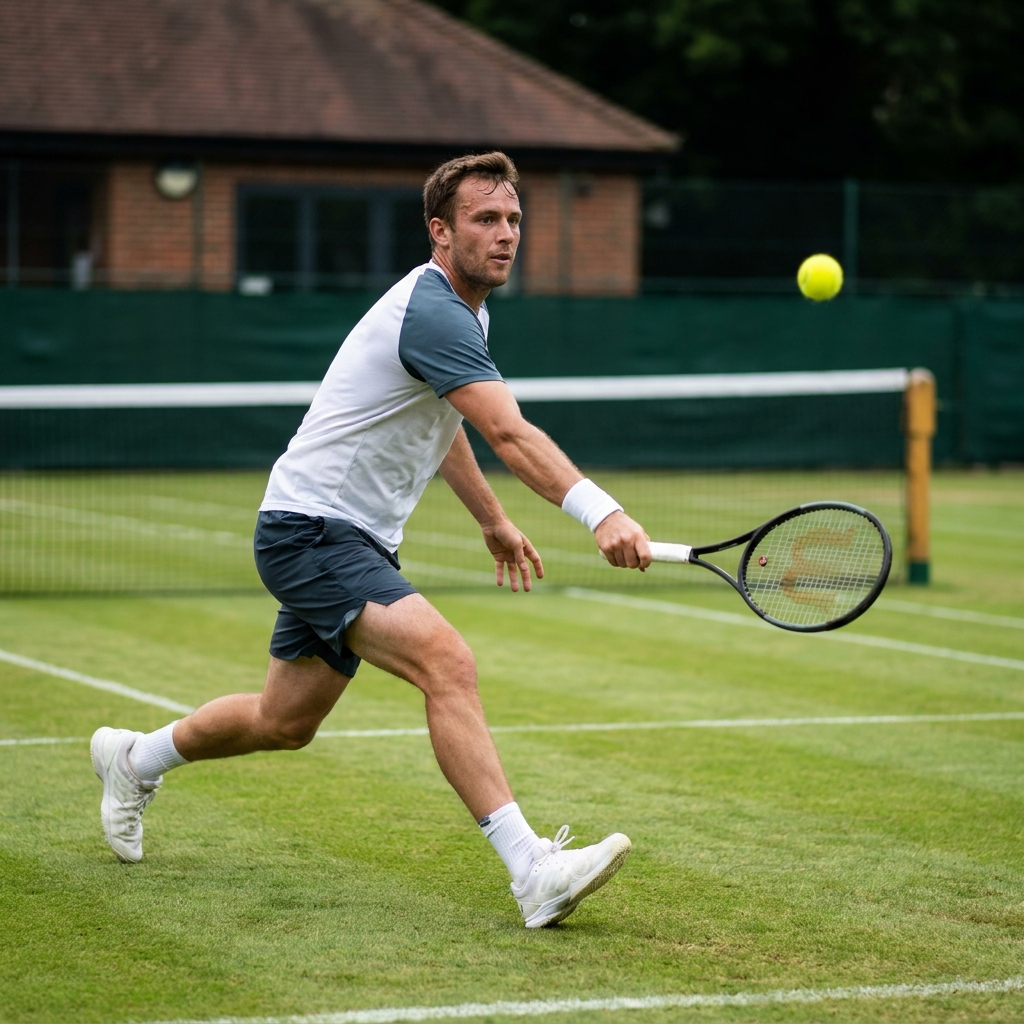
Most club players practise the serve on its own and then have no idea what to do with the ball that comes back. Serve plus one is the pattern that turns a good serve into a won point.


Register for FREE and get coaching tips, top drills, session and more every week!