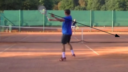
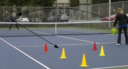
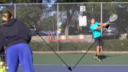
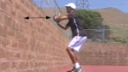
The player serves wide from the deuce side and the coach feeds high ball back. The player finishes with backhand in the air cross-court.
Defensive players know how to neutralize good first serves. Many returners respond with high balls while dealing with powerful serves so if servers want to maintain advantage they have to be able to move forward and take the ball out of the air. Letting the ball bounce gets all the advantage away from the server so players who want to hold own deliveries have to work on the next shot to be able to dominate even while responding to moonballs.
In this drill, the player continues strategy while serving. It is smart for returners to hit high balls off good serves so players can't be surprised with this scenario. The coach has to always remind players that they have to stay offensive after 1st serve so even the ball is coming back their first response is to attack. While playing against moonballers taking few balls in the air will force them to change strategy and take more risk while returning what will result in more errors.
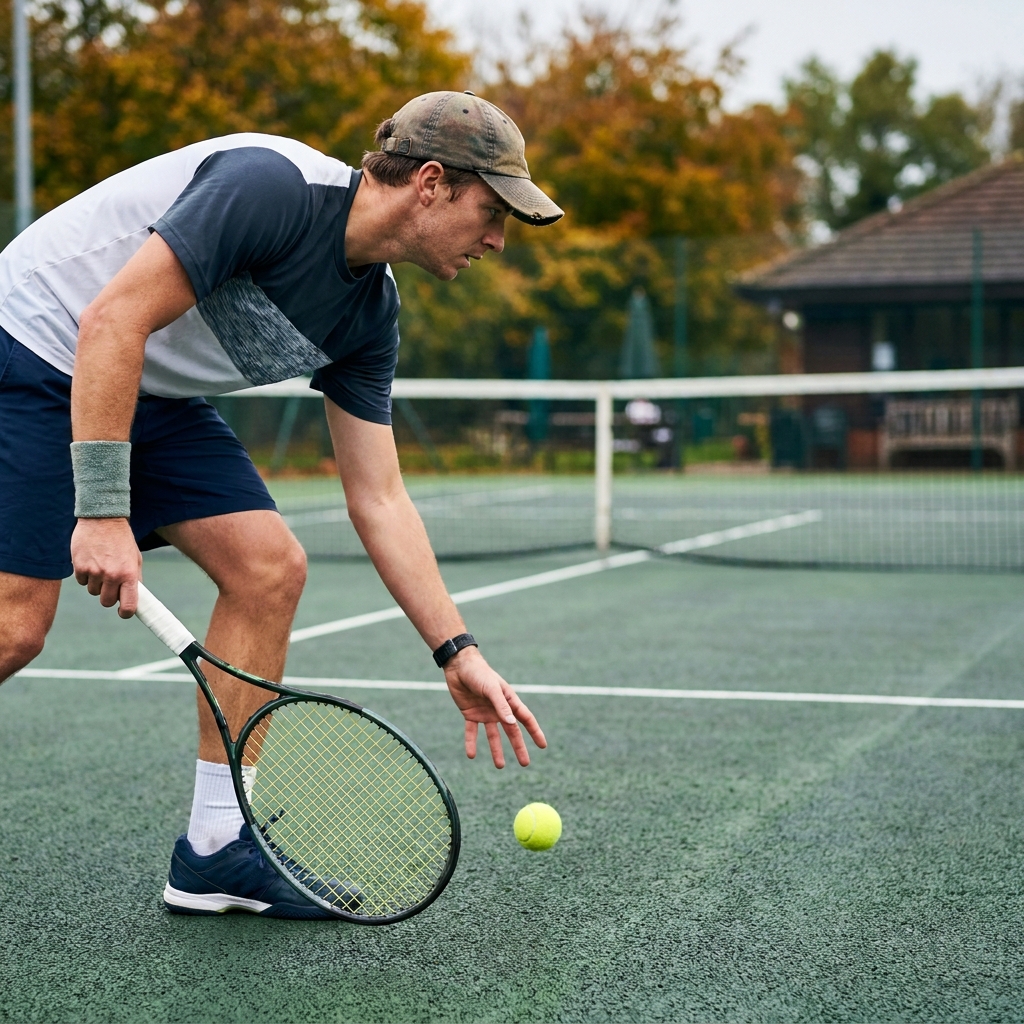
A tiebreak is a short sprint where every point is worth the same as a break of serve. The players who win them are rarely the ones who hit hardest. Here is how to coach the patterns, habits and scoreboard thinking that win the big points.
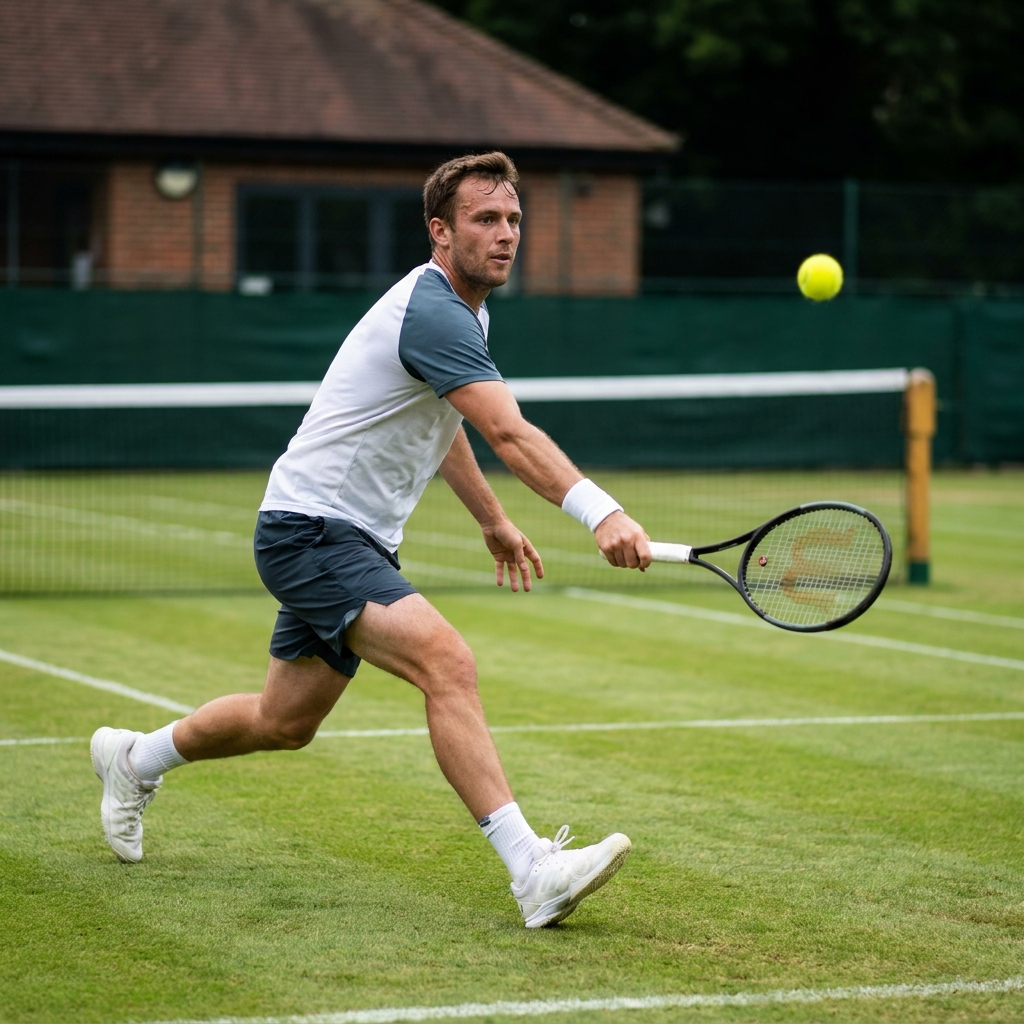
Most club players practise the serve on its own and then have no idea what to do with the ball that comes back. Serve plus one is the pattern that turns a good serve into a won point.
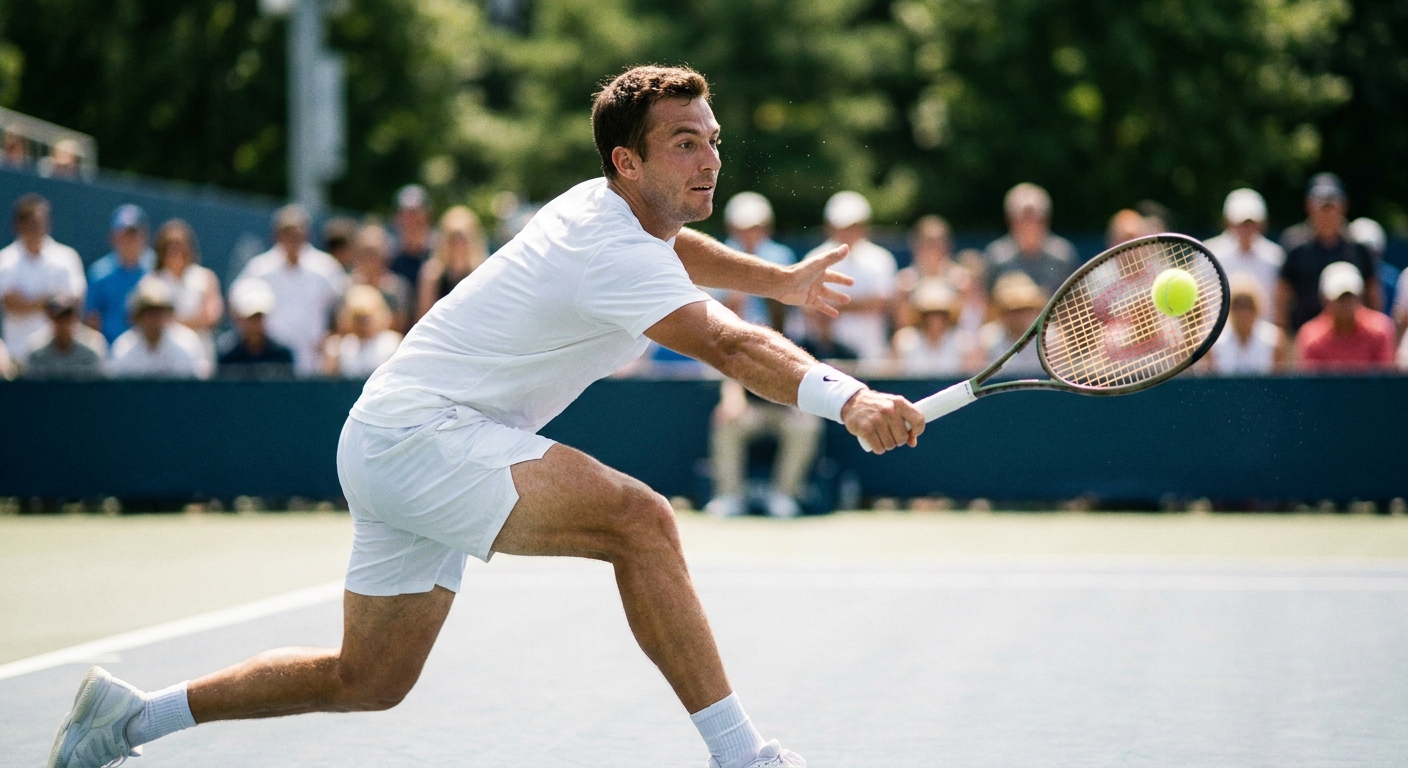
Wimbledon has just crowned another champion, and if you watched closely you saw the same thing every year: the best returners quietly won the tournament. Here is how to coach a return that pressures the server rather than just surviving it.


Register for FREE and get coaching tips, top drills, session and more every week!