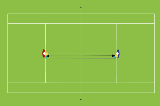
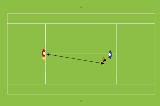
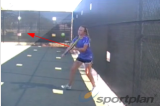
The player starts by standing close to the net. The coach feeds balls to the backhand side, with the player hitting backhand volleys in return, emphasis on using short movement of the racquet. The net prevents the player from taking any follow through, so they learn to use a short movement.
There are many factors that can contribute to making volley mistakes, and the follow through is one of them. The shorter reaction time and high speed of the ball means that a player doesn't have to do much movement to control the shot. Players who use excessive follow through across the body don't have a great chance of achieving good placement and consistency at the net.
In this exercise, the player works on the short move while hitting a backhand volley. Positioning close to the net limits player's ability to excessively move the racquet.
For beginners, coach can throw the ball to let the players feel the move. For more advanced athletes, coach can feed hard balls to check if they don't come back to old habits.

A tiebreak is a short sprint where every point is worth the same as a break of serve. The players who win them are rarely the ones who hit hardest. Here is how to coach the patterns, habits and scoreboard thinking that win the big points.
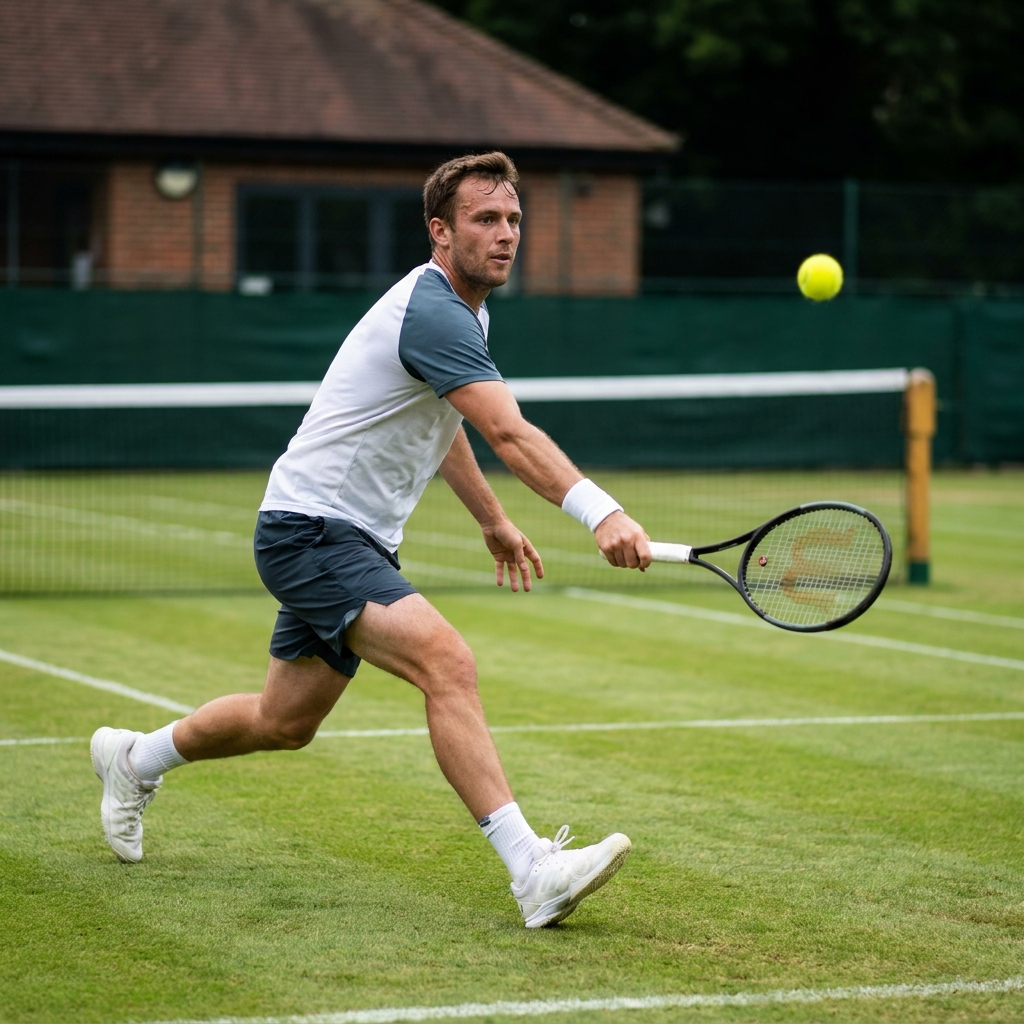
Most club players practise the serve on its own and then have no idea what to do with the ball that comes back. Serve plus one is the pattern that turns a good serve into a won point.
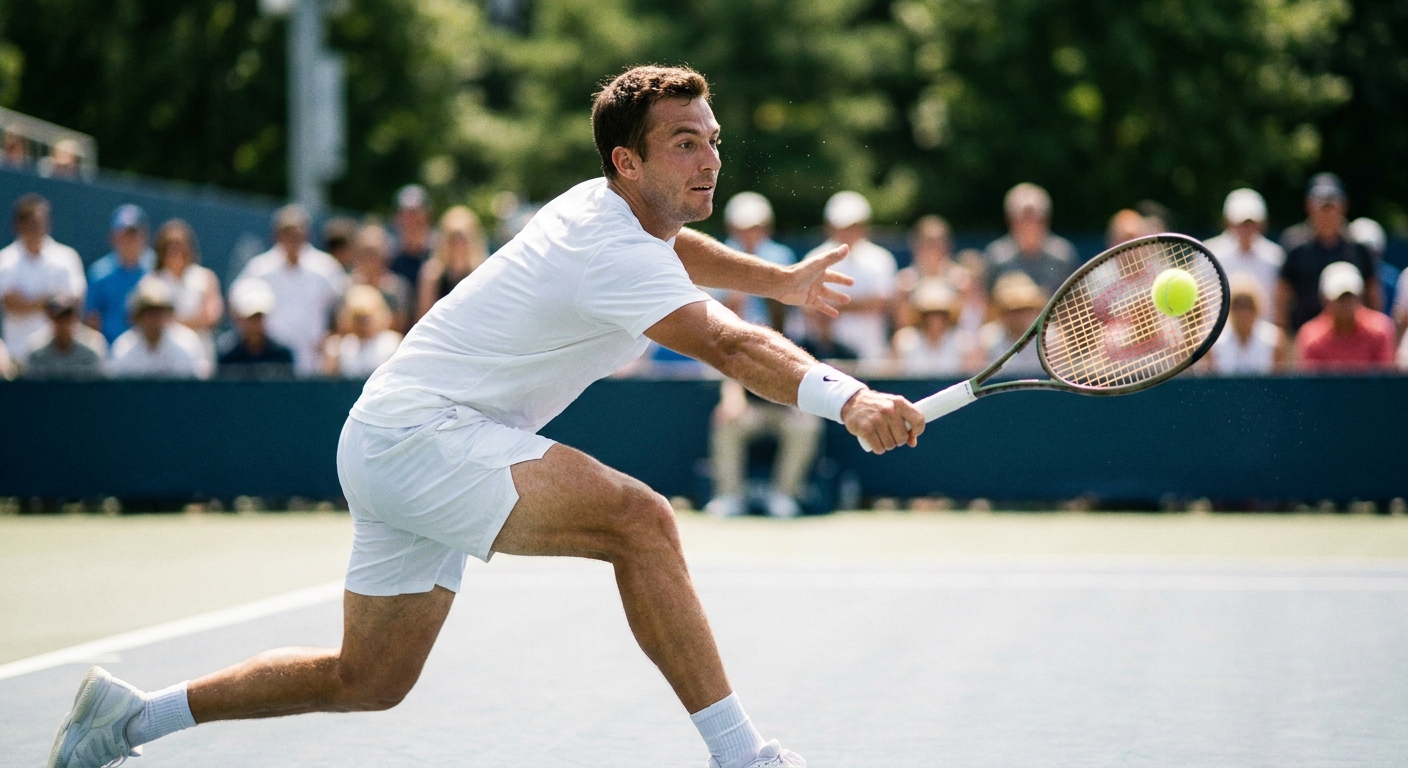
Wimbledon has just crowned another champion, and if you watched closely you saw the same thing every year: the best returners quietly won the tournament. Here is how to coach a return that pressures the server rather than just surviving it.


Register for FREE and get coaching tips, top drills, session and more every week!