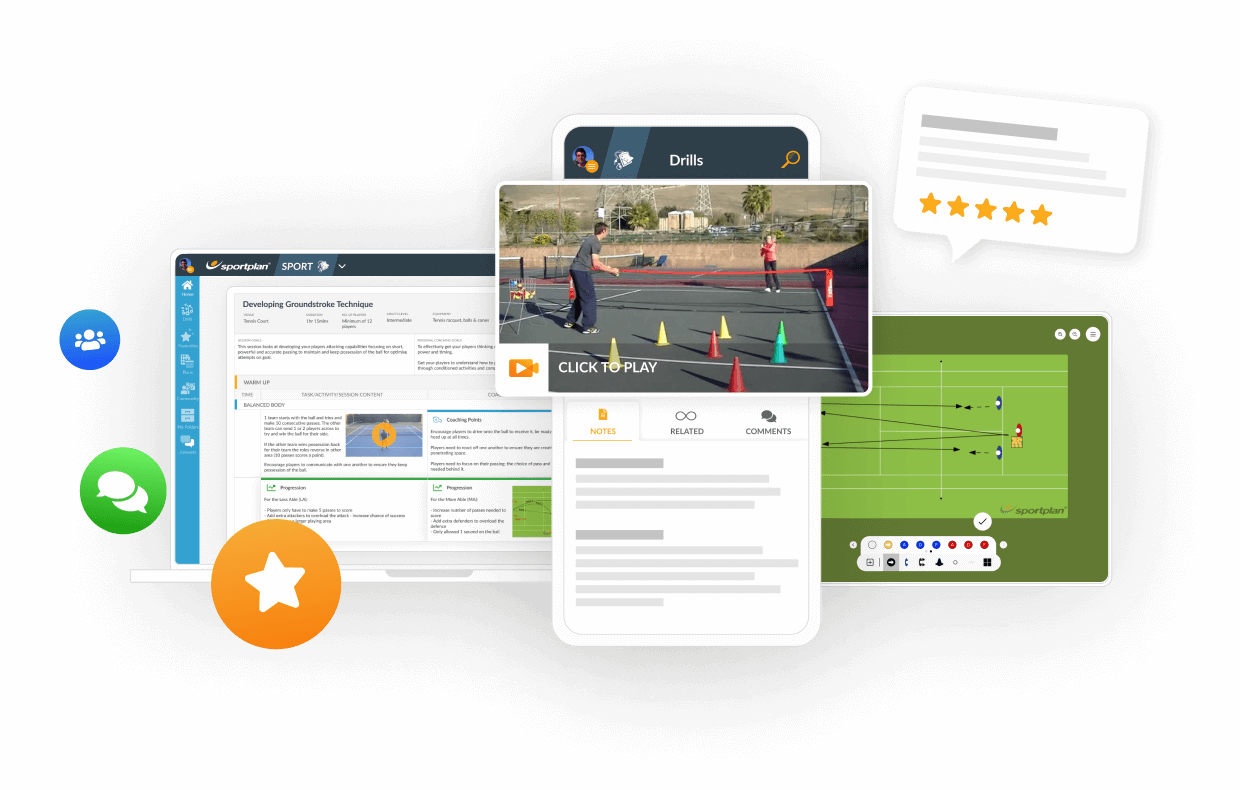
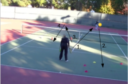
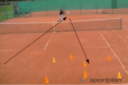
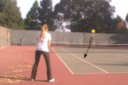
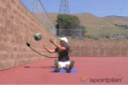
The coach stands in front of the player and throws balls to the backhand side. The player executes backhands using only open stance.
Playing against left-handed opponent means that our strategy has to be reversed. Many times we feel comfortable while rallying with backhand cross-court because the opponent has to hit the ball with backhand too. With left-handed players, we have to adjust our position and we have to accept the fact that many times we will be forced to hit open-stance backhand. If you prepare for this scenario during practice sessions, we won't find it difficult to execute this shot under pressure.
In this drill player works on open-stance backhand. This position is difficult for many players so the coach should spend significant amount of time on basic drills to make sure that players start to feel comfortable with left leg to the side. The coach has to tell players that the more they bend their left leg, the more dynamic they are so every time they feel stiff, it means that the left leg was too straight.
Indoor courts give players less time and less room. Help them sharpen their split step, shorten their swing and stay calm, and winter becomes a season of real progress.

A tiebreak is a short sprint where every point is worth the same as a break of serve. The players who win them are rarely the ones who hit hardest. Here is how to coach the patterns, habits and scoreboard thinking that win the big points.
Most club players practise the serve on its own and then have no idea what to do with the ball that comes back. Serve plus one is the pattern that turns a good serve into a won point.


Register for FREE and get coaching tips, top drills, session and more every week!