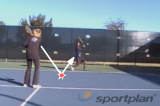
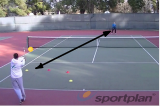
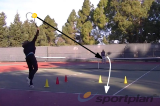
The player rallies with a coach using only backhand strokes and has to stay inside the court during entire rally.
Playing at different surfaces requires different decisions to make. Firstly, players have to possess the knowledge to understand why changes are necessary and secondary players have to adapt and use this knowledge during practice sessions. The best players in the world are highly adaptable because they have to adjust to different conditions every time they play a new tournament but even at lower levels, if you can't adjust your game, you won't be successful.
In this drill, the player learns how to play more offensively. By being inside the baseline, the player gives less time to opponent for reaction. Of course this approach puts also more risk at player who executes this shot because specific modifications have to be applied to achieve desired results. Players have to remember to shorten backswing and stay low with the legs to make sure that they have good control over the shot. Late preparation or improper position will immediately end up as a mistake. This strategy is useful on hard-court because the ball bounces regularly so players shouldn't use it while playing on clay.
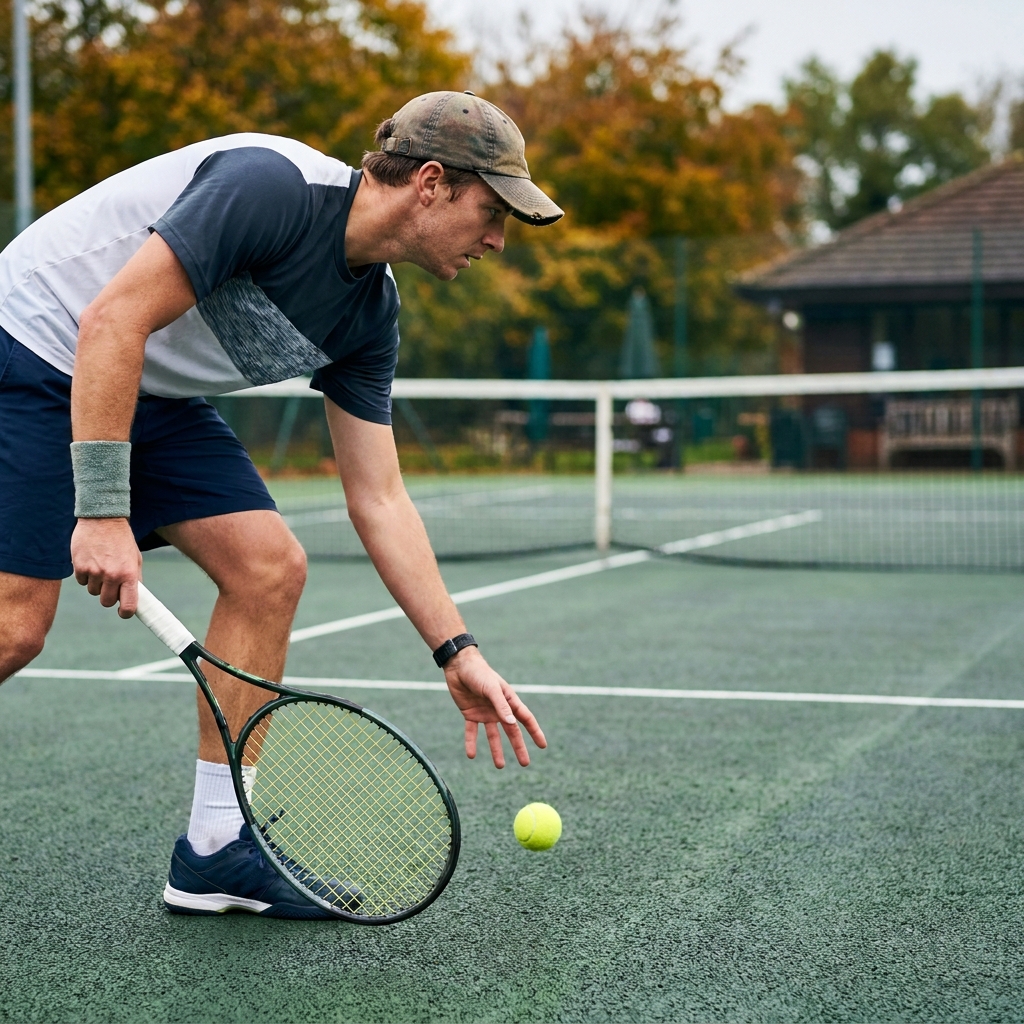
A tiebreak is a short sprint where every point is worth the same as a break of serve. The players who win them are rarely the ones who hit hardest. Here is how to coach the patterns, habits and scoreboard thinking that win the big points.
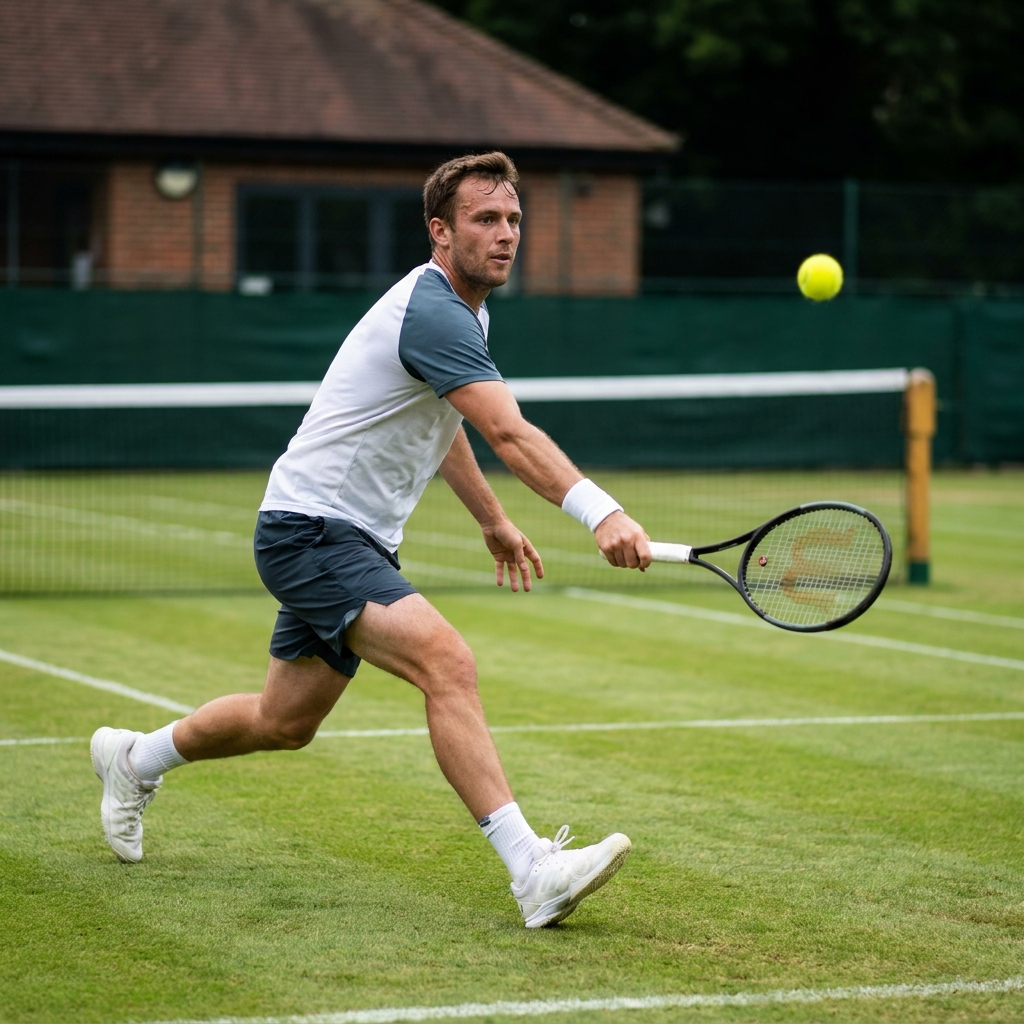
Most club players practise the serve on its own and then have no idea what to do with the ball that comes back. Serve plus one is the pattern that turns a good serve into a won point.
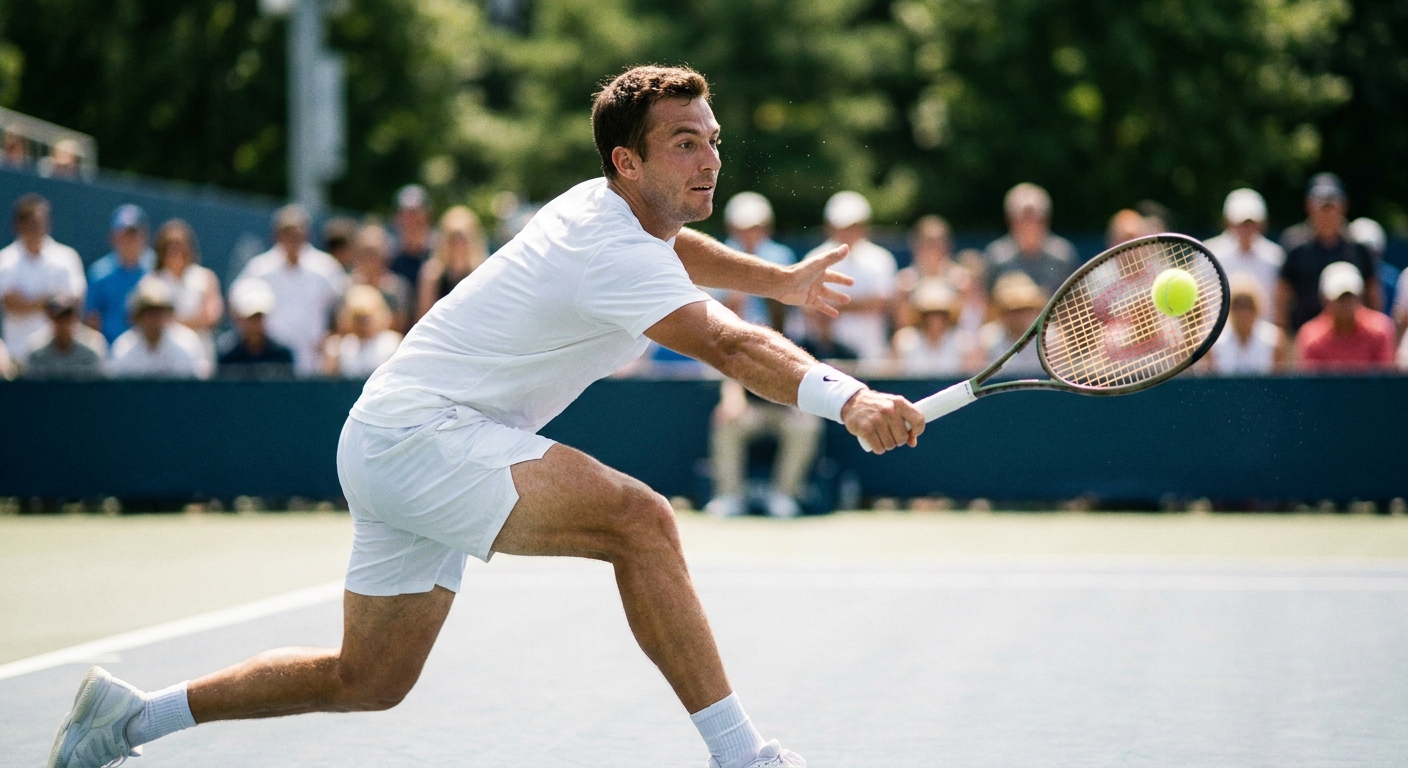
Wimbledon has just crowned another champion, and if you watched closely you saw the same thing every year: the best returners quietly won the tournament. Here is how to coach a return that pressures the server rather than just surviving it.


Register for FREE and get coaching tips, top drills, session and more every week!