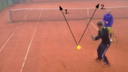
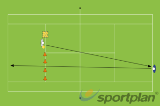
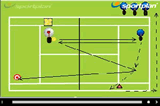
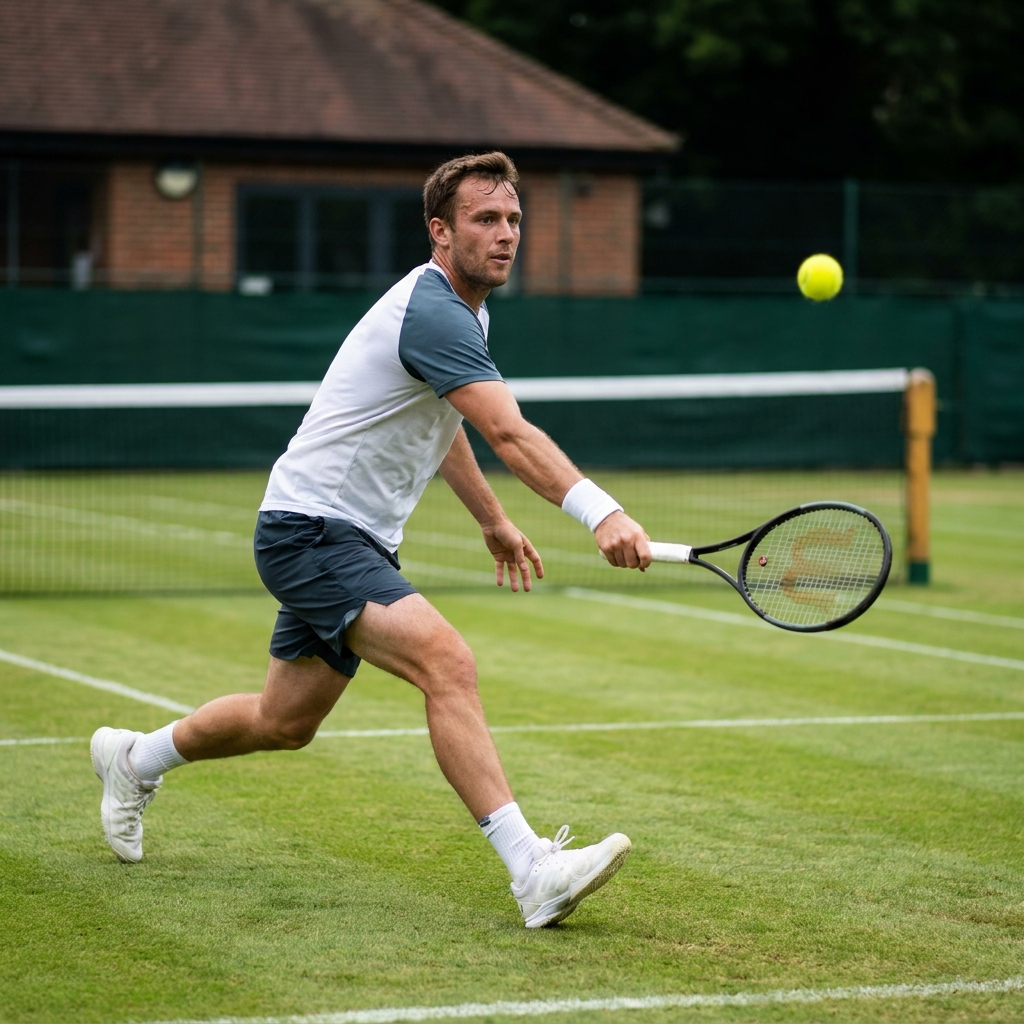
Players rally together. Player A hits 2 backhands cross-court and 1 backhand down the line. Player B responds with all shots to the backhand corner.
Moving the opponent is a basic tactic in tennis at any level of performance. By playing the shots to different sides, their opponent needs solid skills to maintain the rally and control the direction. At a decent level, most of the players can hit from the static position but where the running starts, mistakes also get bigger.
In this drill, the player works on changing direction while using backhand strokes. Being able to be consistent while rallying in cross-court direction is a primary skill to create advantage on the court. Well-placed shots down the line ball can result in straight winner or it can be a reason why opponent responded with ball that is easy to finish. For more advanced players, the coach can set up zones (for cross court: deep or angle, for down the line: deep) to make sure that players are able to hit specific targets on the court.
Indoor courts give players less time and less room. Help them sharpen their split step, shorten their swing and stay calm, and winter becomes a season of real progress.

A tiebreak is a short sprint where every point is worth the same as a break of serve. The players who win them are rarely the ones who hit hardest. Here is how to coach the patterns, habits and scoreboard thinking that win the big points.
Most club players practise the serve on its own and then have no idea what to do with the ball that comes back. Serve plus one is the pattern that turns a good serve into a won point.


Register for FREE and get coaching tips, top drills, session and more every week!