

The One Principle Behind Every Great Junior Session
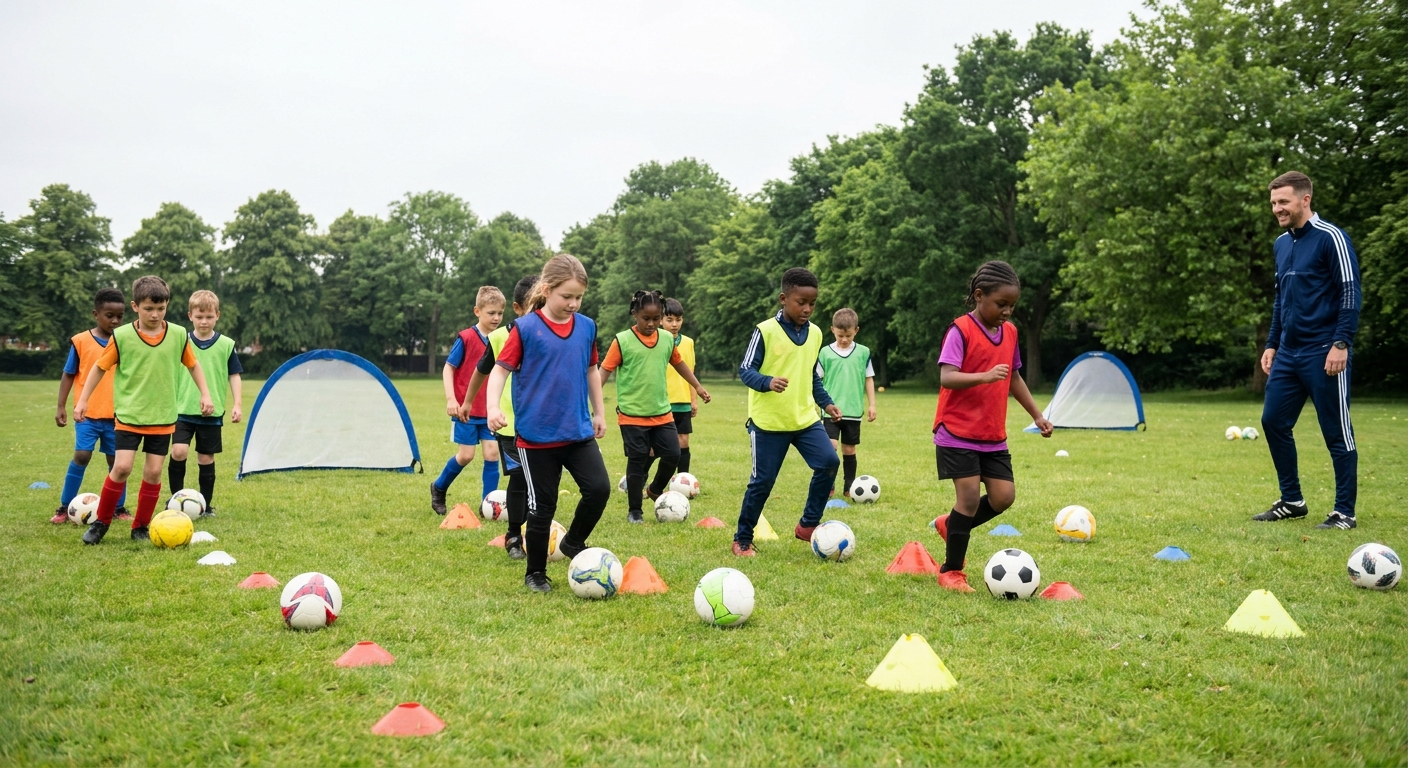
If you take only one idea away from this guide, make it this: maximum touches, minimum waiting. The single biggest difference between a session that develops young footballers and one that does not is how often each child has a ball at their feet. A drill where one player works while six others watch from a line is a drill that develops one player and bores six. Break the group down, hand out more balls, and use small-sided games so everybody is constantly dribbling, passing, defending and shooting.
This is the heart of the FA's grassroots philosophy. For U7 to U12 players in mini-soccer - 5v5 at Under-7s, 7v7 at U9-U10, 9v9 at U11-U12 - the message from coach educators is consistent: ditch the long lines and the big, complicated drills, keep the numbers small, and let the children play. Young players learn football by playing football. They develop fastest when they are making their own decisions, trying things, getting it wrong, and having fun doing it. Your job is to set up the game, then largely get out of the way.
So as you read the 15 drills below, keep that lens on. Almost all of them are games. Where a practice could become a queue, split it into smaller groups so nobody waits. Keep your coaching points short, demonstrate rather than lecture, and put the fun first - the skills follow. Here is how a strong, high-energy mini-soccer session tends to flow.
Running a High-Energy Mini-Soccer Session
- Arrival activity (5-10 min): A ball each from the moment they arrive - free dribbling or a quick tag game so nobody stands idle while you set up.
- Fun warm-up game (10 min): A games-based warm-up that gets bodies moving and balls rolling - chasing, tagging, scoring.
- Skill focus (15 min): One theme for the day - dribbling, a 1v1, passing or shooting - in small groups with a ball each or shared between two.
- Small-sided games (15-20 min): The main event. 3v3, 4v4 or up to the mini-soccer format, lots of goals, every child involved.
- Cool down and a word (5 min): A quick, positive review - praise effort and a moment of skill, then let them go on a high.
Drop any of the drills below into that structure. For a ready-made framework you can fill in week to week, use our free football session plan template.
Fun Warm-Up Games
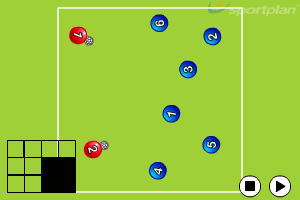
Warm-ups for juniors should never be laps and stretches. Make them games that happen to warm the players up - chasing, dodging and getting a feel for the ball from the first whistle.
Dribbling & Ball Mastery
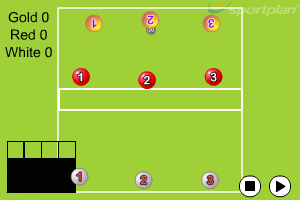
Dribbling is the skill juniors love most and the one that builds the confidence to try things. Give every child a ball and let them explore moving it with both feet, all surfaces, head up.


1v1 Attacking & Defending
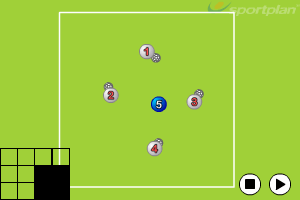
The 1v1 is the building block of football. Juniors who learn to beat a player and to defend one become brave, decisive footballers. Keep these short, intense and in small groups so nobody waits.
Passing & Possession (Rondos)
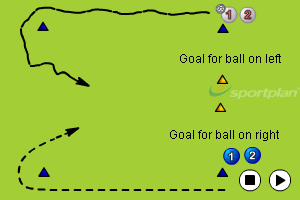
Rondos - a small group keeping the ball away from one or two defenders - are the simplest way to teach passing, movement and decision-making. They are fast, fun and give juniors a reason to look up and find a teammate.
Shooting & Finishing
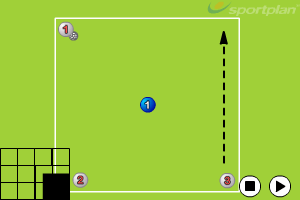
Nothing lights up a junior's face like scoring a goal. Keep the queues short, the balls flowing and the goals achievable so every child gets shots away and feels the buzz of finding the net.
Small-Sided Games
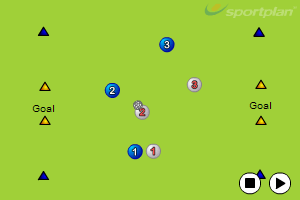
This is where it all comes together - and where juniors learn the most. Small-sided games guarantee constant touches, real decisions and the joy of playing. End every session here.
Putting It All Together Across a Season
Fifteen drills is more than enough to keep a junior squad fresh for a whole season - you do not need a new exercise every week. Pick a theme, run a warm-up game, work the skill in small groups, and always finish with a small-sided game. Rotate players through different jobs rather than pigeon-holing a child as "the defender" too early; at U7-U12 everyone should attack, defend and score. As they grow into 7v7 and 9v9, our guide to football formations and positions explains how the shapes and roles develop.
Above all, keep judging your session by one question: is every child on the ball, or are players standing in a line? If you see a queue forming, break the group down and add a ball. Keep it fun, keep the touches high, and let them play. For hundreds more practices sorted by skill and age, browse the full Football drills library, and drop your favourites into our session plan template to build your week.
Frequently Asked Questions
How long should a junior football session be?
For U7-U12, keep it to roughly 45 to 60 minutes. Younger players (U7-U8) sit at the shorter end - their concentration fades after about 45 minutes. The key is not the total length but the pace: break the session into 10 to 15 minute chunks, keep every child on a ball as much as possible, and stop activities while they are still enjoying them rather than dragging anything out. A short, sharp, high-energy session beats a long one every time at this age.
What age can children start football?
Children can start playing football informally from around 4 or 5, and many grassroots clubs run fun, games-based sessions for this age. In England, organised mini-soccer begins at Under-7s with 5v5, moving to 7v7 at U9-U10 and 9v9 at U11-U12 before the move to 11-a-side. The FA's guidance is that the youngest players need lots of contact with the ball and plenty of small games rather than drills, queues or full-pitch matches.
How many touches should a young player get?
As many as possible - this is the single most important measure of a good junior session. Every child should have a ball at their feet for the large majority of the session. Avoid long lines where one player works while six watch, and avoid big drills that involve standing around. If you find players queuing or waiting, break the group into smaller numbers, add more balls, and use small-sided games so every player is constantly dribbling, passing, defending and shooting.
How do I keep U7s engaged?
Make it a game, not a lesson. Young players learn through fun, so dress skills up as tag games, races, story games like 101 Dalmatians, and lots of small-sided matches with goals to score. Keep instructions short, demonstrate rather than talk, use plenty of small games with their own ball, and rotate activities before boredom sets in. Praise effort and creativity, let them try things and make mistakes, and let them play - the FA philosophy is that children develop fastest when they are enjoying themselves and making their own decisions.