


Positions, Units and the Numbers Game
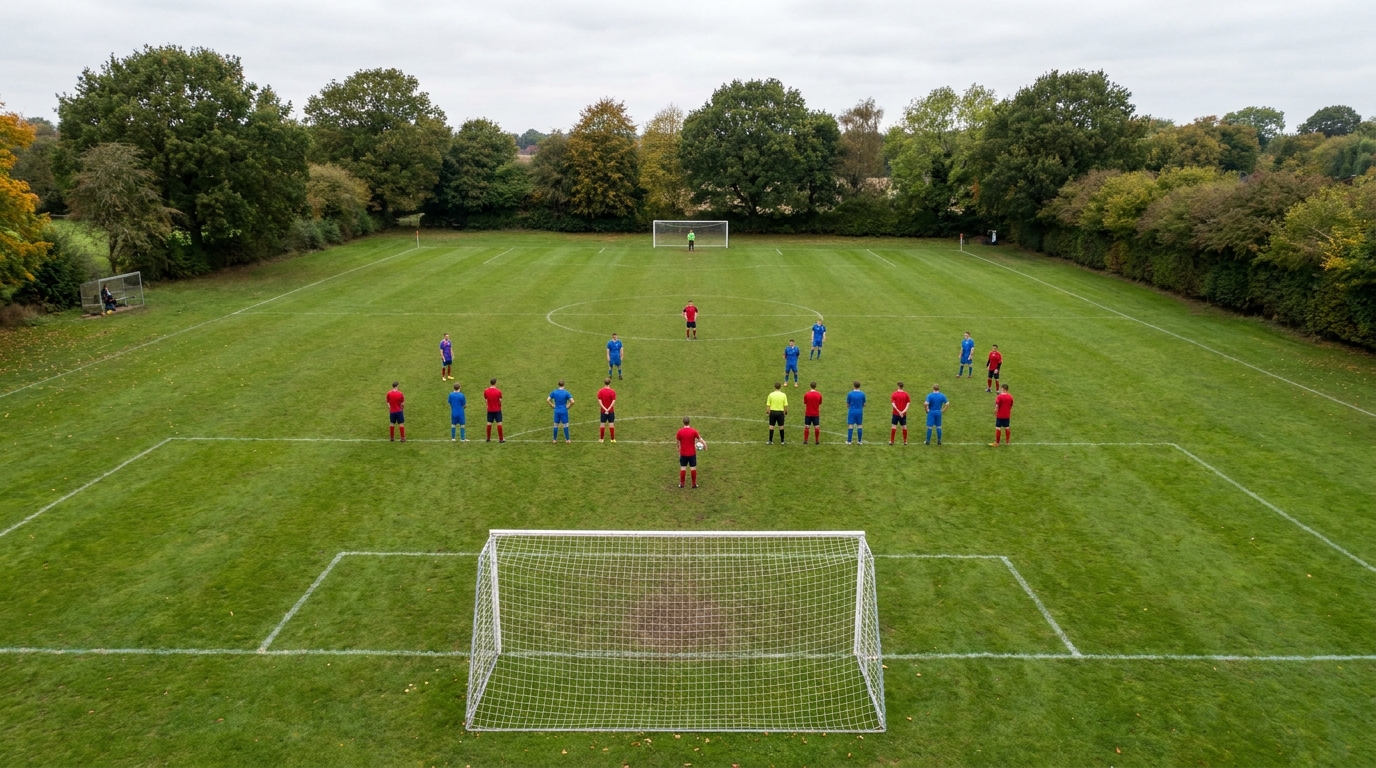
Football looks simple from the sideline - one ball, two goals, run about a bit - until someone starts talking about inverted full-backs, a double pivot or a false nine. Underneath the jargon, though, the structure is genuinely straightforward. Every team is built from four units that sit in bands from your own goal to the opposition's: a goalkeeper, a line of defenders, a line of midfielders and a line of forwards. A "formation" is simply how you spread your ten outfield players across those bands.
That is also what the numbers mean. A formation like 4-4-2 or 4-3-3 is read from the back forwards, and it only ever describes the ten outfield players - the goalkeeper is always assumed and never counted. So 4-3-3 is four defenders, three midfielders and three forwards. Once you know that, every shape on the planet decodes itself. Below we explain what each position actually does, the three most common 11-a-side formations, and - most importantly for grassroots - how all of this scales down to the small-sided games your juniors will actually play.
The Goalkeeper
The goalkeeper is the only player allowed to handle the ball, and only inside their own penalty area. Their first job is obvious - stop the ball going in - through shot-stopping, commanding their box at crosses and set-pieces, and organising the defenders in front of them. In the modern game the keeper is also the first attacker: distributing quickly with hands or feet, and acting as a spare passing option when the team builds from the back. At grassroots, calm hands, brave positioning and a loud, clear voice matter more than spectacular saves.
The Defenders
Centre-backs
The two centre-backs are the heart of the defence. They mark the opposition strikers, win headers, block shots and clear the danger, while staying organised and holding a disciplined line. A good centre-back reads the game early, steps in to intercept and stays calm under pressure rather than lunging into tackles. Increasingly they are also expected to be comfortable on the ball and start attacks with a composed pass out of defence.
Full-backs (left-back and right-back)
The full-backs defend the flanks either side of the centre-backs. Their defensive job is to stop the opposition wingers getting crosses in; their attacking job is to overlap down the touchline and provide width when their own team has the ball. Modern full-backs cover enormous distances up and down the pitch, so energy and good decision-making - when to push on, when to tuck in and cover - are everything. In junior football this is one of the best positions for teaching when to attack and when to defend.
The Midfielders
Midfield is where games are won and lost, and it is the most varied area of the pitch. Depending on the formation you might field defensive, central, attacking and wide midfielders - often all at once.
Defensive midfielder
The defensive midfielder - sometimes called the holding midfielder or "number six" - sits just in front of the back line. Their job is to screen the defence, break up opposition attacks, win the ball back and then give it simply to a more creative teammate. They are the anchor that lets others go forward.
Central midfielder
Central midfielders control the tempo of the game. They receive the ball under pressure, keep possession ticking, support both attack and defence, and cover huge amounts of ground. The classic "box-to-box" midfielder defends one penalty box and arrives in the other to score - a brilliant role for a fit, all-round junior who is still working out their best position.
Attacking midfielder
The attacking midfielder - the "number ten" - plays in the pocket of space between the opposition midfield and defence. Their job is to create: receiving on the half-turn, threading the killer pass, and chipping in with goals. It demands quick feet, good vision and the nerve to take risks in the final third.
Wingers
Wingers hug the touchlines and provide the team's width and pace. They take defenders on one-against-one, deliver crosses for the strikers and increasingly cut inside to shoot. A good winger is direct, brave and willing to track back to help their full-back. For exciting, confident dribblers this is the most natural home on the pitch.
The Forwards
Centre-forward / striker
The centre-forward, or striker, leads the line and carries the team's main goal threat. Their headline job is to score - finishing chances, getting in behind the defence and being clinical in the box - but a complete striker also holds the ball up with their back to goal, brings teammates into play and leads the press from the front. At grassroots, a striker who keeps moving, gambles on chances and shoots without hesitation will always be valuable, regardless of size.
The Common 11-a-Side Formations
Once players reach 11-a-side (U13 and up in England), formations start to matter. You do not need a tactics PhD - three balanced shapes cover almost everything you will face at grassroots level.
4-4-2
The traditional British shape: four defenders, four midfielders (two central, two wide) and two strikers. It is balanced, simple to teach and easy for players to understand because everyone has a clear partner and a clear zone. The two banks of four make the team hard to break down. It is still the best starting formation for a team learning to hold its shape.
4-3-3
Four defenders, a midfield three (often one holder and two more advanced) and a front three of two wingers and a central striker. It gives natural width high up the pitch and lots of attacking options, while the midfield triangle helps the team dominate possession. It asks more of the wide forwards defensively, but it is a superb attacking shape and a great teaching tool for width and pressing.
4-2-3-1
Four defenders, two holding midfielders (a "double pivot"), a band of three attacking midfielders (a number ten with two wide players) and a lone striker. It is the modern default at the top level because the two holders give real defensive security while still freeing four players to attack. It is more demanding to coach, so it suits older, more developed grassroots teams that already understand the basics.
A Football Pitch and the 4-3-3
The diagram below shows a full-size pitch - the outline, halfway line, centre circle, both penalty boxes and goals - with an 11-a-side 4-3-3 laid out as labelled dots. Use it to picture how the four units stack from your own goal up to the opposition's.
An 11-a-side 4-3-3: a back four (LB, CB, CB, RB), a midfield three and a front three of two wingers around a centre-forward, with the goalkeeper behind.
Small-Sided Football: How the FA Scales It Down
Here is the part that matters most for grassroots, and the part the formation-obsessed sideline often forgets. Children in England do not play 11-a-side until U13. Before that, The FA runs a deliberate small-sided pathway designed to maximise touches, decisions and fun, with the pitch and the shape growing gently as the players do:
The FA Small-Sided Shapes at a Glance
- 5v5 (U7-U8): Usually played with no fixed formation at all. The classic guideline is a loose 1-2-1 or simply "keep your shape like a diamond" - one back, two in the middle, one up top - with no goalkeeper required in some leagues. The aim is touches, dribbling and fun, not tactics.
- 7v7 (U9-U10): The standard shape is a 2-3-1 - two defenders, three midfielders and a striker. It gives a defensive pair, a midfield triangle and a central focal point, and it naturally teaches width, support and covering.
- 9v9 (U11-U12): A 3-2-3 (or 3-3-2) works well - three defenders, a midfield two or three and a front line. It is the bridge to the back-four thinking players will need at 11-a-side, without overwhelming them.
- 11v11 (U13+): Now the full pitch and the familiar 4-4-2, 4-3-3 or 4-2-3-1 come into play, with eleven players and clearly defined units.
Notice how positions simply scale down. The 7v7 2-3-1 is a whole team in miniature: the two defenders are your future centre-backs and full-backs, the midfield three teaches the holding, central and wide roles, and the lone striker is learning to lead the line. By the time players reach 9v9 and then 11-a-side, the language of units and bands is already familiar because they have lived it on a smaller pitch.
The Grassroots Reality: Rotate, Don't Pigeon-Hole
The single most important message for any junior coach is this: do not lock young players into one position. The fast little striker at eight can be the commanding centre-back at fifteen; the shy child you hide at the back may turn out to be a natural number ten once their confidence grows. Rotating players through goalkeeper, defence, midfield and attack across a season builds complete footballers, keeps everyone interested, and stops you accidentally limiting a child before they have even worked out what they enjoy.
It also keeps things fair. Our guide to team selection and game time shows how to balance rotation with equal minutes across a squad, and the junior football drills guide gives you ready-made practices for every position and age group. When you want to build a full session around a unit - say, the back four's defending or the front three's pressing - drop the relevant drills into our free session plan template. And for hundreds more practices sorted by skill and theme, browse the full Football drills library.
Frequently Asked Questions
What are the football positions?
An 11-a-side team has four broad units. The goalkeeper is the only player allowed to handle the ball, in their own penalty area. The defenders are the two centre-backs, who mark strikers and head clear, plus the left-back and right-back (full-backs), who defend the flanks and support attacks. The midfielders link defence to attack: a defensive midfielder shields the back line, central midfielders control the tempo, an attacking midfielder plays between the lines, and wingers hug the touchlines. The forwards are led by the centre-forward or striker, whose main job is to score. Many players are comfortable in more than one of these roles.
What is the best formation for grassroots or junior football?
There is no single best formation, and at junior level it matters far less than coaches think. The FA deliberately keeps young players in small-sided games - 5v5, 7v7 then 9v9 - precisely so the shape stays simple and every child gets plenty of touches. For 11-a-side teams a balanced 4-4-2 or 4-3-3 is the easiest to teach because the roles are clear and the team is hard to pull out of shape. The best formation is the one your players understand and can carry out, not the one a professional side used last weekend.
What formation should I use for 7v7 and 9v9 football?
For 7v7 (typically U9 and U10 in England) a 2-3-1 is the standard and most balanced shape: two defenders, three midfielders and a striker, giving a triangle in midfield and clear width. For 9v9 (U11 and U12), a 3-2-3 or 3-3-2 works well, with three defenders, a midfield two or three and a front line - it eases players towards the back-four thinking they will need at 11-a-side. Keep it loose: the point of small-sided shapes is to teach principles like width, support and covering, not rigid positions.
Should young players have a fixed position?
No. The FA and almost every youth development coach advise against pigeon-holing children early. Rotate young players through goalkeeper, defence, midfield and attack so they develop a complete range of skills, understand the whole game and do not get labelled - the small, quick eight-year-old striker can easily become the tall centre-back at fifteen. Fixing a child in one role too soon limits their learning and can knock their enjoyment. Specialisation can come later, once players are physically developed and genuinely drawn to a position.
What do the numbers in a formation like 4-3-3 mean?
The numbers describe how the ten outfield players are arranged from the back forwards; the goalkeeper is never counted. So 4-3-3 means four defenders, three midfielders and three forwards, while 4-2-3-1 means four defenders, two holding midfielders, three attacking midfielders and a lone striker. Always read them from defence to attack, and remember they add up to ten because the keeper is assumed.