


One Shape That Works Every Week
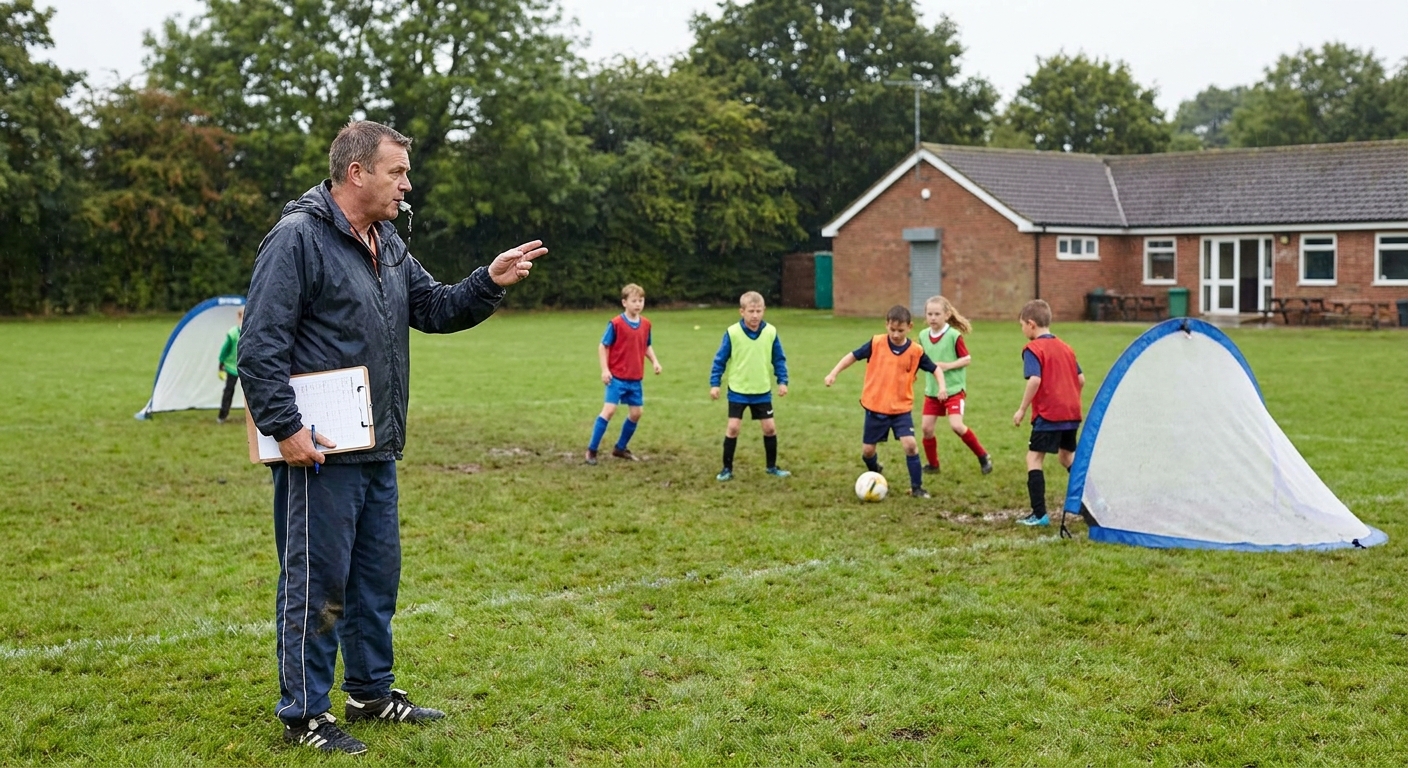
Every grassroots coach knows the feeling: it is half six on a cold Tuesday, the first few players are jogging over, and you have a vague idea but no real plan. The single biggest improvement you can make to your training is not a clever new drill - it is having a reliable shape for the session that you can drop any theme into. Get the structure right and the content almost looks after itself.
This template follows the flow The FA promotes for grassroots and youth football: an arrival activity, leading into skill practice, leading into a small-sided game. It moves players from simple to game-realistic, gives everyone a ball as early as possible, and finishes with the bit they actually came for - a game. Below is the skeleton you can reuse every week, an explanation of why each phase exists, how to adapt it for different ages, and a complete worked example you could run tonight.
The Session Skeleton
Here is the reusable template for a typical 60 to 75 minute junior session. Print it, scribble your theme at the top, and slot a drill into each phase. The minutes are a guide - the only rule is that the small-sided game gets the biggest single slice.
60-75 Minute Session Template
- Arrival activity / ball mastery (10 min): A ball each as players turn up. No standing around - the moment a child arrives they are touching the ball.
- Warm-up game (10 min): A fun, active game that raises the heart rate and switches the brain on, ideally with a ball and lots of dribbling, dodging and changing direction.
- Skill practice (15 min): Introduce the session's one theme - a technique, a 1v1, a move - in a simple practice where players get repetition without too much pressure.
- Skill in a game-like practice (15 min): The same theme, now with opponents, a goal and a decision to make. This is where the skill starts to look like real football.
- Small-sided game (15-20 min): The bit they came for. 3v3, 4v4 or similar, where players use the theme freely. Give it the most time.
- Cool-down & chat (5 min): A gentle wind-down and a quick word - what went well, one thing to remember - then send them home buzzing.
Why Each Phase Exists
The shape is not arbitrary. Each phase has a job, and understanding why makes you far better at adapting it on the night.
The arrival activity solves the most wasteful moment in grassroots football: the dead time while you wait for everyone to show up. Instead of a few early birds standing about, every child who arrives picks up a ball and starts working on their touch. By the time the whole squad is there, they have already had hundreds of contacts with the ball. It is the easiest free improvement you will ever make.
The warm-up game prepares bodies and minds together. Children do not need long static stretches; they need to raise the heart rate, get moving in all directions and start enjoying themselves. A game that involves dribbling and dodging warms them up and rehearses football movement at the same time. Two birds, one ball.
The skill practice and the game-like practice are a pair, and the order matters. First you let players get the feel of the technique with plenty of repetition and not much pressure. Then you add an opponent, a target and a decision, so the skill has to survive contact with real football. Skipping straight to the pressured version frustrates beginners; staying in the easy version too long bores everyone. The bridge between them is where the learning happens.
The small-sided game is the destination. It is what the children turned up for, and it is also where they learn most - more touches, more decisions, more goals and more fun per minute than any drill. Small numbers are the secret: 3v3 or 4v4 means nobody hides and everybody is involved. This is the heart of The FA's grassroots thinking.
The FA "Let Them Play" Principle
If there is one idea to take from modern grassroots coaching, it is this: more playing, less queueing. The FA's whole approach to youth football is built on maximising the number of touches, decisions and goals each child gets. Long lines waiting for a turn, complicated drills that need the coach to keep stopping play, and games where only a couple of confident kids see the ball - these are the enemies of development.
Practically, that means keeping your groups small, running several mini-pitches rather than one big game, and resisting the urge to over-coach. Set the practice up, let it run, and step in only when you have something genuinely useful to add. A coach who talks for two minutes every ninety seconds is a coach whose players are stood still. Let them play, watch carefully, and save your coaching points for the natural breaks.
Adapting It: U7s vs U12s
The skeleton is the same across the age groups - the dials you turn are duration, complexity and how much you say.
For U7s to U9s, lean towards 60 minutes total, keep every phase short, and make everything a game. Attention spans are brief, so an arrival activity might be freestyle dribbling and the warm-up a simple tag game. Keep instructions to a single sentence, use plenty of small games, and do not worry about tactical detail - the wins here are confidence, lots of touches and big smiles. If a child wants to dribble it themselves rather than pass, let them; that bravery is exactly what you want to encourage at this age.
For U10s to U12s, you can stretch to 75 minutes and ask a little more. The same flow holds, but the skill and game-like phases can carry more detail - a clear trigger for when to commit a defender, a target to aim for, a small tactical idea. Players this age can handle a 4v4 or larger format and start to grasp shape and decision-making. The principle of letting them play still rules, but your coaching points can be slightly more advanced. If you are starting to think about shape and positions, our guide to football formations and positions pairs well with sessions at this age.
A Worked Example: "Sharpening 1v1 Attacking"
Templates are easier to trust when you see one filled in. Here is the skeleton above turned into a complete 70-minute session for a U10 to U12 group, themed around 1v1 attacking - beating a defender with the ball. Every phase carries the same idea through, building from a free dribble to a full game. Each practice links to a ready-made drill you can open and run.
Phase 1 - Arrival / ball mastery (10 min). As players arrive, every one of them takes a ball and works on close control and changing direction. A simple free-dribble activity gets hundreds of touches in before the session has even "started".

Phase 2 - Warm-up game (10 min). Raise the heart rate with a fun, ball-based chasing game. Dribbling under a bit of pressure while avoiding being caught is the ideal warm-up for a 1v1 theme.
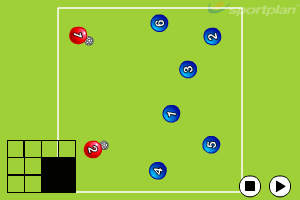
Phase 3 - Skill practice (15 min). Now introduce the theme. Players take turns running at a defender in a controlled practice, working on the feint, the change of pace and committing the defender before going past. Plenty of repetition, low pressure, clear feedback.
Phase 4 - Skill in a game-like practice (15 min). Add a goal and a real outcome. Now the 1v1 ends in a finish, so players must beat their defender and score - exactly the decision they face in a match.
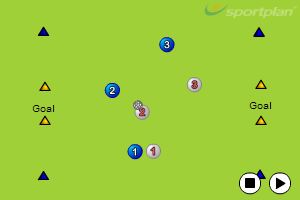
Phase 5 - Small-sided game (15 min). The bit they came for. A 3v3 game gives every player constant 1v1 situations, plenty of touches and lots of goals - and lets them use the session's theme freely, without you stopping play.
Phase 6 - Cool-down & chat (5 min). Wind down with a gentle jog and a few light stretches, then a quick huddle: pick out a couple of good moments of bravery on the ball, give them one thing to remember - "commit the defender" - and send them home wanting to come back. That is the session done, and the theme has run all the way through.
Make It Yours
The power of a template is that you swap the theme and keep the shape. Next week it might be passing, defending or shooting - the flow stays exactly the same, you just drop different drills into each phase. Build a folder of go-to practices for each phase and planning a session becomes a five-minute job rather than a Tuesday-night panic.
For ready-made practices to fill the skill and game phases, our junior football drills guide is a great starting point, and you can browse the full Football drills library for hundreds more sorted by skill - dribbling, passing, shooting, defending and conditioned games. Pick a theme, choose your drills, and let them play.
Frequently Asked Questions
How long should a junior football session be?
For most grassroots junior teams, 60 to 75 minutes is about right. Younger players (U7 to U9) cope best with around 60 minutes because concentration fades quickly, while U10 to U12 can usefully train for 75 minutes. The key is not the total length but how the time is split: keep every phase short and active, get a ball to every child as fast as possible, and finish with a proper small-sided game. A tight, busy hour beats a sprawling ninety minutes of queueing every time.
What should a football warm-up include?
A junior football warm-up should get hearts pumping and, ideally, do it with a ball at every player's feet rather than with laps and static stretches. Start with an arrival activity such as ball mastery or freestyle dribbling as players turn up, then move into a fun warm-up game that involves dribbling, dodging and changing direction - tag games with a ball are perfect. The aim is to raise the heart rate, switch the brain on, and practise touching the ball, all at once. Save long static stretching for older or adult players.
How do I plan a football session?
Work backwards from the game. Pick one clear theme for the session - for example, 1v1 attacking or keeping the ball - then build a flow that moves from simple to game-realistic: an arrival activity as players arrive, a warm-up game, a skill practice where the theme is introduced, the same skill in a game-like practice with opponents and a goal, and finally a small-sided game where players use the skill freely. Finish with a short cool-down and chat. One theme, five or six short phases, and as much ball-rolling time as you can manage.
How much small-sided game time should kids get?
As much as you can reasonably give them - it is the part they came for and the part they learn most from. Aim for at least 15 to 20 minutes of small-sided game in a 60 to 75 minute session, and remember that the skill-in-a-game-like-practice phase is also game time. The FA's grassroots philosophy is built around playing more and queueing less: small-sided formats such as 3v3 or 4v4 mean more touches, more decisions and more goals for every child. If anything is going to overrun, let it be the game.
What is the best structure for a grassroots football session?
A reliable structure follows the FA's arrival-activity to skill to small-sided-game flow: an arrival or ball-mastery activity as players turn up, a warm-up game, a skill practice introducing the theme, that skill in a game-like practice, a small-sided game, and a short cool-down and chat. Each phase flows into the next, the theme runs all the way through, and the small-sided game gets the biggest single chunk of time. Keep groups small so nobody stands in a queue waiting for a turn.