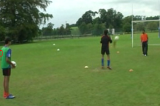
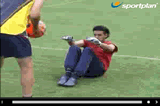
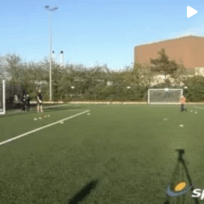
A great drill for working with several keepers. The first player side-steps along the first line of the L-shaped cones with their head up.
When they reach the end of the first line the feeder passes the ball into their body for them to catch and throw back.
They then side-step out and back along the next line of cones where when they reach the end the feeder plays a low and hard driven ball for them to dive and catch / stop.
Keepers must place both feet between each set of cones - promoting fast feet.
The feeds should be challenging - the first ball should be driven and can be played slightly higher or lower to keep the keeper thinking.
Keepers should attempt to catch the second low ball but if they're unable to do so they should practice knocking the ball away from the danger area (not rebounding the ball back into the 18 yard box for the opposition to score an easy rebound!)
in more ways than one
 sportplan_netball

in more ways than one
sportplan_football

Four Halloween-themed games sneak a full warm-up, finishing, rondo and small-sided game into one junior football session this week.
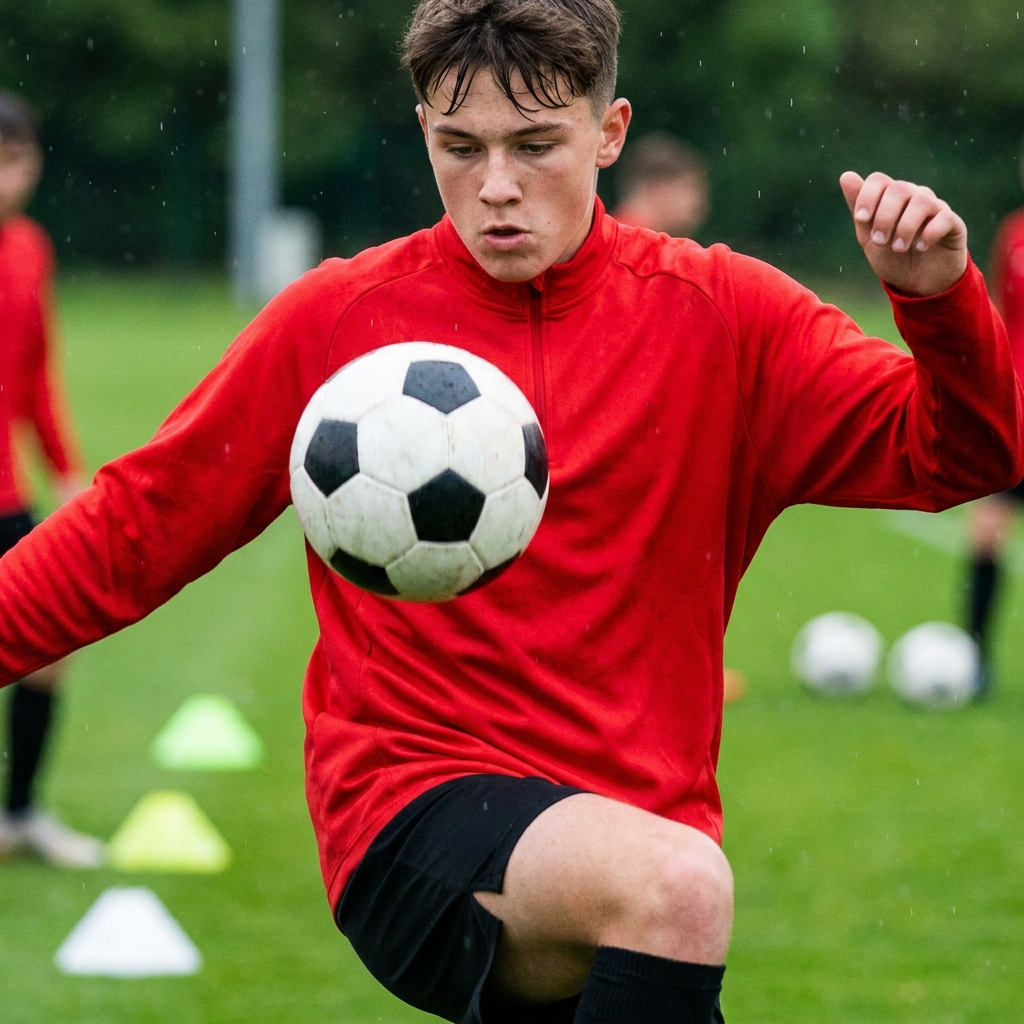
Deliberate heading is now out of U11 grassroots matches. Here is how to coach chest, thigh and foot control so your players still win the ball in the air.
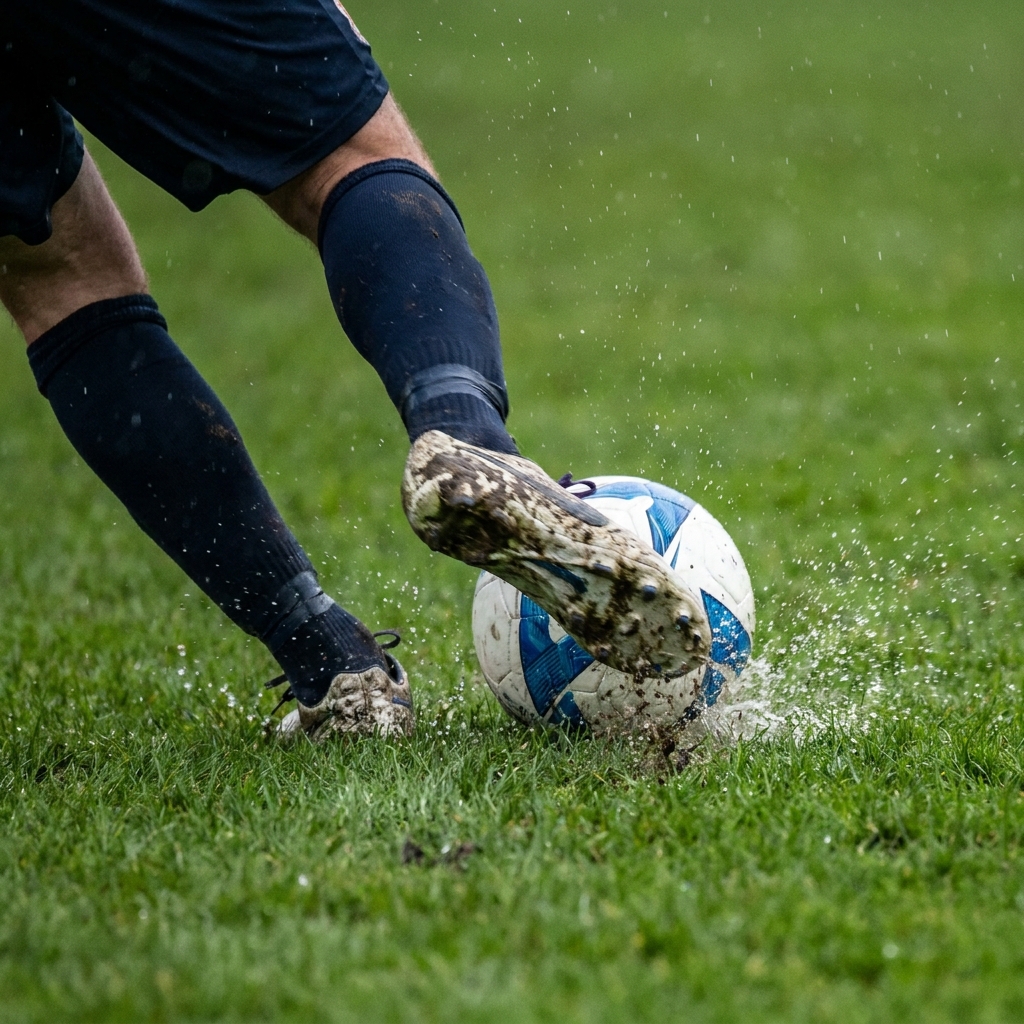
Long-range goals doubled at the 2026 World Cup as teams sat deep. Here is how to coach when to shoot from distance, the technique, and the follow-up.