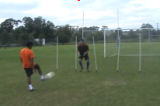
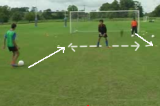
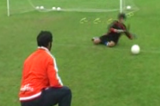
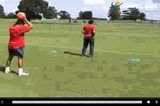
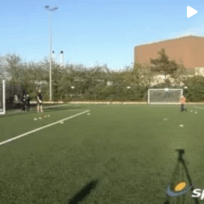
The keeper and the feeder work in each of the gaps between the poles.
The feeder plays the ball at mid-height into the keeper's body. Once the ball has been caught the keeper throws the ball back out and then turns to run between the poles and touch the ground.
After touching the ground behind the poles they should then run out to meet the next ball before turning to run between the next set of poles and touch the ground.
You can increase the fitness element of this drill by asking the keeper to run further behind the poles before turning back to catch the ball.
in more ways than one
 sportplan_netball

in more ways than one
sportplan_football
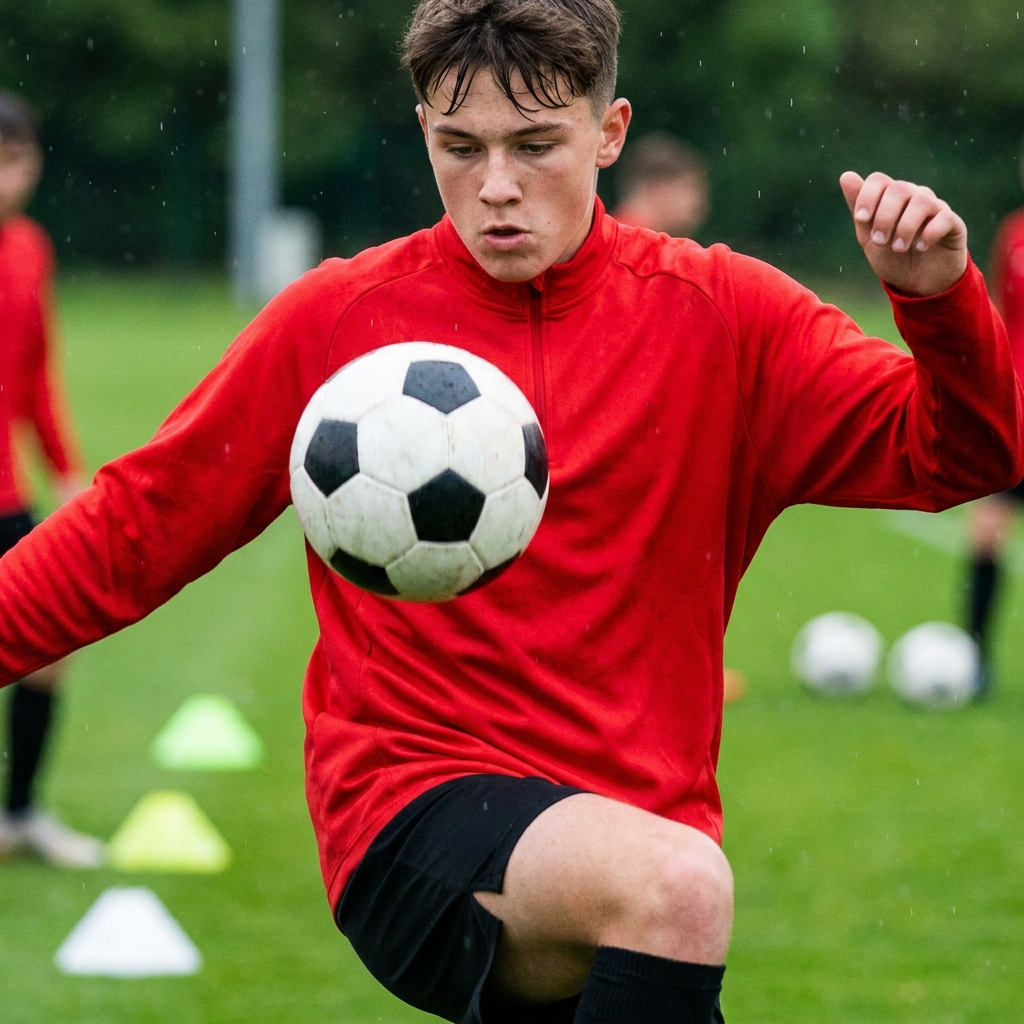
Deliberate heading is now out of U11 grassroots matches. Here is how to coach chest, thigh and foot control so your players still win the ball in the air.
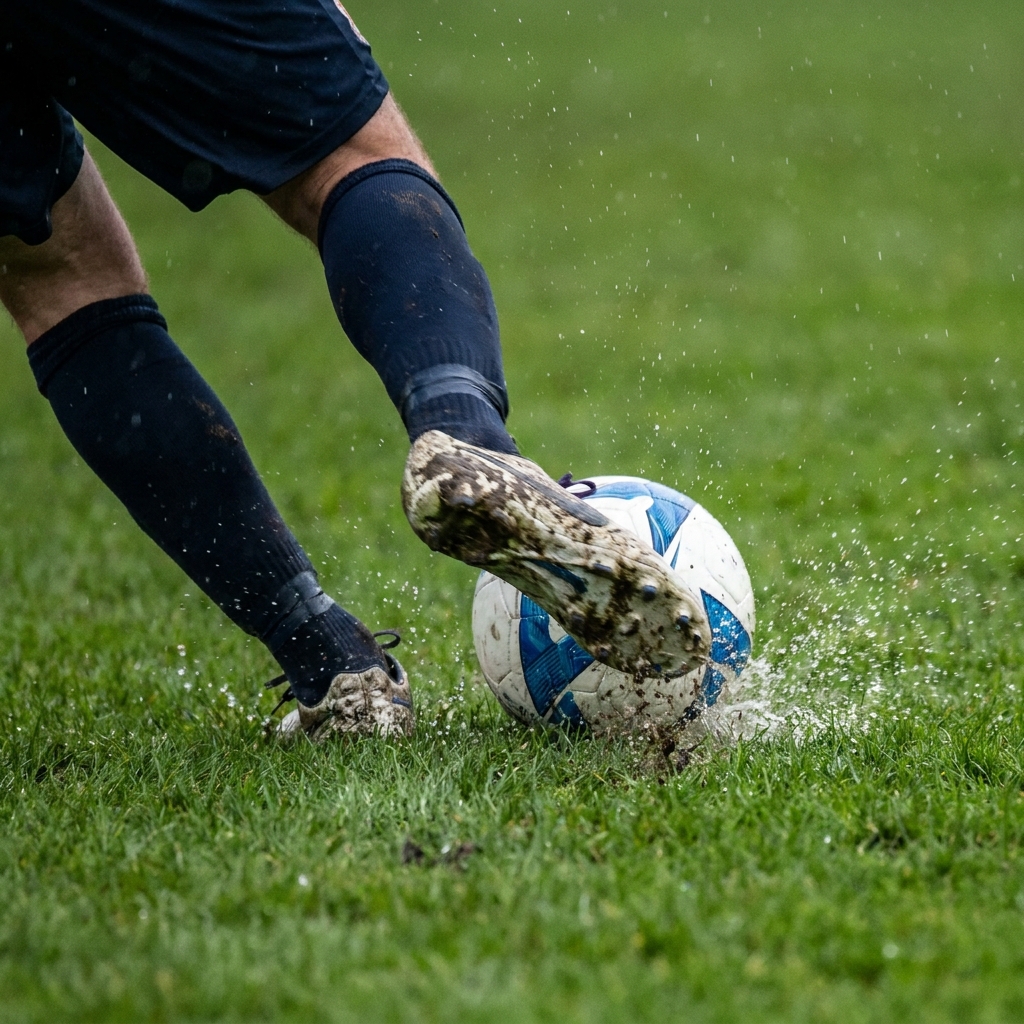
Long-range goals doubled at the 2026 World Cup as teams sat deep. Here is how to coach when to shoot from distance, the technique, and the follow-up.
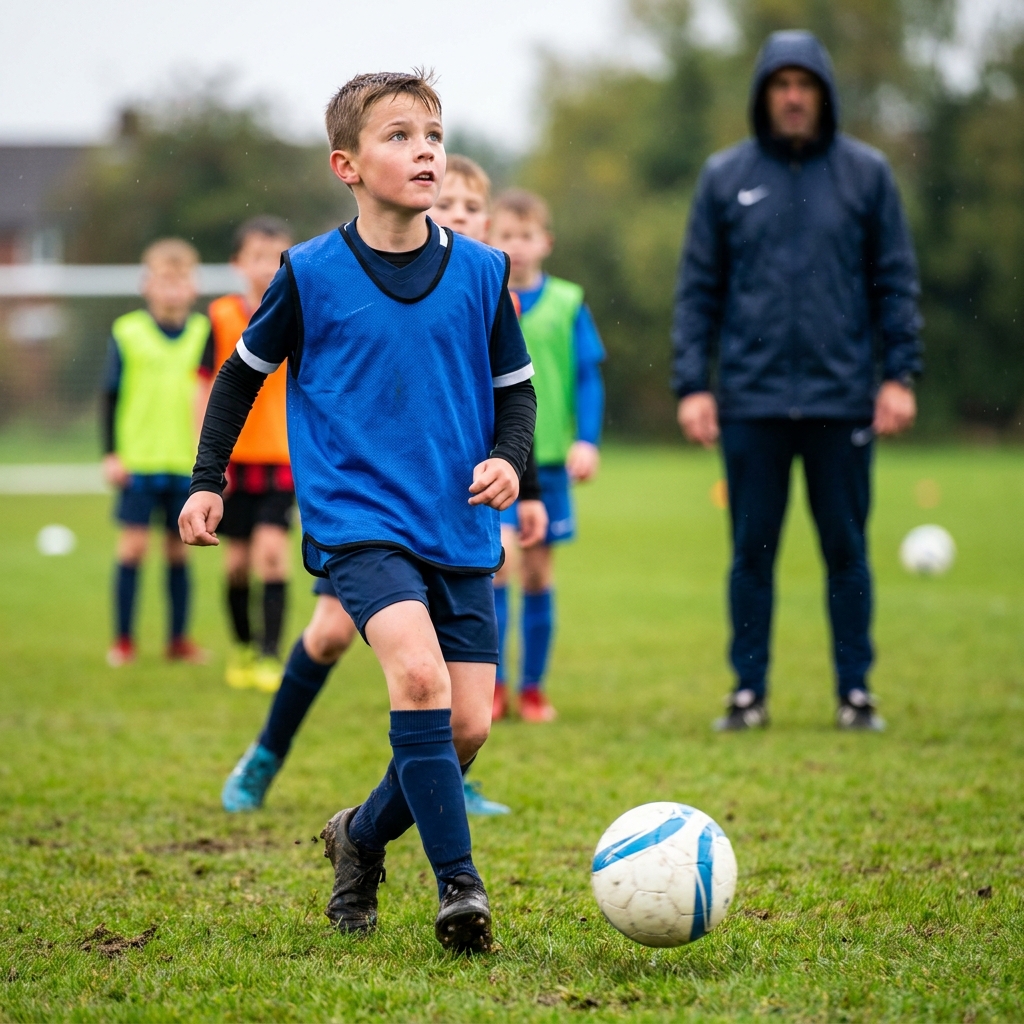
Under FutureFit, your Under-9s stay at 5v5, your Under-11s stay at 7v7 and your Under-13s stay at 9v9. Same pitch, same numbers, one more year. Here is how to make sure that year feels like a step forward rather than a repeat.