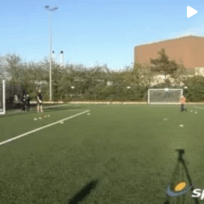
The pitch is 30m x 50m with 2 end zones 30m x 10m plus 2 small goals at each end.
The object of this drill is to keep possession of the ball and to score as many goals or make as many passes as possible. The game is played in 10 minutes durations.
Two equal teams (5v5) (6v6) etc
Each team must add up their total completed passes during the 10 minutes. (this can be done with the coach using counters).
One (1) point is scored for each goal and Two (2) points are scored for every ten passess completed.(eg: 100 passes = 20 points)
To gain the most points each team must try to score goals and when they can't shoot must keep possession of the ball and build up as many completed passes as possible.
No player can enter either of the end zones unless after a missed shot and then play resumes with the opposite team bringing the ball back into play from that end zone.
When the ball goes out in the middle zone, play resumes with the opposite team within that zone.
Goal shooting from all angles within the middle zone.
Communications between players.
Sheilding and Passsing the ball.
Quick transistion from attacking play to defending play.

in more ways than one
 sportplan_netball


in more ways than one
sportplan_football

Under FutureFit, your Under-9s stay at 5v5, your Under-11s stay at 7v7 and your Under-13s stay at 9v9. Same pitch, same numbers, one more year. Here is how to make sure that year feels like a step forward rather than a repeat.
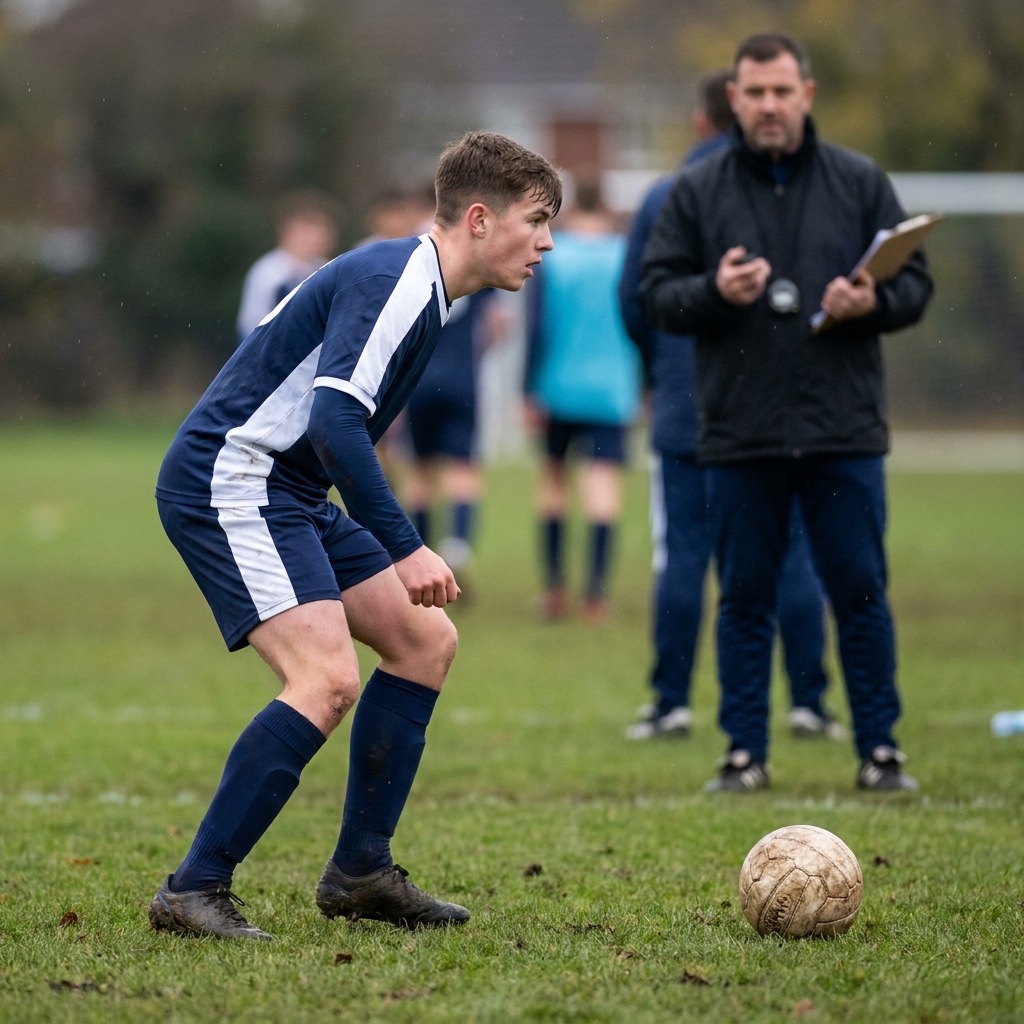
Most 1v1s are lost in the first second, when the defender rushes in and dives. Teach your players to slow the attacker down, take away the dangerous option and pick the right moment, and they will win far more of them.

The FA's FutureFit framework lands this season, bringing a 3v3 entry format at Under-7s. Here is what actually changes on a Saturday morning, and how to coach it well.