Strengths in relation to Team Shape, in relation to the Attacking and
Defending?
- Build up the play from the back (GK or right/left back).
- Wide wingers when in possession.
Identify Weaknesses in relation to the opposing system: Attacking and
Defending?
- Lower number of players in central midfield in relation to opponent.
- Higher pressure in the middle from the opponent.
What style of play does the system suit in relation to the opposition?
- Play quick touches with the wingers, using the central midfielder.
- Control easily the only attacking player.
What are the Key areas when playing this style and system?
- Using winger in build up the game.
- Recovery of the attacking midfielder when defending.
- Play quickly from the right/left back.
What is your Transition to Defend Strategy?
- Recovery of attacking midfielder.
- Recovery of wingers with the right and left back getting close to the central defence (1-5-2-1).
What is yourTransition to Attack Strategy?
- WingerS go wide (on the edge of the side lines) creating space for central midfield to buid uop the game and play in the middle with the attacking midfielder).
How can you adapt your system if required?
- 1 - 3 - 4 - 1 when the opponent team has a higher number of central midfielders.
What is your teams 2nd choice System and when would you use this
system?
1 - 4 - 3 - 1
When the opponent has 2 players playing in line in attack (1 - 3 - 3 - 2).

in more ways than one
 sportplan_netball

in more ways than one
sportplan_football

2026 brings the biggest World Cup ever, revolutionary rule changes, and new tactical opportunities for coaches at every level. Here's what you need to know.
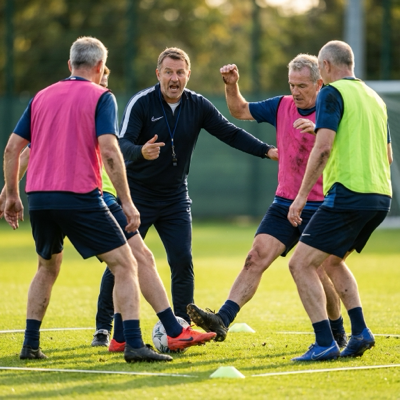
Possession without purpose is pointless. These drills combine ball retention with physical conditioning to create teams that dominate and outlast opponents.
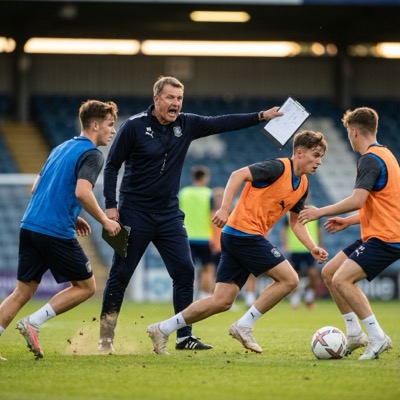
Teams have just 6 seconds to exploit a turnover before defences reorganise. Learn how to train your players to attack with speed and purpose.