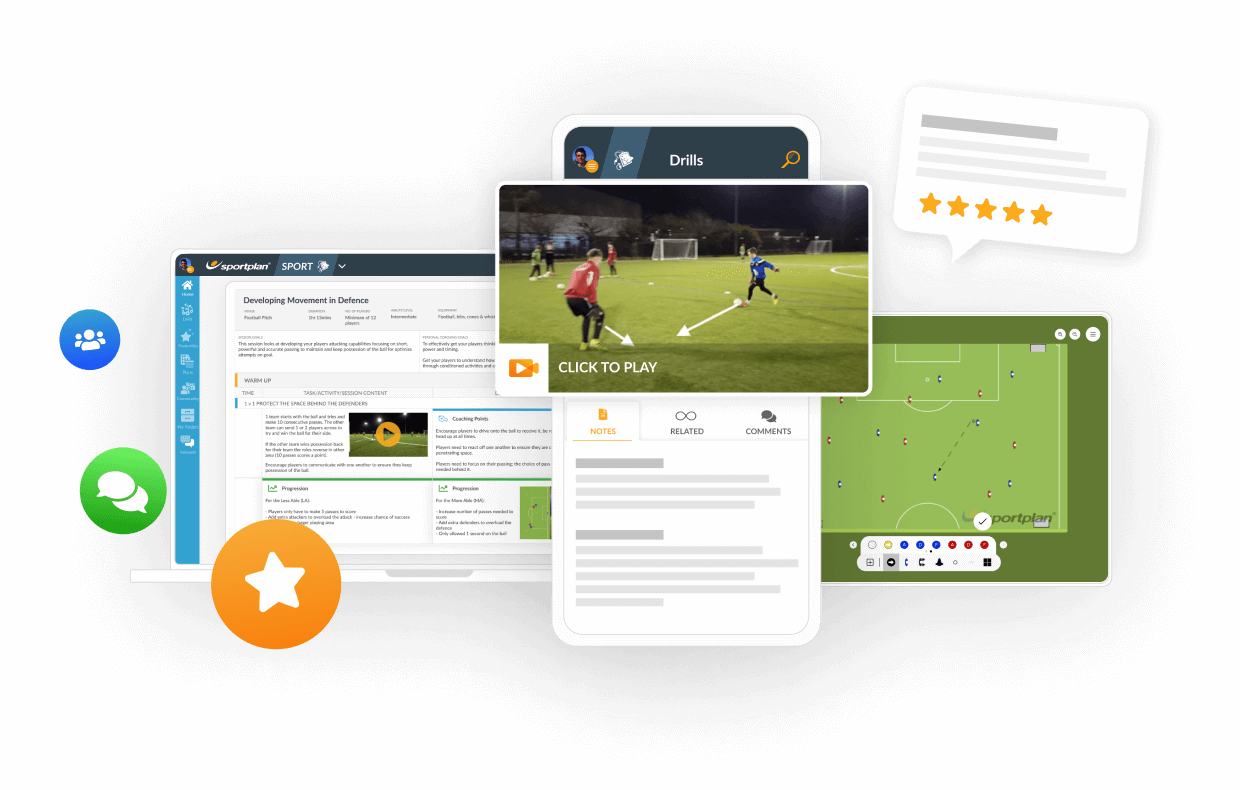
1. Three teams of 3
2. Coach in middle section with supply of balls
3. Coach feeds reds who try to keep possession within their area
4. Coach shouts "one" and one member of black team can go an try and win ball back
5. Once reds make 10 passes they attempt to thread pass to Yellows
6. Yellows repeat and coach again shouts "one" and different black player attempts to win balls back
7. If blacks win back ball, team who lose possession go in middle and coach feeds new ball in to keep game moving quickly
Progressions
1. Add more defensive players by shouting "two"
2. Change playing area size to suit ability. Smaller is harder
1. Using whole area to create space when in possession
2. Communication to let teammates know where you are both with and without ball
3. Game awareness - What to do when you lose ball
in more ways than one
 sportplan_netball


in more ways than one
sportplan_football
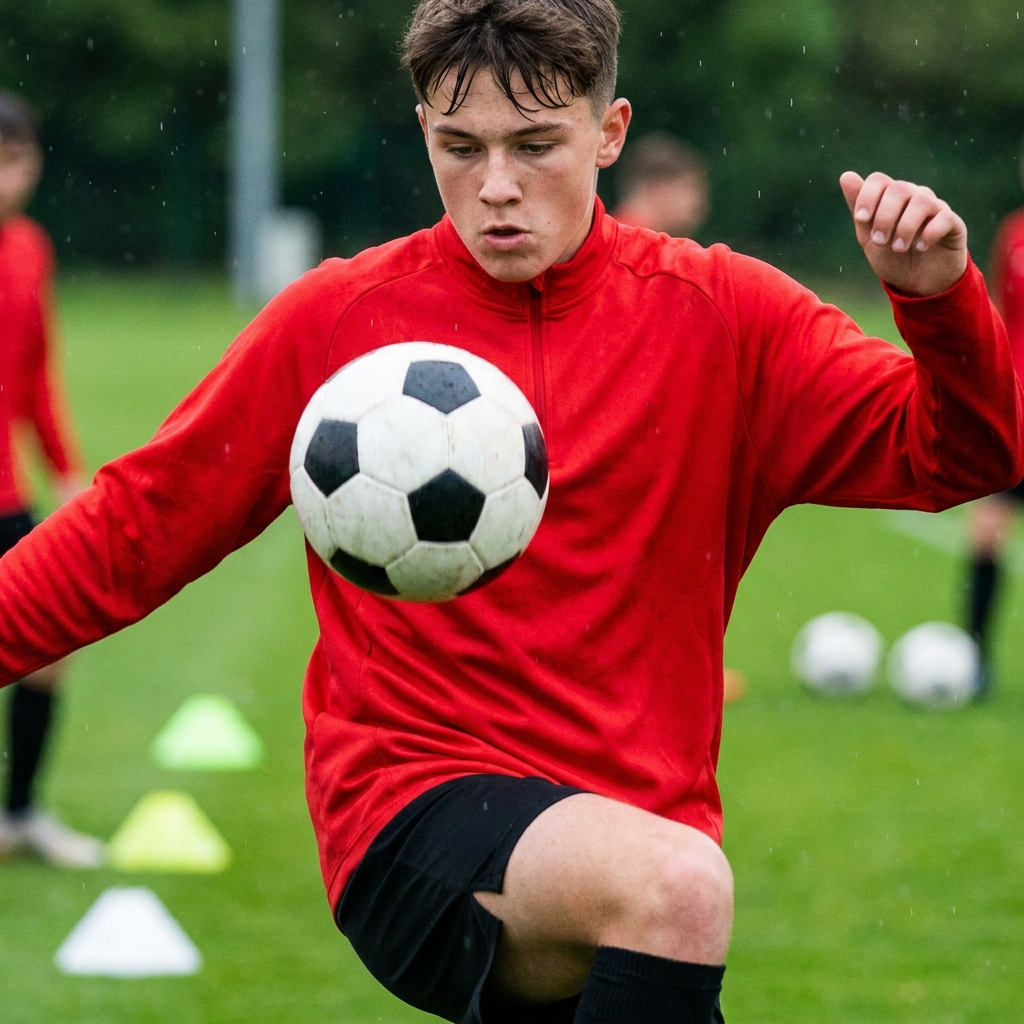
Deliberate heading is now out of U11 grassroots matches. Here is how to coach chest, thigh and foot control so your players still win the ball in the air.
Long-range goals doubled at the 2026 World Cup as teams sat deep. Here is how to coach when to shoot from distance, the technique, and the follow-up.
Under FutureFit, your Under-9s stay at 5v5, your Under-11s stay at 7v7 and your Under-13s stay at 9v9. Same pitch, same numbers, one more year. Here is how to make sure that year feels like a step forward rather than a repeat.