6+ players form a circle with an attacking player and a defensive player in the middle.
The attacking player starts with the ball, passing it to a member of the outer circle and then directing where they would like to receive the 1-2.
They repeat this process, switching direction and changing where they pass the ball each time. They cannot pass to the outer player on either side of the one who just received the pass.
It is the defensive player's job to intercept the pass of the attacking player. They are not allowed to simply tackle the attacker, the defensive player MUST intercept a pass.
This process continues until the defensive player successfully wins the ball from the attacking player.
The two players in the middle then swap with two from the outer circle and the drill resumes.
Encourage the attacking player to change direction frequently as opposed to just making their way around the circle in one direction.
The defensive player should essentially be "Man Marking" the attacking player, anticipating their next pass or move.
The players should be encouraged to progress onto one touch football. Each pass from the outer circle tshould be returned one touch and so on.
in more ways than one
 sportplan_netball


in more ways than one
sportplan_football

Under FutureFit, your Under-9s stay at 5v5, your Under-11s stay at 7v7 and your Under-13s stay at 9v9. Same pitch, same numbers, one more year. Here is how to make sure that year feels like a step forward rather than a repeat.
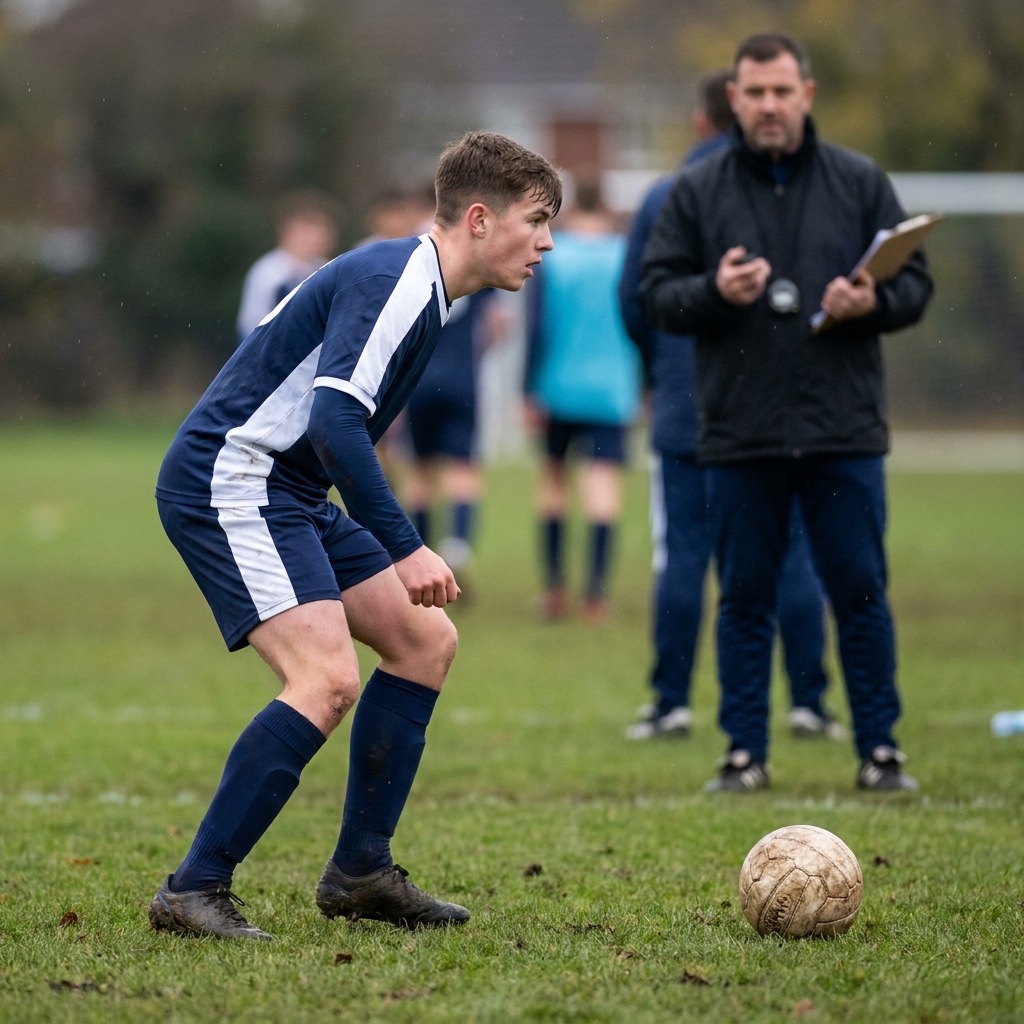
Most 1v1s are lost in the first second, when the defender rushes in and dives. Teach your players to slow the attacker down, take away the dangerous option and pick the right moment, and they will win far more of them.

The FA's FutureFit framework lands this season, bringing a 3v3 entry format at Under-7s. Here is what actually changes on a Saturday morning, and how to coach it well.