Unopposed:
4 players 1 ball
Pass and move
Progression 1:
specify which foot to use/up the tempo/give target passes in a time frame
Progression 2:
On the call 'Play' the player with the ball passes the ball clockwise to a free player in the adjacent box.
Progression 3:
On the call ' Dribble' the player with the ball carries the ball at pace into the adjacent box.
Opposed:
Progression 4:
A bib will be placed in each square.
on the call 'Defender!' the closest player will pick up the bib and run clockwise to the next box and act as a defender until the ball is either won or goes out of play.
Quality of pass/movement/communication
Progression 2:
Vision from player passing to identify recieving player.
Recieving player to make space to recieve/communicate
Quality of pass.
Progression 3:
Player dribbling must do so at speed into space good use of vision/awareness needed.
Progression 4:
Defender:
to close the ball quickly
use body shape to effect play
Attackers:
To move the ball quickly
Good movement/communication
in more ways than one
 sportplan_netball


in more ways than one
sportplan_football
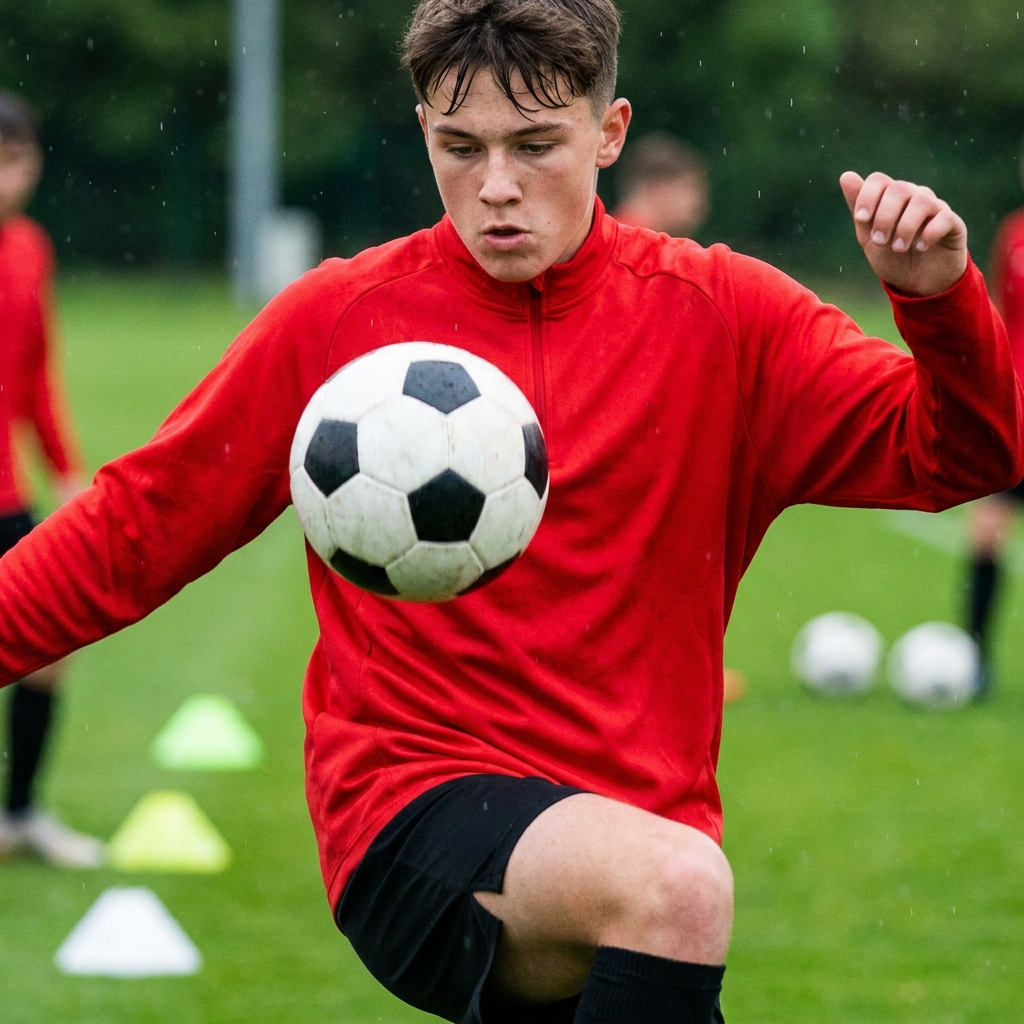
Deliberate heading is now out of U11 grassroots matches. Here is how to coach chest, thigh and foot control so your players still win the ball in the air.
Long-range goals doubled at the 2026 World Cup as teams sat deep. Here is how to coach when to shoot from distance, the technique, and the follow-up.
Under FutureFit, your Under-9s stay at 5v5, your Under-11s stay at 7v7 and your Under-13s stay at 9v9. Same pitch, same numbers, one more year. Here is how to make sure that year feels like a step forward rather than a repeat.