Development
Attacking Overloads : 3v2 Overloads
This session encourages players to play with a quick tempo, to make clever movements and to break lines - i.e. try to get beyond the defender. It also tests players' decision-making as they are challenged to make the most of an overload situation.
Organisation
Position a large goal at 1 end of the pitch with 2 smaller goals/targets in either corner at the opposite end.
Equidistant, but slightly set back, from the 2 smaller goals – mark out a 2x2 metre/ yard ‘holding area’ (see diagram and video).
Mark out a curved line from 1 side of the pitch to the other with the start and end points being approximately 12 yards/metres from the goal line. GK’s take it in turns to go in goals.
Two defenders start on the goal line with 1 on each post. 2 defenders start in the holding area. Three attackers start on the edge of the curved line. Play begins when 1 defender passes the ball to an attacker. Both defenders on the posts need to rush out to close the attackers down.
One defender from the holding area can join in and help defend once the attacker has his first touch. Rotate the players including GK’s if you have more than 1.
Skill Development
Shooting, finishing, communication, dribbling, running with the ball, shot stopping, control.
Coaching Points
Movement – think of the runs to create space
Tempo – break quickly
Decision-making – make the most of the overload
Try to break lines, i.e. try to get beyond a defender. Don’t always play in front of them
Angle to receive body shape
The Coaching Manual
The Coaching Manual contains an entire Key Stage 1 to 4 curriculum with 100s of practice ideas in broadcast-quality video.
Access their entire coaching sessions library now.
[The Coaching Manual Logo]
in more ways than one
 sportplan_netball


in more ways than one
sportplan_football
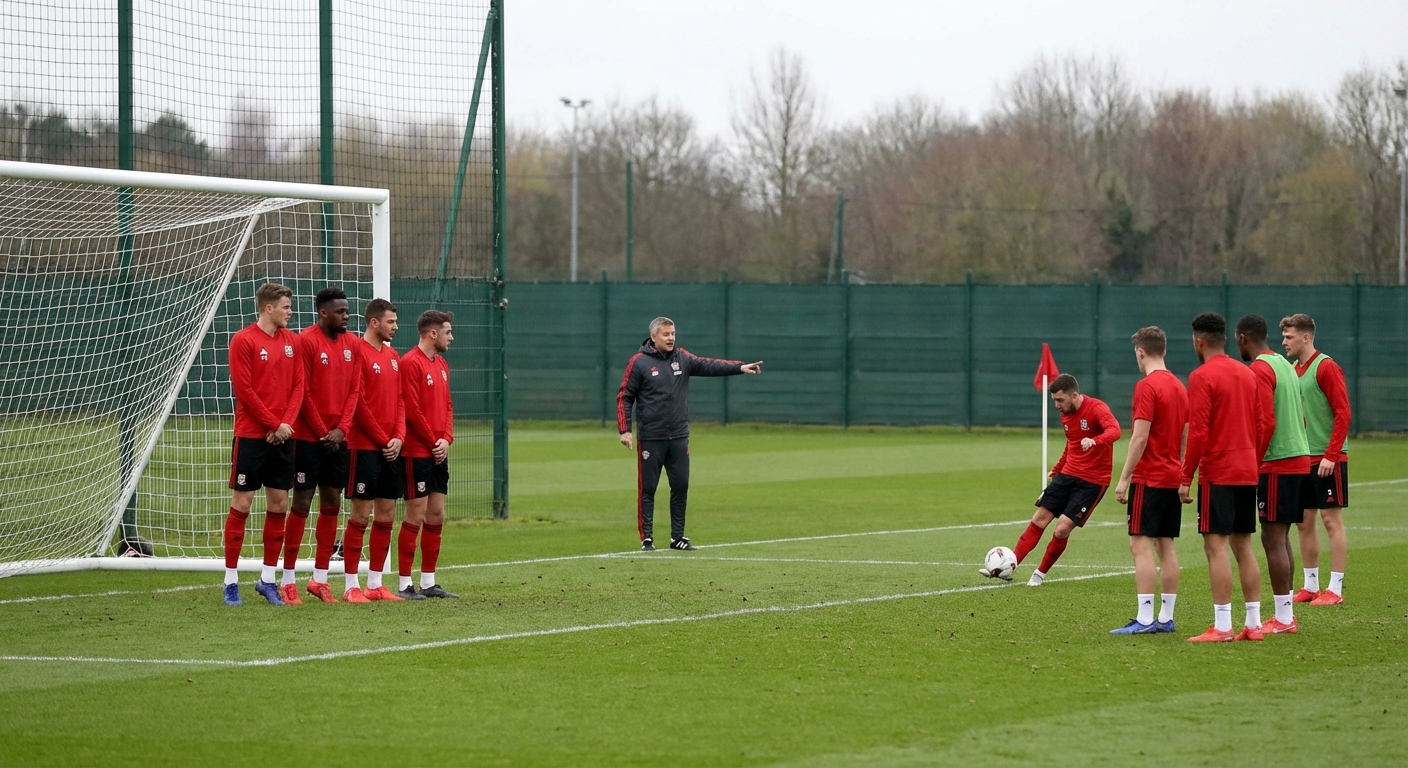
Set pieces account for roughly a third of all goals in football, yet many coaches spend surprisingly little time coaching defensive organisation at corners and free kicks. This article compares zonal and man marking systems, explores hybrid approaches, and provides a practical session structure for building set piece resilience into your team.
A player's first touch determines everything that follows: whether they can play forward, turn, or simply retain the ball. This article explores why training first touch in isolation is not enough, and how to design sessions that develop this critical skill under realistic game pressure.
The coaching methodology revolution sweeping grassroots football - and how to implement it at your club this season.