

Why Set Piece Defending Deserves More Training Time
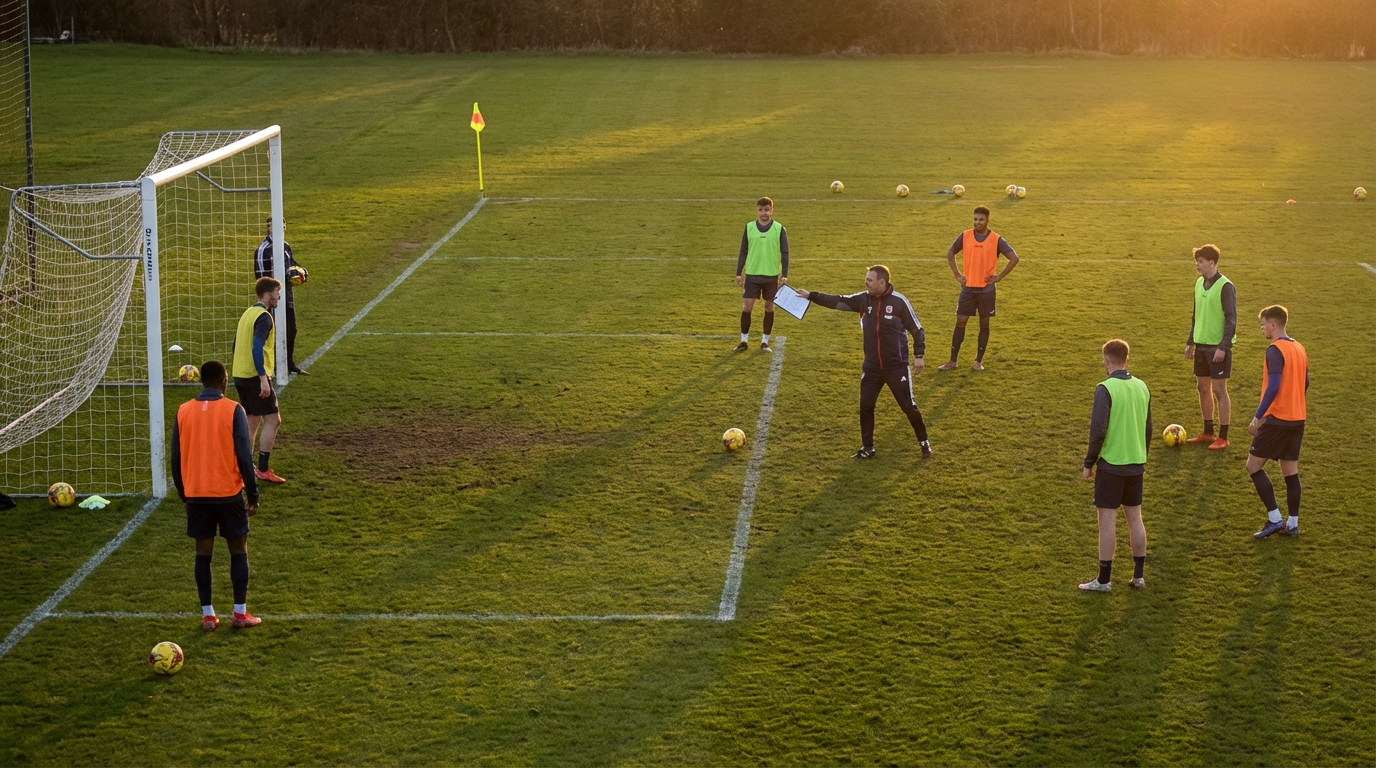
Data from the top five European leagues consistently shows that between 25 and 35 percent of all goals originate from set pieces. At grassroots and youth level, that proportion is often even higher because technical delivery quality is more variable and defensive organisation tends to be weaker. Despite this, many coaching sessions devote the final five minutes to a cursory rehearsal of corners rather than treating set piece defence as a genuine tactical priority.
The reality is that good set piece defending is coachable, repeatable, and can transform a team that leaks soft goals into one that opponents fear attacking from dead ball situations. The first decision every coach must make is which system to use: zonal marking, man marking, or a hybrid of both.
Zonal Marking: Controlling Space
In a zonal system, defenders are assigned areas of the penalty box rather than individual opponents. Each player is responsible for attacking the ball aggressively if it enters their zone. The goalkeeper typically takes charge of the back zone, while the most dominant aerial players occupy the six-yard box and near-post areas.
The primary advantage of zonal marking is that defenders can set up early and hold their shape before the ball is delivered. They face the ball, which gives them a significant advantage when timing their jump. They are also less vulnerable to decoy runs, screens, and blocking movements because they are not trying to track an opponent through traffic.
However, zonal marking requires exceptional communication and discipline. If a player fails to attack the ball in their zone, or if the delivery lands in the gap between two zones, the system breaks down. Zonal marking also struggles against teams that flood a particular area with multiple runners, creating numerical overloads in a single zone.
When Zonal Works Best
- Your team has strong, brave aerial defenders who will attack the ball
- You face opponents who use lots of movement and screening at set pieces
- Your players are disciplined enough to hold their zone under pressure
- You want a system that is easier to organise quickly with limited training time
Man Marking: Tracking Opponents
In a man-to-man system, each defender is assigned a specific opponent to mark throughout the set piece. The advantage is clear accountability: every attacker has a shadow, and it is obvious after a goal who lost their runner. Man marking also allows you to match your best aerial defenders against the opponent's biggest threats.
The downsides are significant, though. Defenders must turn their back to the ball to watch their opponent, which means they are often jumping blind or reacting late. Attackers can use screens, crossover runs, and late movement to break free from their marker. A single lapse in concentration from one defender can undo the entire system.
Man marking is also more demanding to set up. Assignments must be communicated clearly before every set piece, which takes time and can lead to confusion if opponents change their setup. At youth level, players often lose their marker in the chaos of a crowded penalty box.
The Hybrid Approach: Combining Both Systems
Most professional teams now use a hybrid system that takes the best elements of both approaches. A typical hybrid setup at a corner might look like this: three or four players mark zonally across the six-yard box, two players man-mark the opponent's most dangerous aerial threats, one player guards the near post, one guards the back post, and one or two players position on the edge of the box to deal with cutbacks and second balls.
The hybrid approach gives you zonal coverage in the most dangerous area while still accounting for specific threats. It requires more coaching time to implement but is more resilient against teams that have clearly practised their attacking set pieces.
Common Mistakes in Set Piece Defending
- Ball watching: Defenders staring at the delivery instead of holding their zone or tracking their runner
- Static defending: Failing to attack the ball aggressively when it enters the danger area
- Poor communication: No one taking charge of organising the defence before delivery
- Ignoring the short option: Leaving the short corner or free kick routine completely undefended
- Switching off on the second ball: Relaxing after the initial clearance and conceding from a recycled delivery
Session Structure: Set Piece Defending Training
A well-structured 75-minute session dedicated to set piece defending might follow this progression:
Warm-Up (15 minutes)
Heading technique in pairs. Progress to competitive heading in small groups with servers delivering from wide positions. Emphasise timing of jump, eye contact with the ball, and directing headers away from goal.
Zonal Practice (15 minutes)
Set up four zonal defenders on the six-yard box with a server delivering corners. No attackers initially. Focus on each defender attacking the ball in their zone with aggression and correct technique. Progress to adding two passive attackers, then make them active.
Man Marking Practice (15 minutes)
Pairs work: each defender must track an attacker's movement through the box and win the header. Vary the runs: near post, far post, pulling short, late arrivals. Emphasise staying goalside and being physical without fouling.
Full Set Piece Rehearsal (20 minutes)
11v11 or 8v8 corner and free kick situations using your chosen system. Rotate delivery positions. Award points for clean clearances and punish goals conceded heavily to raise the stakes. Include short corner routines and second ball scenarios.
Cool-Down and Review (10 minutes)
Walk through the key roles and responsibilities. Use a tactics board to reinforce positions. Ask individual players to explain their role in the system to check understanding.
Coaching Points to Reinforce
Regardless of which system you choose, certain principles apply universally. Defenders must be brave and decisive. Hesitation in the six-yard box is punished ruthlessly. The goalkeeper must command their area and communicate loudly. Every player should know their role before the ball is delivered, not as the kick is being taken.
Practise your system regularly but briefly. Ten minutes at the end of two sessions per week is more effective than a single 45-minute block. Set piece defending is about repetition and clarity, not complexity. The simplest system that your players execute with confidence will always outperform a complex system that causes confusion.
Frequently Asked Questions
Is zonal or man marking better for youth teams?
For younger age groups, zonal marking is generally easier to implement because players only need to remember their area rather than tracking specific opponents through a chaotic penalty box. It also reduces the physical mismatches that can occur when a small player is assigned to mark a much larger attacker. As players mature, you can introduce man marking elements to create a hybrid system.
How many players should guard the posts at corners?
Most systems use one player on the near post and one on the far post. The near post defender's job is to flick away any delivery aimed at the front zone, while the back post defender covers anything that clears the main defensive group. Some coaches remove the back post defender to gain an extra marker, but this leaves a vulnerable area if the delivery is overhit or flicked on.
How do you defend against short corners?
Assign one or two players to press the short option immediately. They should close down quickly to prevent a crossing angle while the rest of the defence holds its shape. A common mistake is pulling a zonal defender out of position to chase a short corner, which creates a gap in the box. Nominate specific players for short corner duty before the game.
How often should you practise set piece defending in training?
Aim for two short sessions per week during the season, each lasting 10 to 15 minutes. Consistency is more important than duration. Pre-match walkthroughs before games are also valuable for reinforcing roles against the specific threats posed by the upcoming opponent. Vary the delivery type and position each time to keep players engaged.