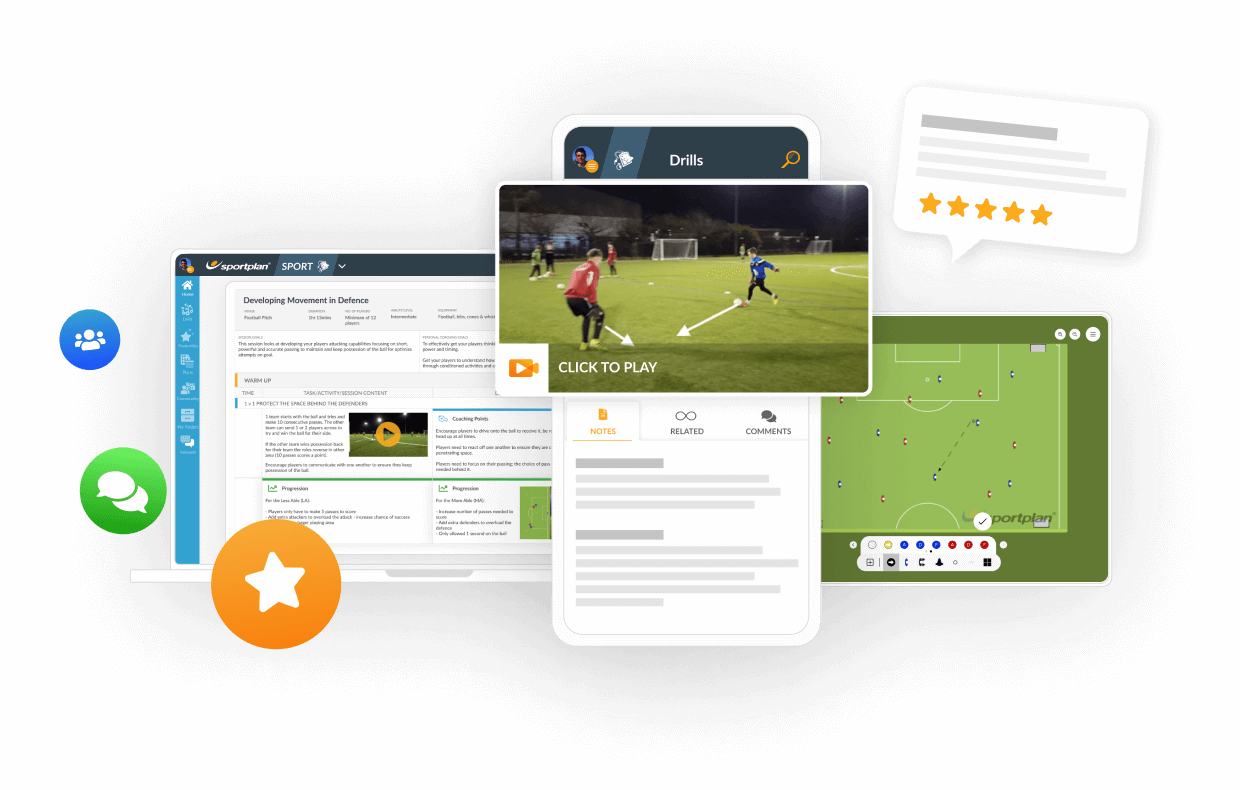


Excellent site with easy to navigate pages.

How do I stop players from taking on one too many opponents in a one v one situation - my players insist on trying to go through too many players.

My team has just moved up to youth football 11 aside. Our defence is solid and our forwards skillfull and quick but we seem unable to win the ball in midfield. Our midfielders watch what is happening hoping the opposition midfielder will mess up, rather than attacking the ball. Encouragement from the sidelines does not seem to help. Can you suggest some training drills.
My forwards are not scoring goals. and i spend half of my sessions on finishing drills. What can i do about this?
Disciplining for misbehaviour? 8-11 year olds, they dont really get bored because i know that sometimes that can be the cause. How or what can i apply a bit of strictness into the team.
Whats the best way to recruit a specific player, is there a website or organisation?We are looking for a left winger/midfielder to play for our first team, they will need to have experience in playing league football. They will be rewarded by playing with one of Sussex's best run youth teams, and all under the umbrella of Shoreham FC with our own stadium.
Hi, my name is Marcos Rezende and I'm from Brazil... I was recently appointed director of the youth team of our club.I'm a bit confused here. There is so many videos and links to study !!! I have 4 teams, 9, 11, 13 and 15 years old. Where should I start ??? Is there a default full plan to follow ? Thank you in advance.
I coach 3 age groups 5s,6s and 8s. How long should each training session last ? Academy's train for a few hours!
Kids get bored of drills and I like to balance the two but I don t want kids falling behind because they not completing drills.
Hi, I coach u13 team and most of them really have poor shoot power. I tried to show them proper way to shoot the ball, we worked on approaching the ball with small steps, and now after few months their shoot technique is mostly satisfying, but they simply lack power. There are 3 or 4 players who can shoot the ball well, but others can't shoot on goal from 15 or 20 metres out which is really worrying because in other teams we play against almost all players can shoot the ball much further than my players. I think 13 years old is too early to start with any serious strength trainings. Any ideas?
I started coaching about year ago in local club with solid youth base. Some of the sessions I run by myself and I want to encourage decision making and creativity in midfield. My goal is to make at least one or two players who will be very good with ball in their feet and who will make others better, simply playmakers. I am trying that with some talk in and after training beside some drills and SSG's. Can you share with me some advices how to succed in that?
I manage and coach two current u8 boys teams, which as you can imagine is time consuming and often stressful. I can often feel under pressure particularly being a female and getting dads interfering. Time wise I have to train them together but I really need some news ideas to engage them and stop the messing about. I have 16 of them and we are going to u9 in the new season. Any help would really be appreciated.
I took over a under 8s team 2 years ago unfortunately soccer is not my game and I did as there was no other option other than to fold. Im a good coach in terms of developing a good team (discipline, teamwork , sportsmanship fun etc) but I think my lack of knowledge about the game is holding the team back . I have a 12 players who are about to move up to the under 10s level , they skill level ranges from timid to very skilled, I try to give each player equal time and the lower skilled players are improving (just not at the same pace as the opposition). Unfortunately the opposition we face seem to be light years ahead in terms of playing a scheme and we are often found out during games (i have used a basic zone defense to try and stop the team becoming ball magnets). I think its a mixture of me insisting all players get equal playing time and the fact I dont know enough about the game to be able to coach an effective scheme and to react to opposition schemes. They are good kids and I want to give them a taste of success (you can only say it was bad luck so many times) but cant seem to get our club to take it to the next level. The drills on sportsplan are helpful but a lot of drills are too complicated for the kids age or can simply go wrong very quickly in reality. We dont get thrashed in games but we cant seem to eke out a draws or wins (I know its not all about winning but try explaining that to the kids when they lose on a regular basis)Any suggestions
What's the best drills for under 9 that is also fun and exciting for that. My team is new so looking for fun way to train but also let me see how what they are best at Asked using Sportplan Mobile App

Im an assistant coach running a under 7 team. During play a few of the parents/family of the players keeping shouting out instructions Like tackle, clear it get back get up front etc. Even the manager I help and it seams to me some if the players get disstracted and confused to what they should do, it's come to the point a player seems to scared to do what he feels, just incase he does something wrong. How do I go about this? Asked using Sportplan Mobile App

Opinions please.After a game do you go into what happened in the game at length / or short and sweet focus on the positive.Personally once the whistle goes they play the game they see and after a game I ask them what was good and not. Asked using Sportplan Mobile App

I want to share the plan or let my youth athletes have access. I know the account has limits to access. How do I get the kids to have a digitalised experience?

Hello all! My kids aged 9 and 7 are very slow when compared to their peers of the same age. They don't seem to fight for the ball and get and watch others play their game. They seem to lack the urgency (heart) needed for the game. (They LOVE football). How can make them move around and react faster. Any help you are able to provide is greatly appreciated. Thanks O
Hello, I am currently coaching an u9's boys team and a majority of them are well behaved and want to play football, but the odd 1or2 tend to mess around at training which distracts the others. I have sat them out in training and spoken to the parents but still this goes on. Do I decide to kick them out of the team altogether or does anyone know the miracle cure to stop this happening?

Disciplining for misbehaviour? 8-11 year olds, they dont really get bored because i know that sometimes that can be the cause. How or what can i apply a bit of strictness into the team.
Team keep getting thrashed every week - where to start? Having been the sole coach/manager of a little league team for the past two years, this year I lost all my senior players. I was therefore presented with 10 brand new lads, some of whom have never played competitive football. We are 8 games in and my lads are getting thrashed every week. The main problems are that they cannot get the ball out of their half, positions are usually a mess, finishing and chance creation are non-existent, and they don't apply any pressure or are unable to tackle. The main problems are keeping the ball as a team, getting it in the opponents half and staying there, and creating/finishing chances. I only have 1 and a half hours a week with them. I don't really know what to do, and I'm a little desperate. Does anybody have any advice? Thanks for literally anything.

The 2026 World Cup is nearly upon us. Here is Sportplan's preview for the tournament on who we think is going to do well and which teams to look out for.

Discover our new Coaching Trends section - in-depth articles covering the latest tactics, techniques and innovations across Football, Hockey, Cricket, Rugby, Netball, Basketball, Tennis, Handball and Volleyball.

Save yourself a scare this Halloween and ensure your session runs smoothly. No chaos, no fright, just structure.
Coaches from around the world look to Sportplan for coaching confidence.
Excellent site with easy to navigate pages.

The 'My Stuff' feature is amazing! It's a coach's best friend!

Love the site, it's a fantastic learning tool!

Wow what a great website, I have found sportplan an important tool for me when planning my netball sessions with my netball team. There are alot of very helpful tips/ideas/skills that I can learn and teach to my team. Thank you sportplan I hope to continue to use your helpful tips and to learn more about improving my teams netball skills. Thanks again....keep it up....

I have been using Sportplan now for 3 years and can honestly say that I have never repeated the same session twice. My girls are always focused and are improving every year. Thanks Sportplan.
What a fantastic tool. The Chalkboard and session tools make an unbelievable difference in making training plans in both time and organization. I will be instructing all of my assistant coaches that this tool must be used for all sessions during the season, so that we may build a club coaching resource library.
I can't get enough of the Sportplan, It has given me back the enthusiasm i was starting to lose. My girls are so keen and are ready at 14 to take the next up in their game. Sportplan will help no end.


Register for FREE and get coaching tips, top drills, session and more every week!