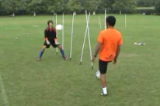
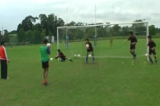
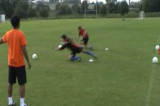
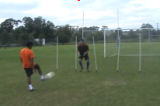
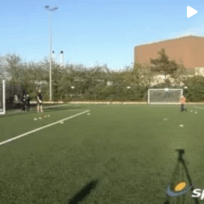
Set up a line of equally spaced poles. Keeper starts at the far end and moves quickly in and out between each of the poles in sequence - moving left and then right.
Once they move out (to the right) the feeder plays a mid-pace pass along the floor.
The keeper dives out to catch the ball and throws it back out before continuing to move between the poles and diving onto the next ball.
Keeper should be moving laterally at speed, using side-steps to ensure they never face away from the ball as they change direction and move between the poles.
Reverse direction of drill (right to left).

in more ways than one
 sportplan_netball


in more ways than one
sportplan_football
Four Halloween-themed games sneak a full warm-up, finishing, rondo and small-sided game into one junior football session this week.
Deliberate heading is now out of U11 grassroots matches. Here is how to coach chest, thigh and foot control so your players still win the ball in the air.
Long-range goals doubled at the 2026 World Cup as teams sat deep. Here is how to coach when to shoot from distance, the technique, and the follow-up.