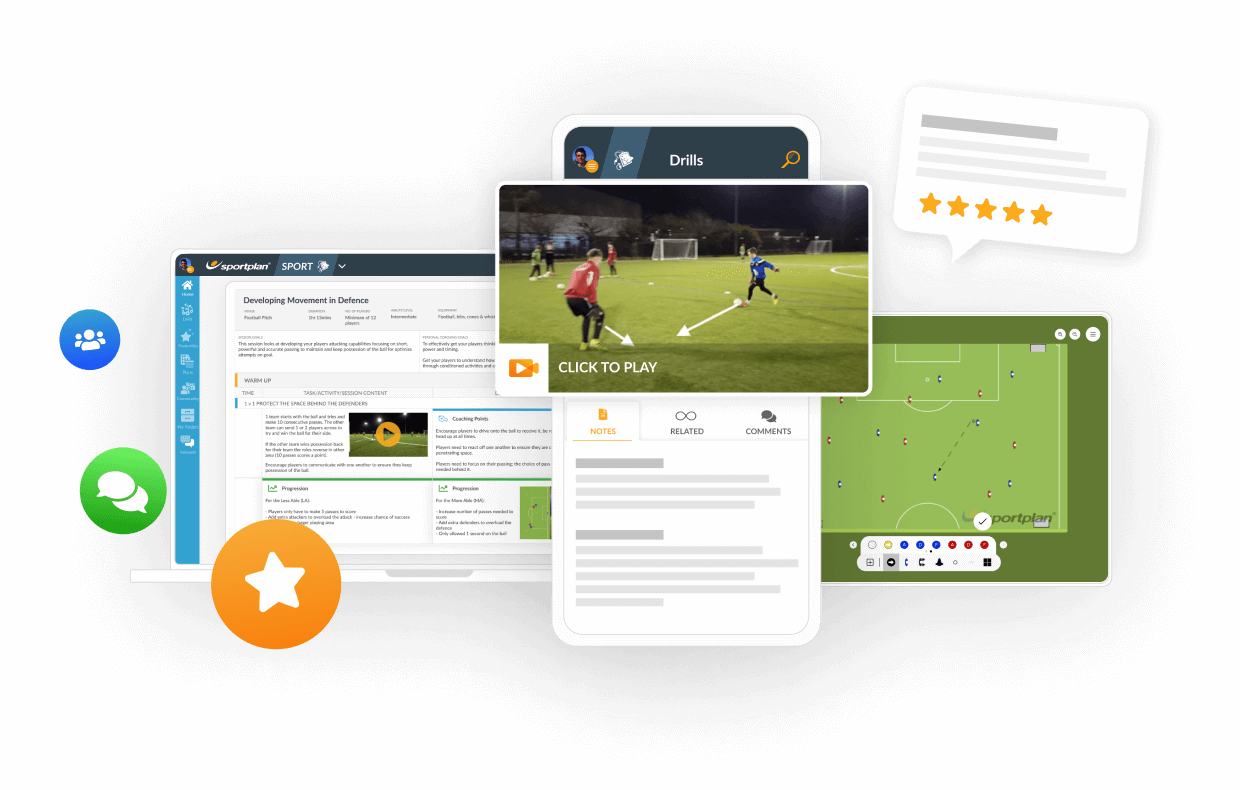
Set up with 2 cones as shown with 2 players at each end and 1 ball.
Player with the ball passes the ball across and then quickly closes their pass down. Once they get close they take a defensive stance and move backwards as the player on the ball dribbles forward.
Once they get halfway the player defending quickly retreats and then receives the pass before changing roles.
Demand firm passes to test the first touch of your players.
Defending stance should be like a boxer, remaining sideways, on their toes and showing the attacker one way or the other but not both.
For younger players you can use the saying of 'get on your surfboard' to give the image of the defending stance.
Players should not tackle.
You can maniplulate the distance between the two cones accordingly to give more or less practice on the type of movement you want and to also demand a different distance of passing.
in more ways than one
Roughly a fifth of Premier League goals come from set pieces, and the gap between teams who plan their routines and teams who do not has never been wider. Here is how the modern set-piece specialists design attacking corners, free kicks, and throw-ins - and how you can apply their ideas at any level.
The next frontier in football coaching is not physical, it is mental. Cognitive load training - the deliberate use of perception, decision-making and dual-task demands inside football drills - is reshaping how the best academies develop players. Here is what it means and how to use it.
If the last decade taught us about pressing, this one is teaching us about what stands behind it. Rest defence is the shape your team holds while attacking, and it is the difference between dominating a game and getting picked off on the counter.