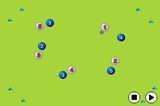
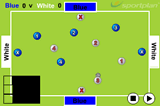
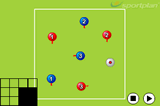
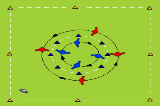
Set up a 10 x 10 area fish tank (any shape you see fit - diamond, square, circle, etc) and set up small goals on the outside.
Have 4 players on the outside of the fish tank with a ball each.
1 player in the middle without a ball.
The players (fishes) on the outside try to go across the tank without the player in the middle (shark) taking their ball. If the player in the middle takes the ball he/she tries to play it outside the area into one of the goals.
Work on the basics of defending with the player in the middle.
Get him/her to choose which player to try to defend against and then work to isolate this player.
Get sideways on and show away from escape routes.
Keep a low centre of gravity and move on mainly the toes, keeping heels of the ground so reacting to turns and changes of pace becomes easier.
On winning the ball look to play quickly into the goals by playing the way your facing, or quickly turning out to play into another goal. Do not give opportunity for the attacker to win their ball back.

in more ways than one
 sportplan_netball


in more ways than one
sportplan_football

Four Halloween-themed games sneak a full warm-up, finishing, rondo and small-sided game into one junior football session this week.
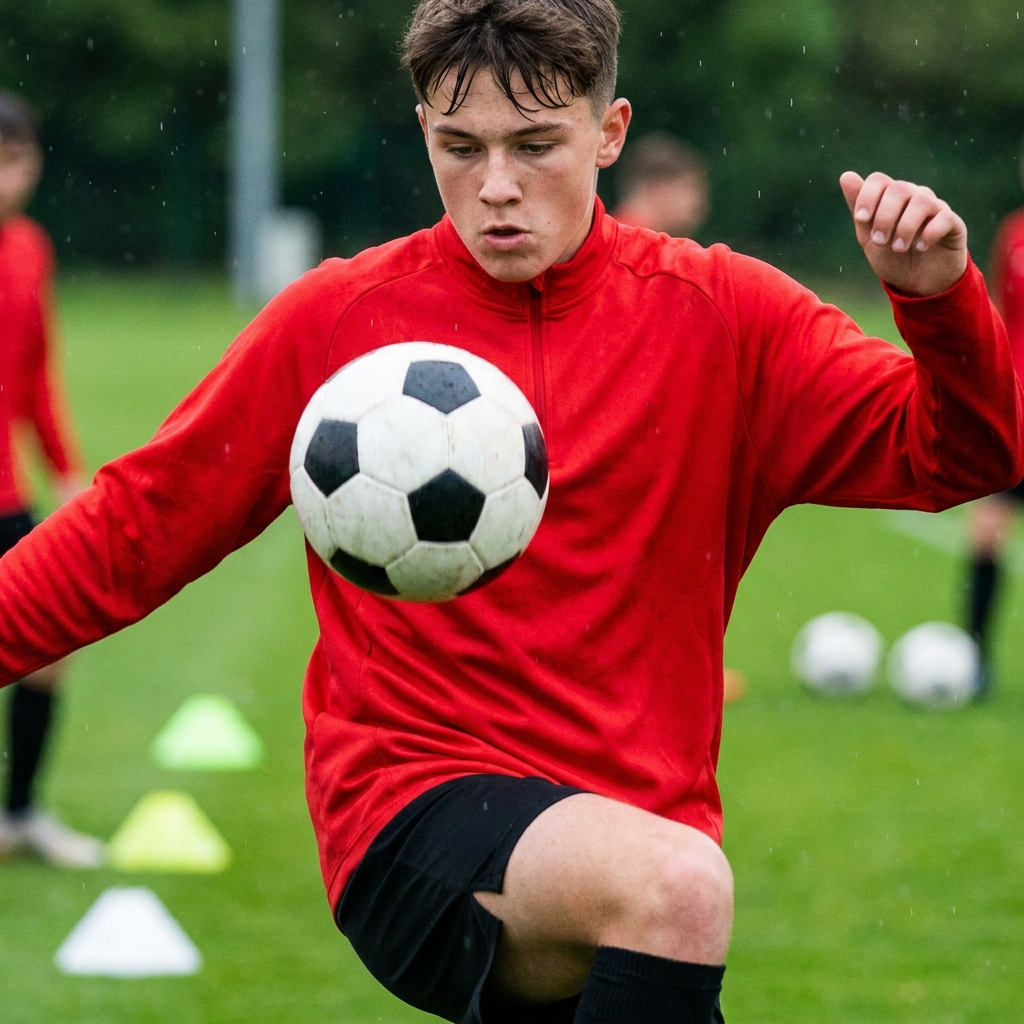
Deliberate heading is now out of U11 grassroots matches. Here is how to coach chest, thigh and foot control so your players still win the ball in the air.
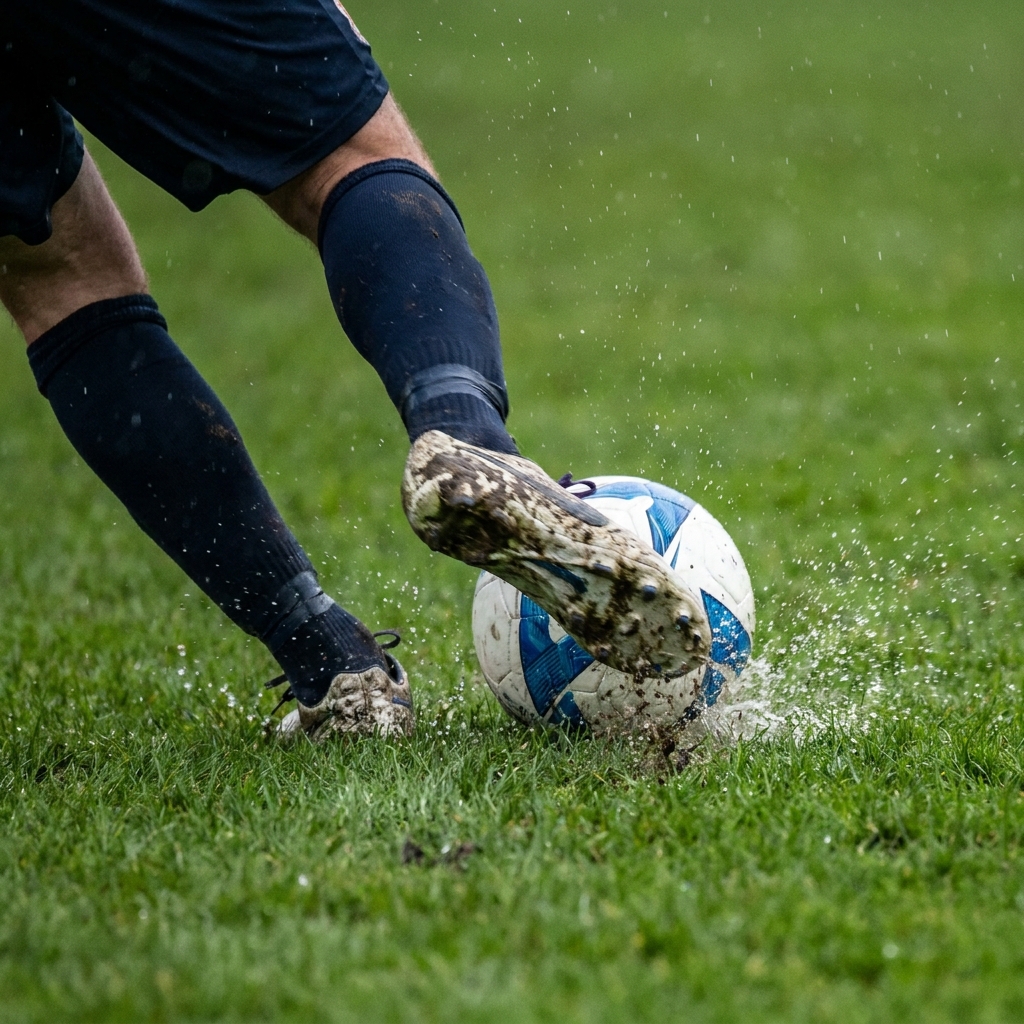
Long-range goals doubled at the 2026 World Cup as teams sat deep. Here is how to coach when to shoot from distance, the technique, and the follow-up.