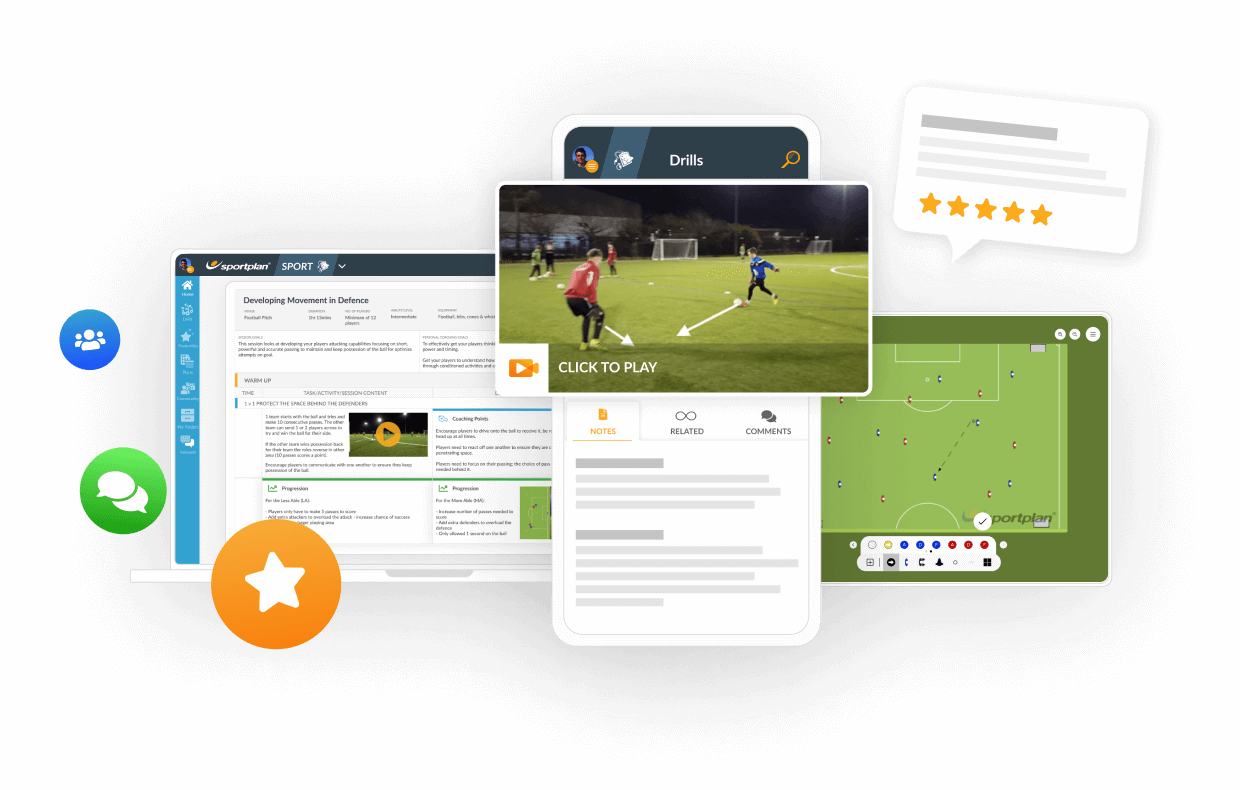
start from gk. reds must try dribble over halfway line to start attack. blues can not track back with them. up to reds how many numbers they commit.
p:Allow 1 player from attackers to come back and support build up.
p: ball can now be passed over half way line.
p: an additional defender can press the ball in the other half.
p: ask defenders to play with low-block: 3 lines of defence but they decide set-up.
p: then remove halfway and have 2 lines that defenders cant press until attackers cross.
encourage use of GK for 3v2
composed and patient build up play
stay on the ball and beat opponents 1v1.
use creative passes to beat opponents.
defdners should stay on ball and look to counter not kick it out
can attackers break lines with dribbles or passes
attackers need to recover in the press when ball played past them
work with others when pressing
stay compact in central areas.
in more ways than one
 sportplan_netball


in more ways than one
sportplan_football

Deliberate heading is now out of U11 grassroots matches. Here is how to coach chest, thigh and foot control so your players still win the ball in the air.

Long-range goals doubled at the 2026 World Cup as teams sat deep. Here is how to coach when to shoot from distance, the technique, and the follow-up.

Under FutureFit, your Under-9s stay at 5v5, your Under-11s stay at 7v7 and your Under-13s stay at 9v9. Same pitch, same numbers, one more year. Here is how to make sure that year feels like a step forward rather than a repeat.