2. skill training component - positioning games
Depending on the ability of your players, choose any of the 3 ‘basic’ positioning games i.e. 4 v 1; 3 v 1 and 4 v 2. All have similar objectives but with varying degrees of resistance and complexity.
See diagrams on the right: A. 4 v 1 (grid size 10m x 10m – 15m x 15m)
B. 3 v 1 (depending on the level of the players)
possible coaches remarks:
“The player on the ball must always have a player to their left and right that they can play to ”But do not stand in the corners, your angle is much smaller if you do that”
With 3 v 1 this means that “you have to move each time the ball moves” (see diagram B)
“Position yourself in a way that you can see the whole grid” (“with your back to the line”)
“play the ball to the proper foot of your team-mate (i.e. away from the
defender) and with the proper speed and precision”
Please note that 3 v 1 asks for a lot of running and is therefore quite exhausting for players this age. Use regular drink breaks to allow for recovery
in more ways than one
 sportplan_netball

in more ways than one
sportplan_football

Deliberate heading is now out of U11 grassroots matches. Here is how to coach chest, thigh and foot control so your players still win the ball in the air.

Long-range goals doubled at the 2026 World Cup as teams sat deep. Here is how to coach when to shoot from distance, the technique, and the follow-up.
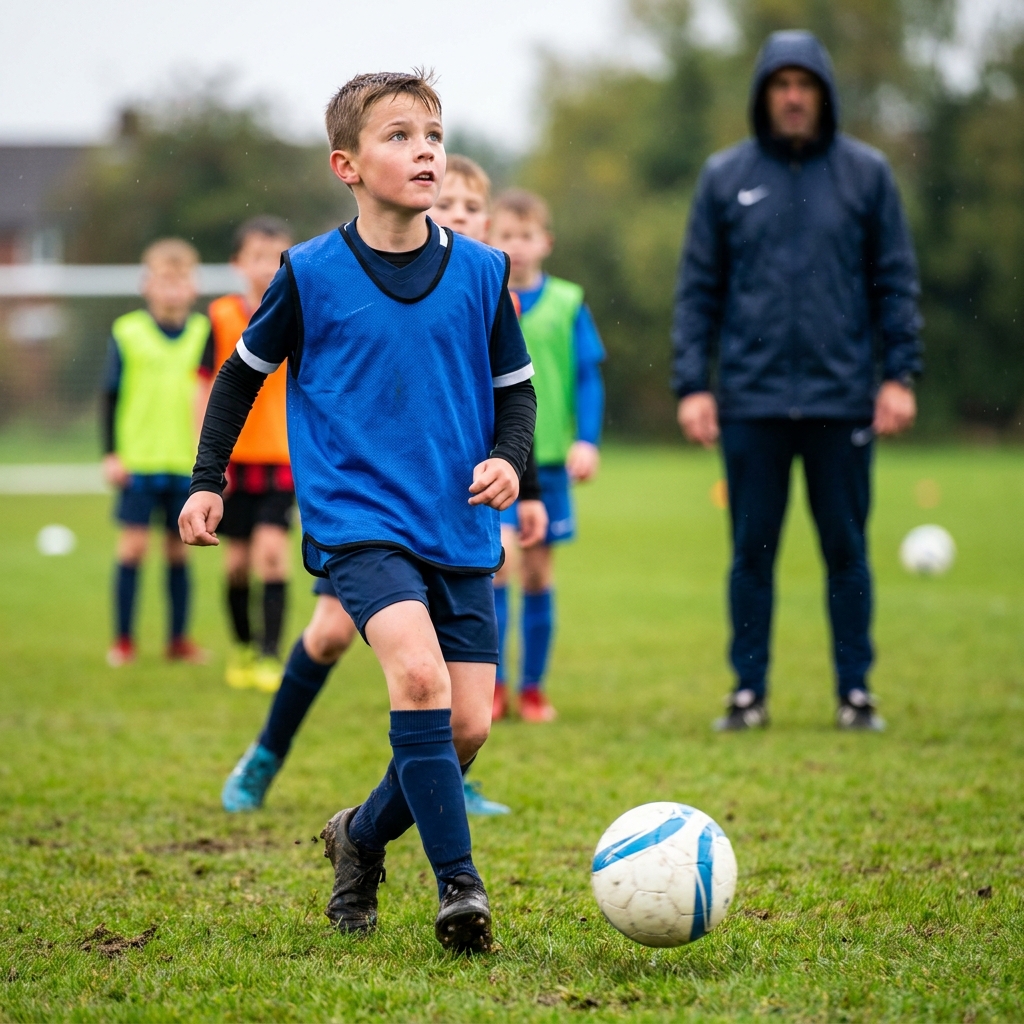
Under FutureFit, your Under-9s stay at 5v5, your Under-11s stay at 7v7 and your Under-13s stay at 9v9. Same pitch, same numbers, one more year. Here is how to make sure that year feels like a step forward rather than a repeat.