Skill Training Component
• A grid of approximately 15m x 15m with a halfway line and three gates of 5m at each byline
• Two groups (yellow and orange) of 4 players positioned opposite one another in the middle gate (see diagram A)
• Yellow group with a ball each; orange without a ball
• #1 yellow passes to #1 orange and immediately sprints to the halfway line (yellow must start defending on or over the halfway line, waiting in own half is not
allowed)
• Orange #1 receives the ball and takes on yellow #1 at speed, trying to get past them and score by dribbling through the left or right gate
• The action stops when orange scores or yellow wins the ball
• Orange #1 now takes the ball and joins the yellow line while yellow #1 joins the orange line
• After everyone’s had a turn, the oranges now become the defenders and yellow the attackers
• “Count the number of goals: who scored most?”
ATTACKER
“Go at the defender with speed”
“Use a feint to put the defender off
balance”
“Threaten to pass to the overlapping
player but accelerate past the defender instead”
DEFENDER
“Show the attacker one way”
“Bend your knees and stand on your
toes so you’re able to change direction quickly”
“The best moment to commit is when the attacker takes a heavy touch or slows down”
in more ways than one
 sportplan_netball

in more ways than one
sportplan_football
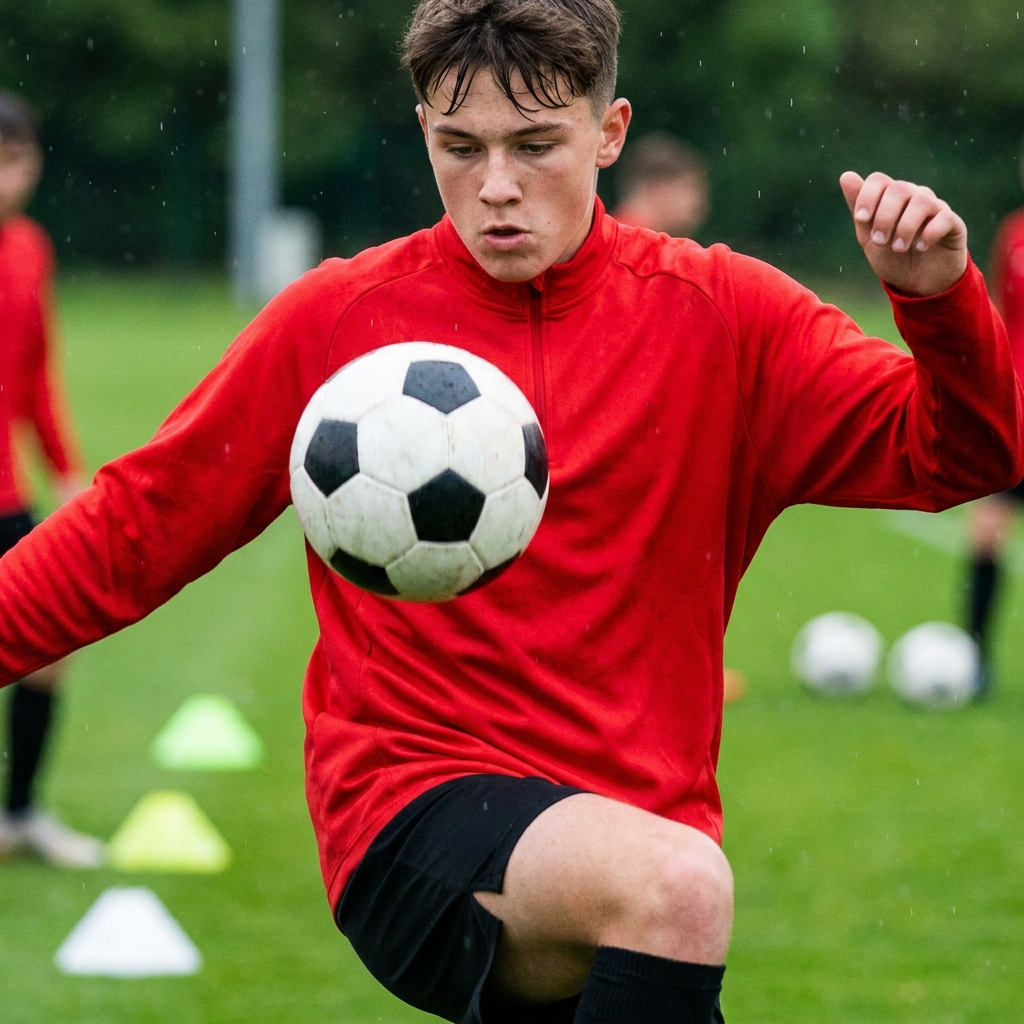
Deliberate heading is now out of U11 grassroots matches. Here is how to coach chest, thigh and foot control so your players still win the ball in the air.
Long-range goals doubled at the 2026 World Cup as teams sat deep. Here is how to coach when to shoot from distance, the technique, and the follow-up.
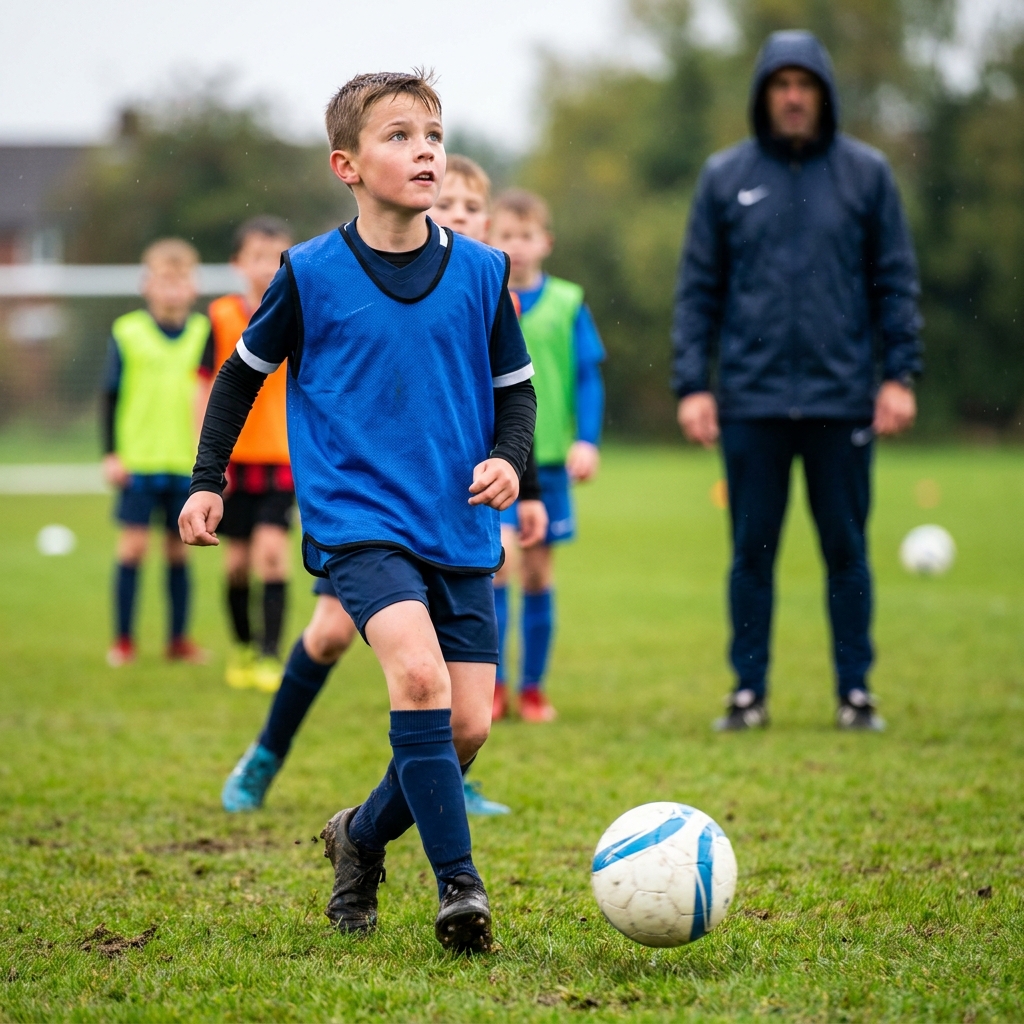
Under FutureFit, your Under-9s stay at 5v5, your Under-11s stay at 7v7 and your Under-13s stay at 9v9. Same pitch, same numbers, one more year. Here is how to make sure that year feels like a step forward rather than a repeat.