Again, this is just a format and template for a possession activity.
There are 2 grids marked out; one bog and one relatively small.
Play a possession game changing the space and area that the players are playing in. Coach shouts 'big', and players play in big grid. Cohac shouts 'small' and players play in small grid.
Progressions/Adaptations
This practice is aimed at challenging the players in different spaces. The idea is to mimc the game, in that sometimes players will receive in soeace and low pressure, and sometimes they will receive in tight spaces, and high pressure scnarios.
The big area needs to be big enoough to give the players the opportinity to have wuite a bitof time and space on the ball. Teh small area needs to be very small for the numbers and needs to really challenge the players in terms of how small it is. The small gird should be so small, that players will struggle to put strings of 5 passes of more togther. The idea is to challenge players in this tight areas, and to be able to cope in there.
The practice will interlvea space and pressure sitiations.
Talk about teh differnt sitautions and possible solutions for each.
Tight spaces
Big spaces
Awareness, recogntion, perceotion of space and surroundings

in more ways than one
 sportplan_netball


in more ways than one
sportplan_football

Under FutureFit, your Under-9s stay at 5v5, your Under-11s stay at 7v7 and your Under-13s stay at 9v9. Same pitch, same numbers, one more year. Here is how to make sure that year feels like a step forward rather than a repeat.
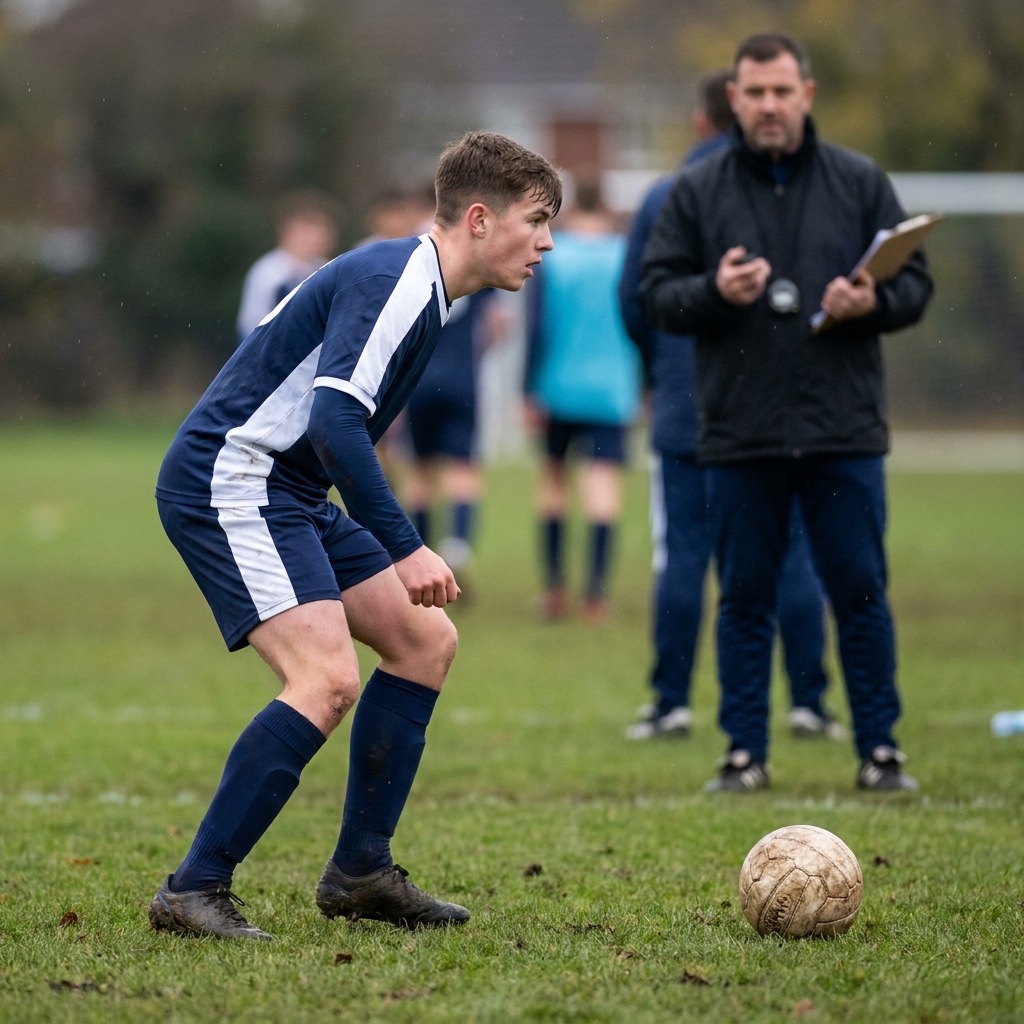
Most 1v1s are lost in the first second, when the defender rushes in and dives. Teach your players to slow the attacker down, take away the dangerous option and pick the right moment, and they will win far more of them.

The FA's FutureFit framework lands this season, bringing a 3v3 entry format at Under-7s. Here is what actually changes on a Saturday morning, and how to coach it well.