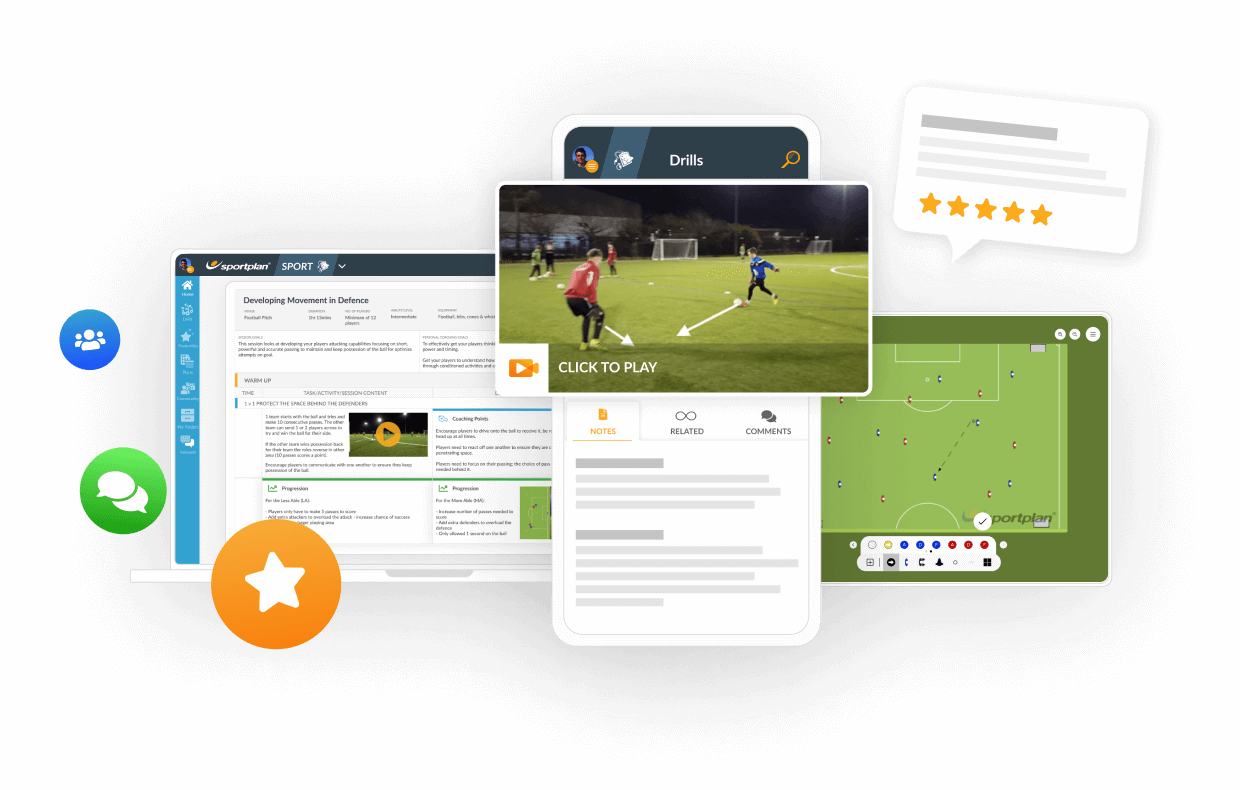
Players in pairs - with one ball between the two of them
Gates scattered throughout the grid.
PLayer with ball has to dribble through as many consecutuive gates as possible wothout the ball being stolen.
If partner steals ball, then roles reverse.
Progressions/Adaptations
This practices is all about staying on the ball as an indivudual; being able to stay on the ball under pressure.
There should be lots of twisting, turning, and changing direction
Changing speed to 'get away' from DF
Awareness of space (open gates)
Use of different turns/1vs1 moves to evade DFs
Disguise, fakes - exagerate the movement. Tell a lie with your body.
Use of body
Ball protection skills and shielding
Note - this practice will look messy and out of control, and players will more than likely lose the ball a lot to begin with.
in more ways than one
 sportplan_netball


in more ways than one
sportplan_football
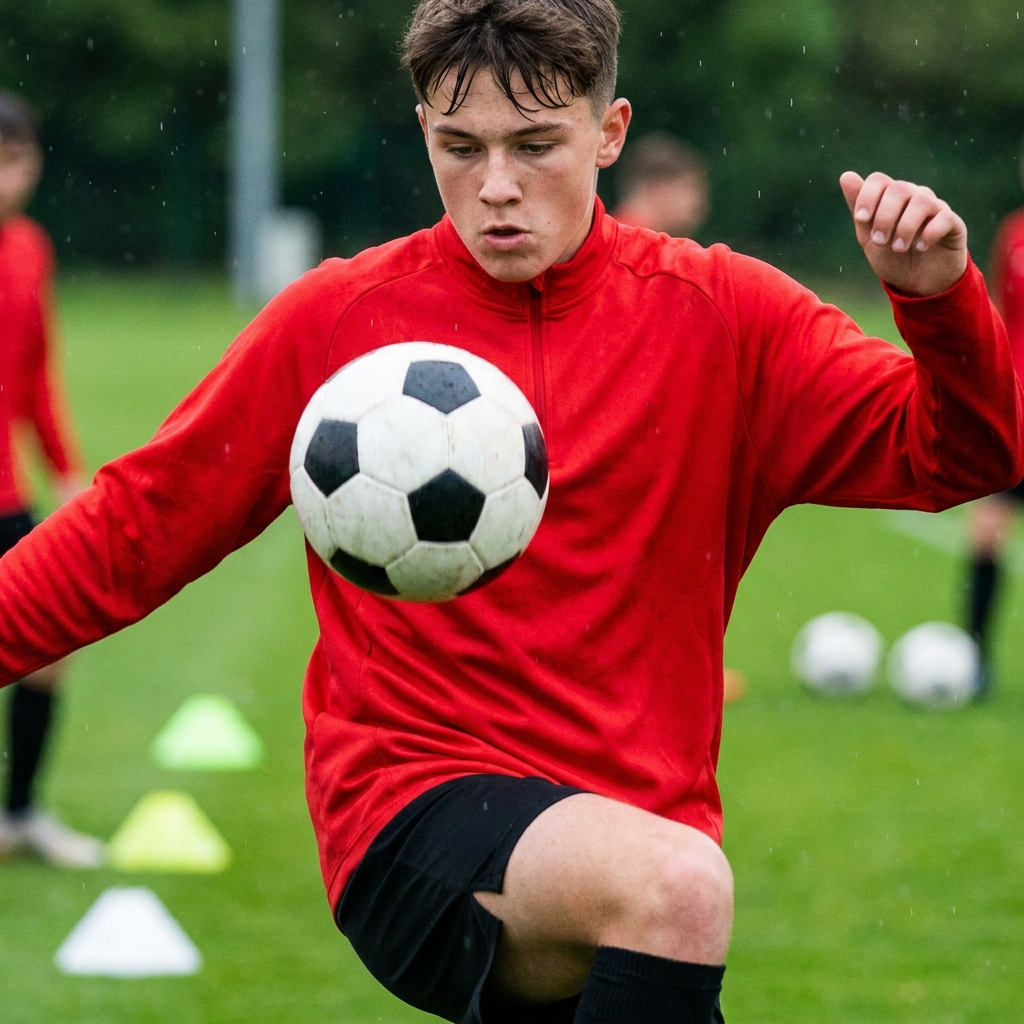
Deliberate heading is now out of U11 grassroots matches. Here is how to coach chest, thigh and foot control so your players still win the ball in the air.
Long-range goals doubled at the 2026 World Cup as teams sat deep. Here is how to coach when to shoot from distance, the technique, and the follow-up.
Under FutureFit, your Under-9s stay at 5v5, your Under-11s stay at 7v7 and your Under-13s stay at 9v9. Same pitch, same numbers, one more year. Here is how to make sure that year feels like a step forward rather than a repeat.